Systems Overview

Deployment Systems for Real-World Integration

The G-Cav™ platform can be configured for inline, submersible, modular, and pump-integrated deployment depending on the process environment, the fluid dynamics of the site, and the commercial pathway being pursued.

This page explains the systems layer of the platform: not what the cavitation engine is in scientific terms, but how it is practically deployed in the field.

WHY THE SYSTEMS LAYER MATTERS

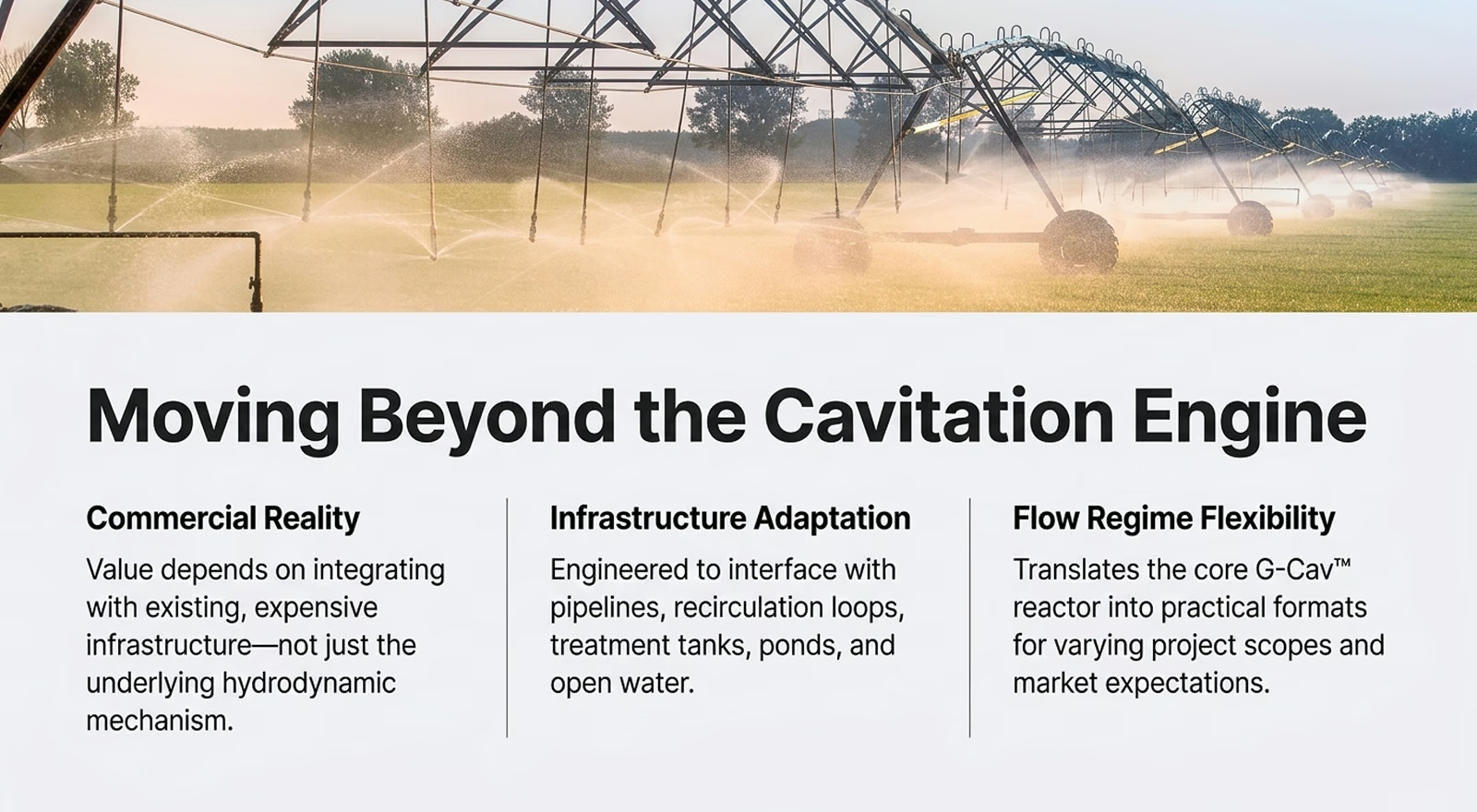
The commercial value of the Global Cavitation platform does not depend only on the underlying hydrodynamic cavitation mechanism. It also depends on whether that mechanism can be deployed in ways that suit real infrastructure, real operators, and real projects.

A platform that works only in one fixed configuration is far less valuable than a platform that can be adapted to pipelines, recirculation loops, treatment tanks, ponds, open-water environments, and larger industrial process trains.

This is why the systems layer matters. It translates the core G-Cav™ reactor platform into practical deployment formats that suit different flow regimes, installation constraints, pilot pathways, and market expectations.

THE ROLE OF SYSTEM DESIGN IN THE PLATFORM MODEL

Global Cavitation is not positioning G-Cav™ as a single rigid product. It is positioning it as a licensable industrial technology platform. The systems layer is what allows that platform to move across sectors and geographies without losing coherence.

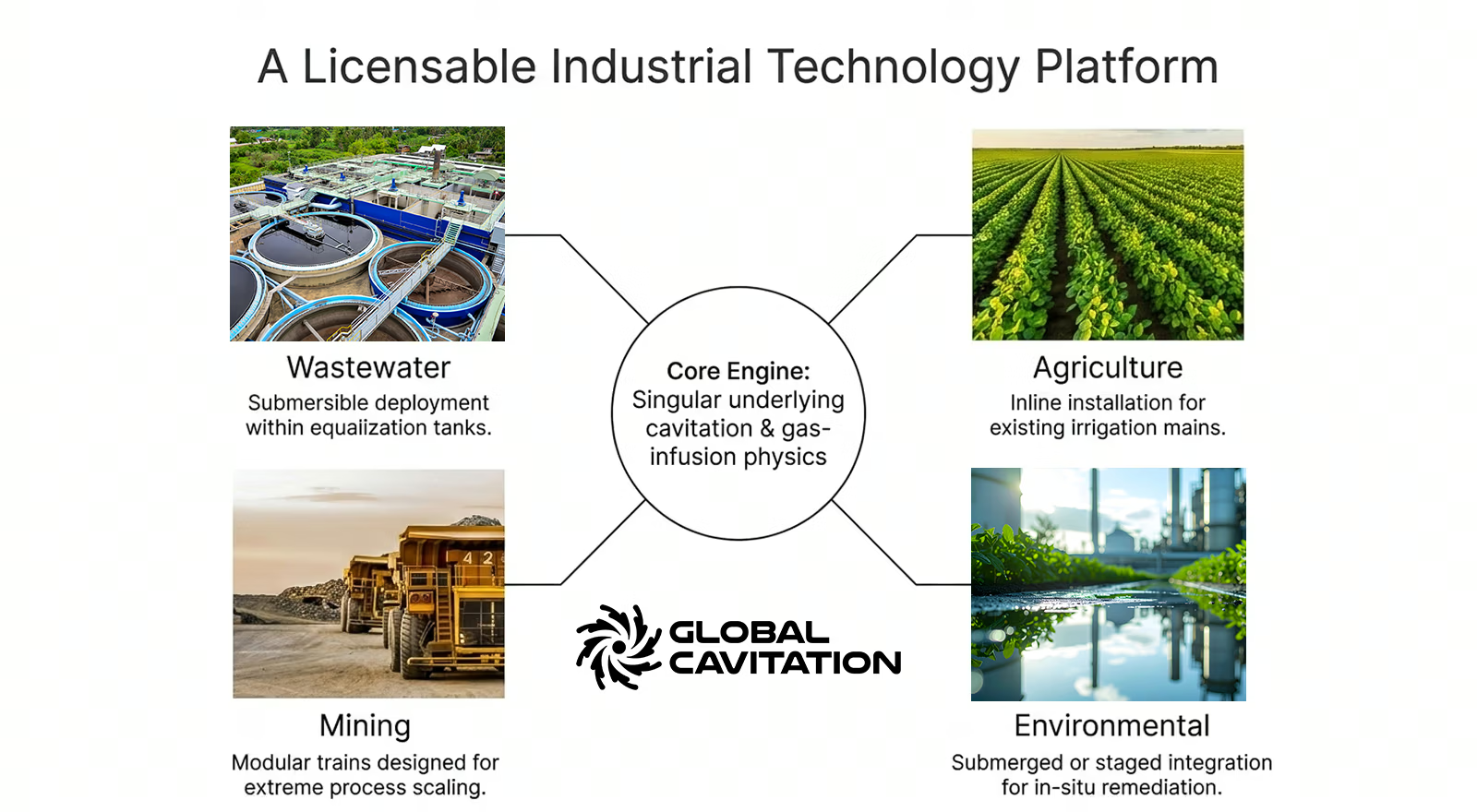
A wastewater partner may need a submersible deployment in an equalisation tank. An agriculture partner may need an inline irrigation installation. A mining project may require a modular train. An environmental remediation deployment may favour submerged or staged field integration.

Different system formats exist, but they are all expressions of the same underlying cavitation and gas-infusion engine.

Licensable industrial technology with global cavitation

INLINE SYSTEMS

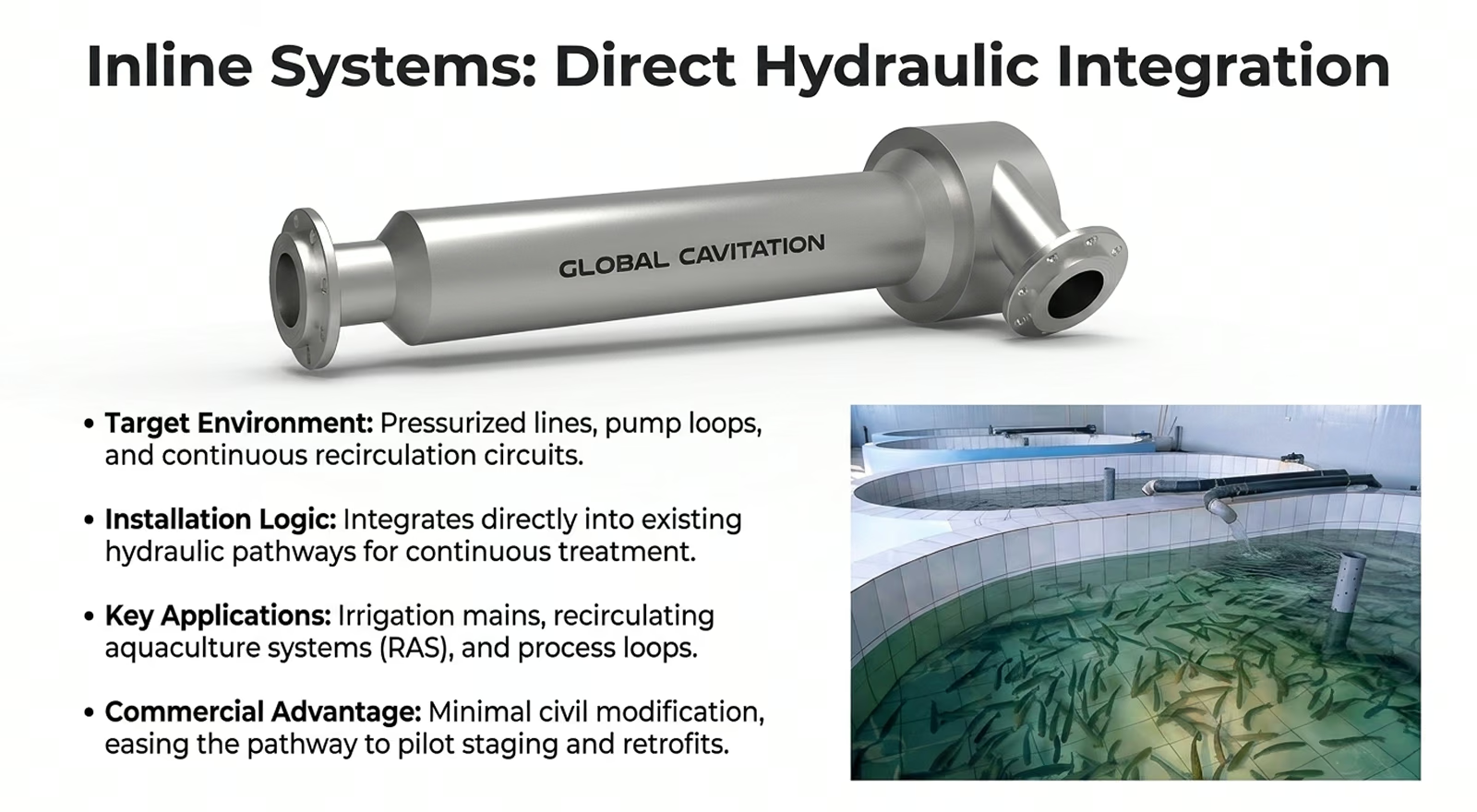
Inline systems are the most straightforward deployment model where the process environment already includes a pressurised line, a pump loop, or a continuous recirculation circuit. In these cases, G-Cav™ can be installed directly into the existing hydraulic pathway so treatment occurs continuously as liquid moves through the system.

This format is especially relevant for irrigation mains, recirculating aquaculture systems, industrial process loops, wastewater recirculation circuits, and a wide range of retrofit scenarios where pipe-based integration is preferred.

The commercial appeal of inline deployment is that it is easier to stage as a pilot, easier for operators to understand, and often easier to integrate without major civil modification.

Inline systems send direct hydraulic systems with global cavitation

SUBMERSIBLE SYSTEMS

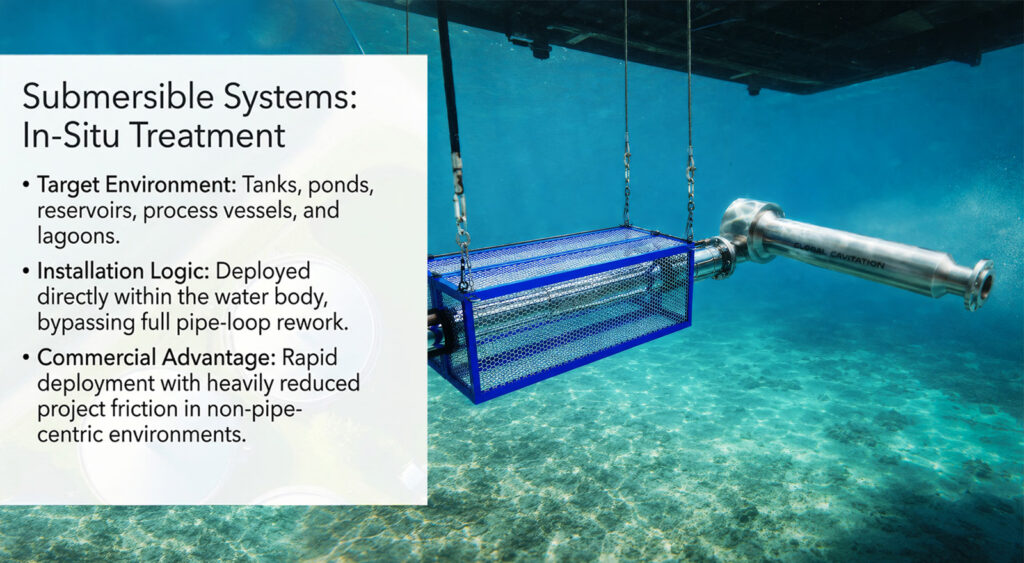
Submersible systems allow G-Cav™ to be deployed directly within tanks, ponds, reservoirs, process vessels, lagoons, or open-water bodies where in-situ treatment is more practical than full pipe-loop integration.

This format is highly relevant where the customer needs to move quickly, avoid heavy infrastructure rework, or target conditions within the water body itself.

Submersible deployment reduces project friction and creates a lower barrier to trial work in environments that are not naturally pipe-centric.

MODULAR SYSTEMS

Some deployment environments require more than a compact single-unit configuration. Larger industrial facilities, higher-throughput water systems, and broader project scopes may require modular architecture that can scale by adding capacity in a disciplined way.

Modular systems allow the G-Cav™ platform to grow from pilot to plant-scale deployment without changing the underlying technological logic.

This is strategically important in mining, oil and gas, wastewater, and larger process-water applications where throughput, redundancy, or future expansion shape the final design.

PUMP COMBINATION SYSTEMS

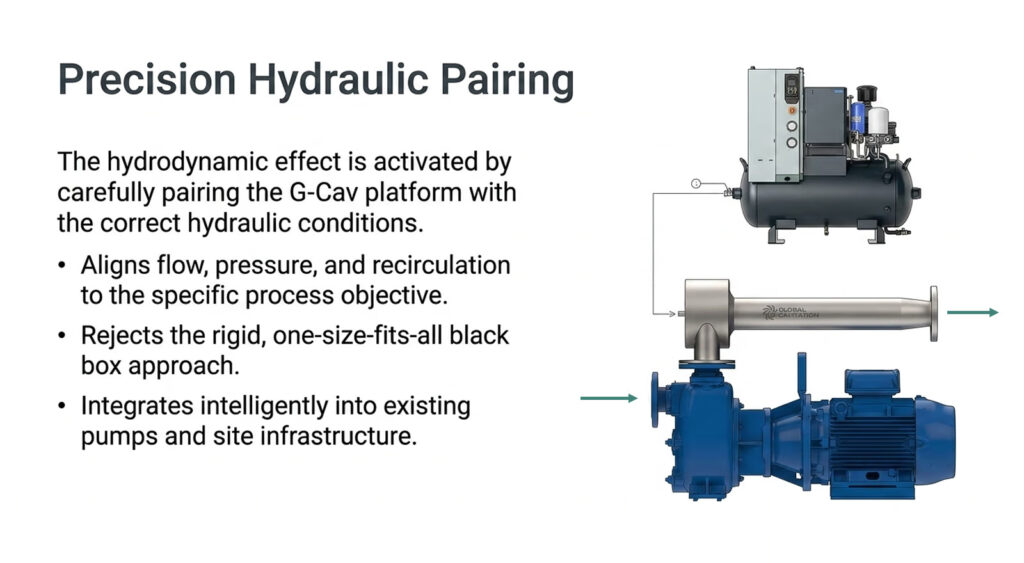
Because G-Cav™ is a hydrodynamic platform, pump selection and hydraulic pairing are not minor implementation details. They are part of how the technology creates its process effect in the real world.

In some applications, the best path is not to treat G-Cav™ as a standalone insert, but to pair it carefully with the right hydraulic conditions so flow, pressure, and recirculation behaviour align with the process objective.

Pump combination systems help the platform fit intelligently into existing infrastructure rather than appearing as a one-size-fits-all black box.

INTEGRATED GAS SUPPLY

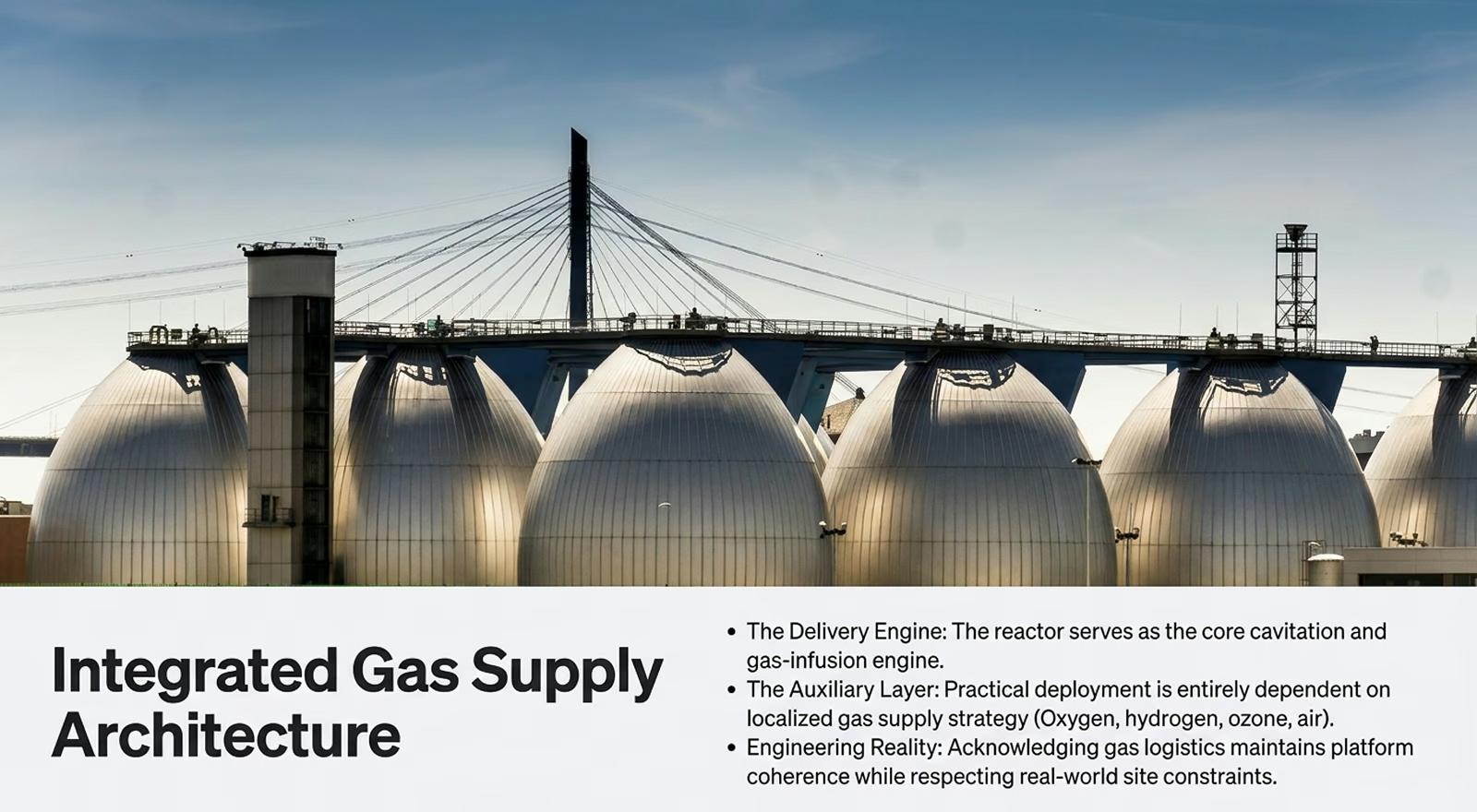
The systems layer also interacts with gas supply strategy. G-Cav™ is the cavitation and gas-infusion engine, but practical deployment still depends on where the gas comes from and how that gas is supplied to the site.

Oxygen, hydrogen, ozone, air, and other process gases create different installation realities. The reactor remains the centre of the platform. The gas-supply approach is one supporting layer in the wider deployment model.

That distinction matters because it keeps the platform coherent while still acknowledging real-world engineering requirements.

WHY FLEXIBILITY STRENGTHENS LICENSING

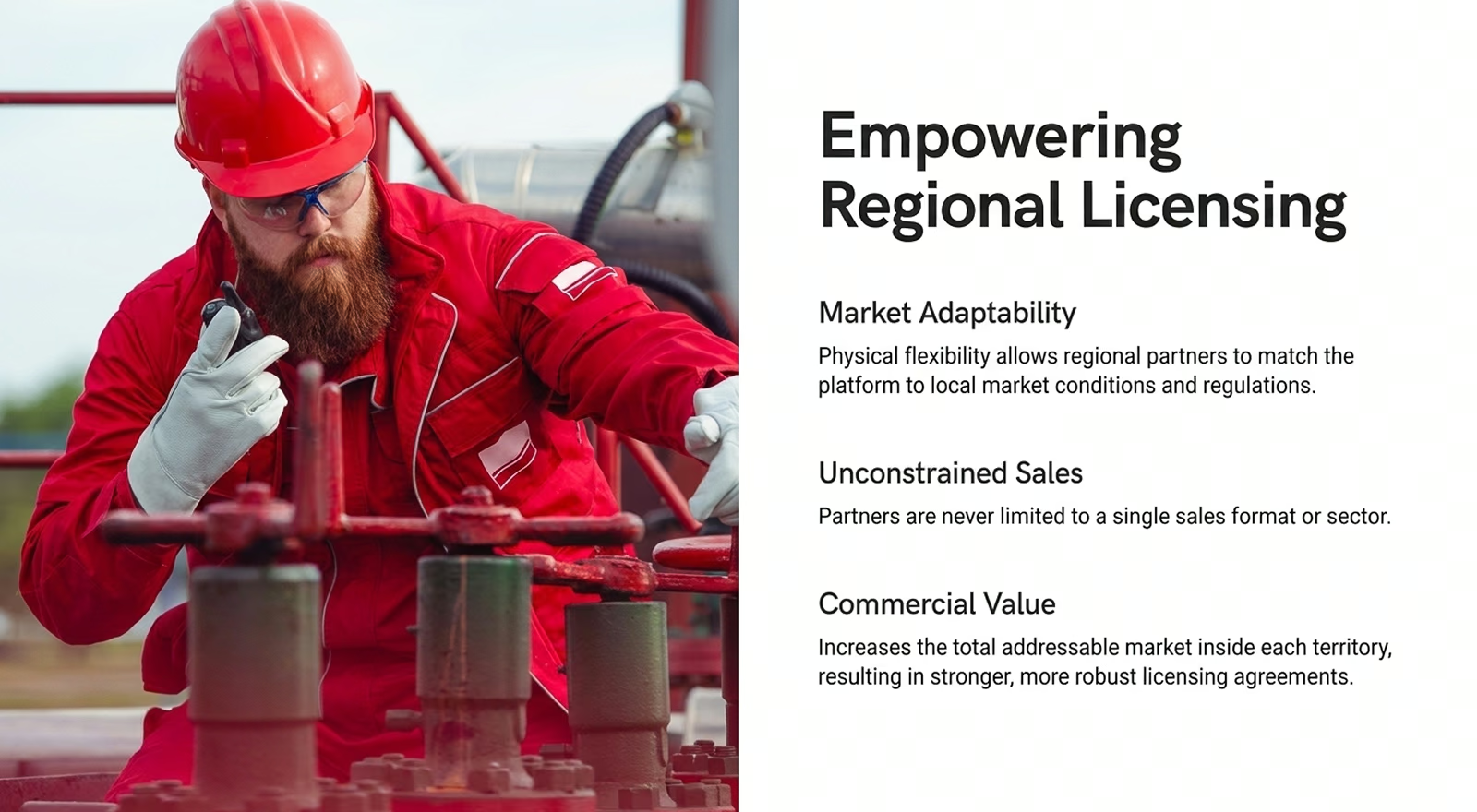
A licensable platform becomes stronger when it can be adapted to different market conditions without losing technical coherence. That is exactly what the systems layer provides.

A regional partner is not limited to one sales format. They can pursue projects that suit local infrastructure, customer preferences, regulatory settings, and installation constraints while still remaining within the same platform family.

This flexibility increases the addressable market inside each territory and strengthens the quality of licensing discussions.

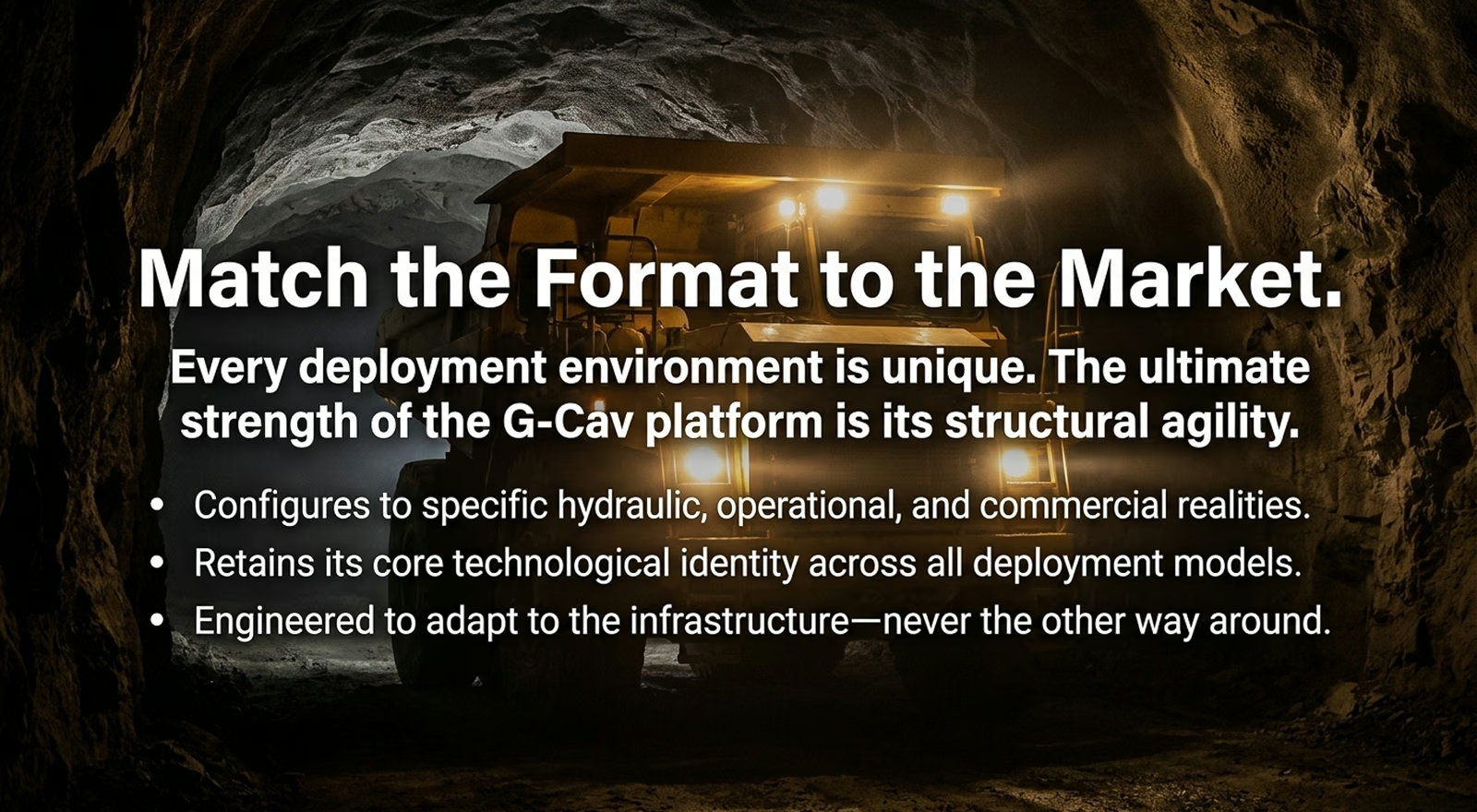
Match the Deployment Format

Every deployment environment is different. The strength of the G-Cav™ platform is that it can be configured to suit different hydraulic, operational, and commercial realities without losing its core technological identity.

GLOBAL CAVITATION ONLINE CONTACT FORM