
Deliver oxygen, molecular hydrogen, and ozone through existing irrigation infrastructure to support plant metabolism, nutrient uptake, root-zone health, soil biology, and regenerative productivity.
Global Cavitation is positioning agriculture as one of the most commercially significant deployment verticals within the broader G-Cav™ platform. The opportunity is not simply to add another farm input. It is to improve the biological effectiveness of irrigation water itself and, through that, improve how the crop and the soil system perform under real operating conditions.
Agriculture is under structural pressure. Fertiliser costs remain volatile, water quality and availability are increasingly constrained, soil biology is degraded in many growing environments, and growers are under rising pressure to reduce chemical intensity while still improving productivity. In that setting, traditional input-heavy responses are reaching a point of diminishing return.
The deeper problem is often not the absence of added chemistry. It is biological inefficiency inside the plant-soil-water system. If root respiration is weak, if oxygen availability is poor, if microbial conditions are unstable, or if the plant is metabolically stressed, then more fertiliser does not automatically translate into stronger performance.
G-Cav™ Agriculture addresses that problem at the irrigation level. Instead of pushing harder on chemical inputs, it focuses on improving the functional quality of the water being delivered to the crop and the biological conditions that determine whether the plant can use nutrients and energy efficiently in the first place.
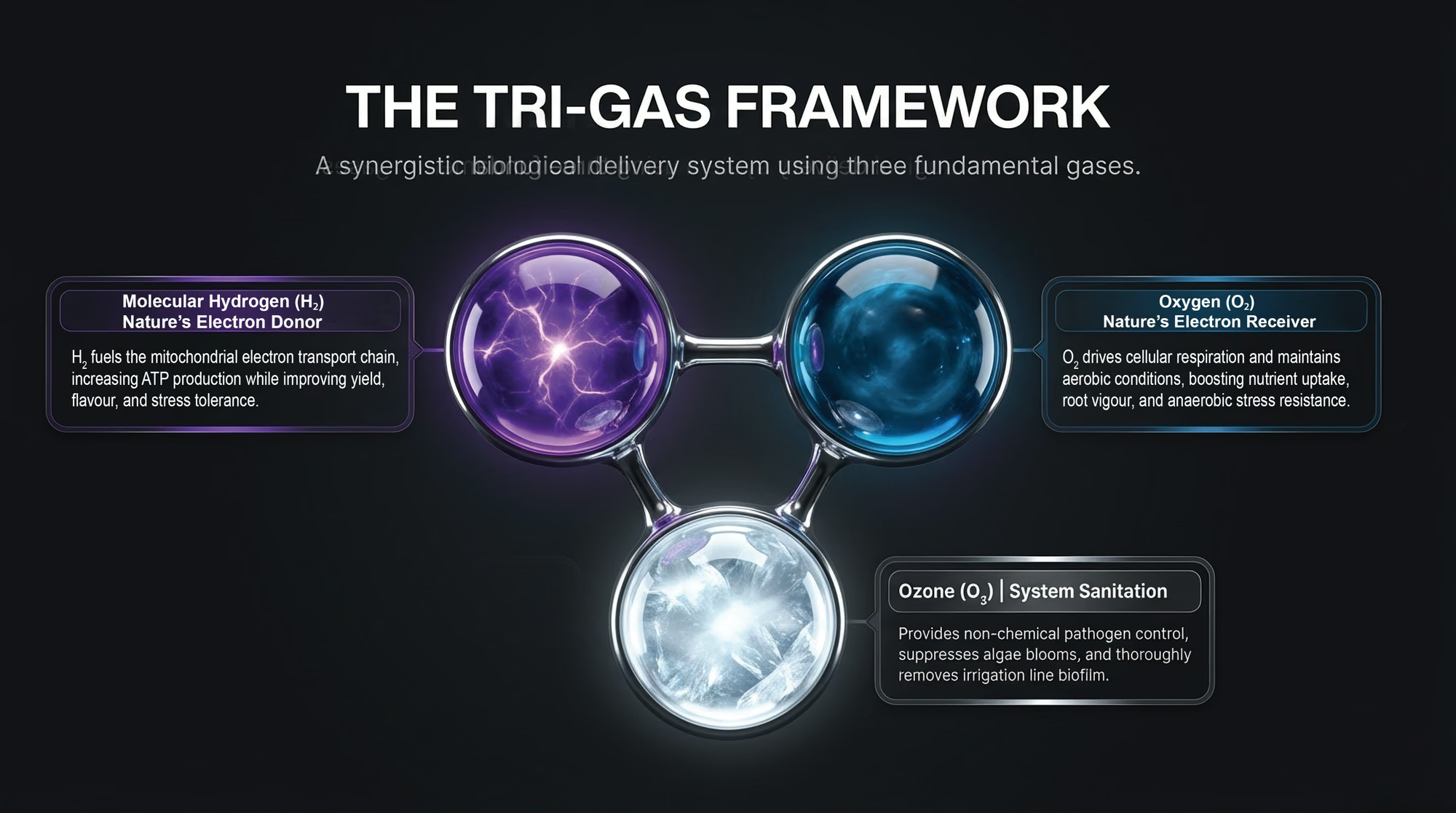
G-Cav™ Agriculture operates through a three-gas framework delivered through irrigation water. Each gas performs a different role, and together, in the right place, at the right time, they create a broader biological and operational system than just a simple oxygenation focus.
Oxygen supports cellular respiration and is nature’s electron receiver and helps maintain aerobic conditions for both the plant and the microbiota in the soil around the root zone. In practical terms, that is relevant to nutrient uptake, root vigour, and resistance to the stagnation and anaerobic stress that often compromises plant performance.
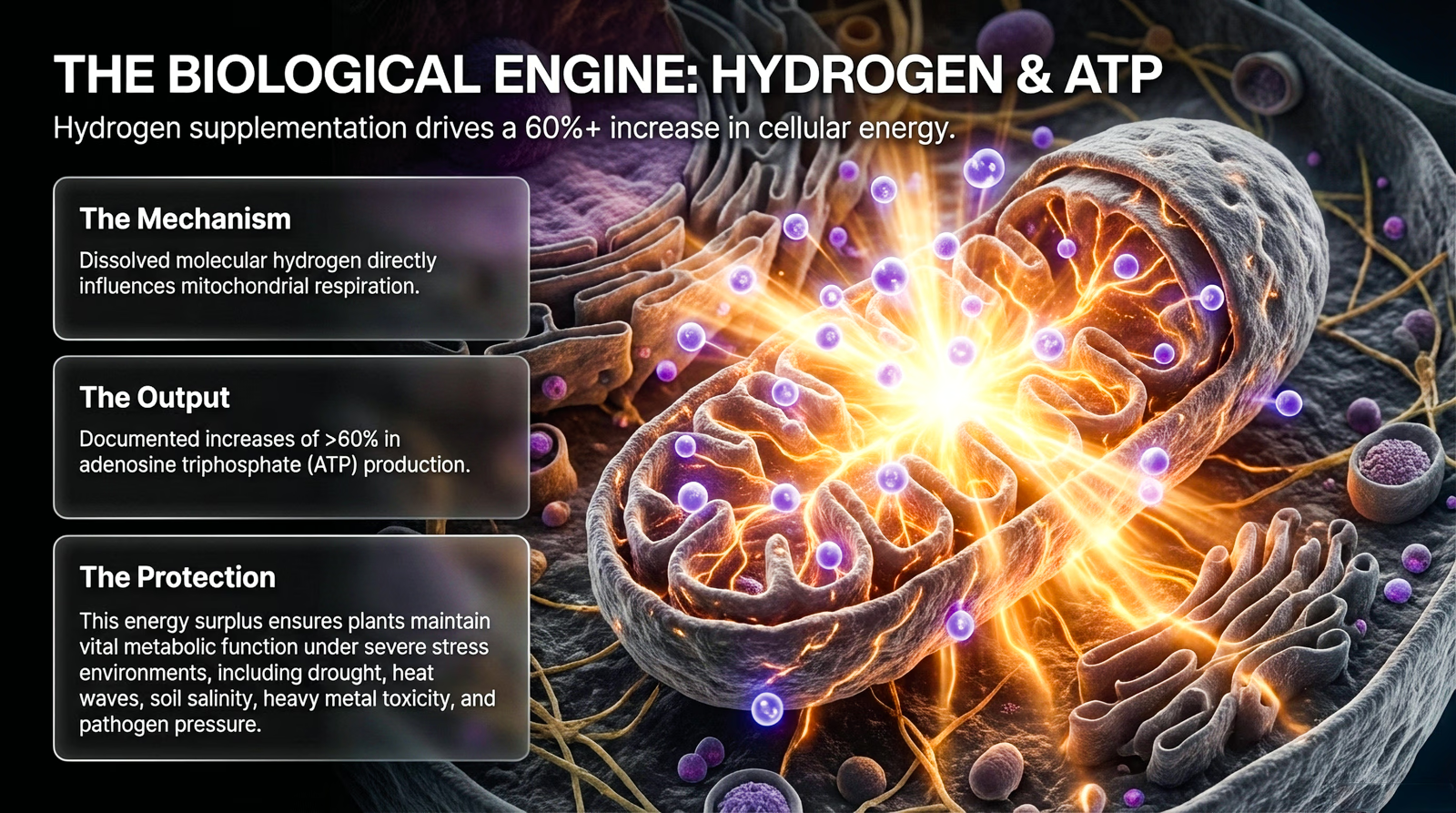
Molecular hydrogen itself is an energy form and is nature’s electron donor for oxygen then to receive via the electron transfer chain in mitochondria for virtually every biological species on the planet. It is directly associated with the creation of, and the increasing of ATP production, improving yield, flavour, stress tolerance, and more stable plant performance under difficult growing conditions such as heat, salinity, drought, heavy metals, and pathogen pressure.
Ozone serves a different function. Its role is not primarily plant metabolism, but irrigation sanitation. Used appropriately, it helps control algae, biofilm, and unwanted biological load within the irrigation system or source water itself, improving hygiene and delivery integrity.
Together, with strategic implementation, these three gases create a more complete agriculture platform: oxygen for respiration and nutrient uptake, molecular hydrogen for metabolic resilience and biological performance, and ozone for sanitation and irrigation cleanliness.
The agricultural value of G-Cav™ is not simply that it can place gas into water. The real value is that it changes the biological effectiveness of the water being delivered to the plant.
When irrigation water carries oxygen and hydrogen more effectively, the conversation moves beyond generic water treatment and into biological optimization. Stronger respiration, more stable metabolic performance, better nutrient uptake, and healthier rhizosphere conditions can create compound gains in yield, crop quality, resilience, and input efficiency.
This is a great example of the massive diversity of what the G-Cav™ infusion platform is capable of achieving in different environments and application objectives, and why this agricultural information must read and be understood differently from the other industrial water pages. The central promise is not only cleaner or better-conditioned water. The promise is a more biologically effective growing system.
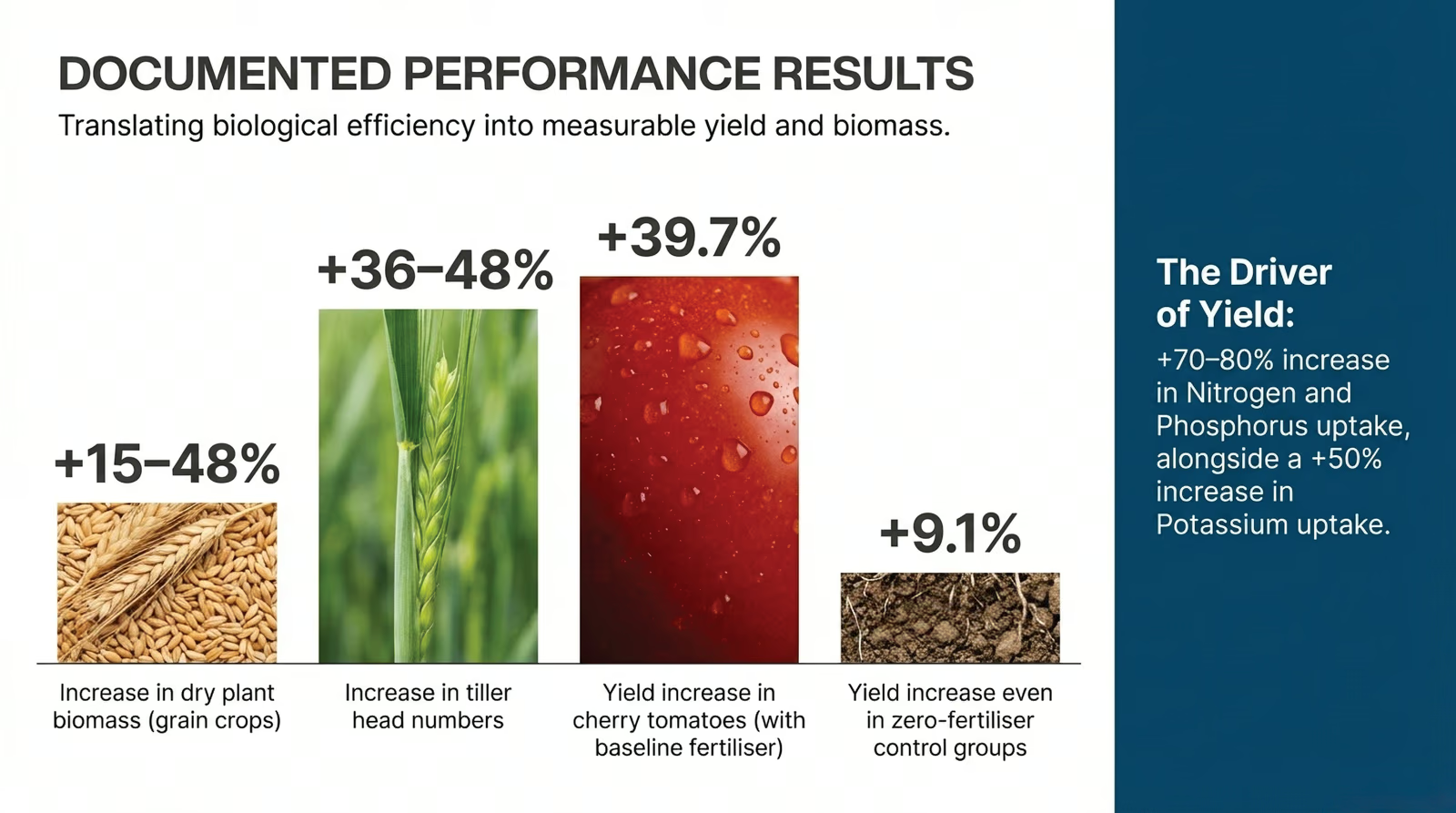
Reported agriculture results provide several strong performance anchors. It reports documented gains of 15–48% in dry plant biomass in grain crops, 36–48% in tiller head numbers, a 39.7% yield increase in cherry tomatoes when molecular hydrogen nanobubble irrigation is combined with fertiliser, and a 9.1% yield improvement even when hydrogen irrigation is used without fertiliser.
Reported results also indicate 70–80% improvement in nitrogen and phosphorus uptake and greater than 50% improvement in potassium uptake. These are commercially important signals because they link the platform not only to output, but to nutrient efficiency and input productivity.
These results are not a promise of identical outcomes across every crop and climate, but they provide a credible performance direction strong enough to justify field deployment, crop-specific trials, and region-specific validation.
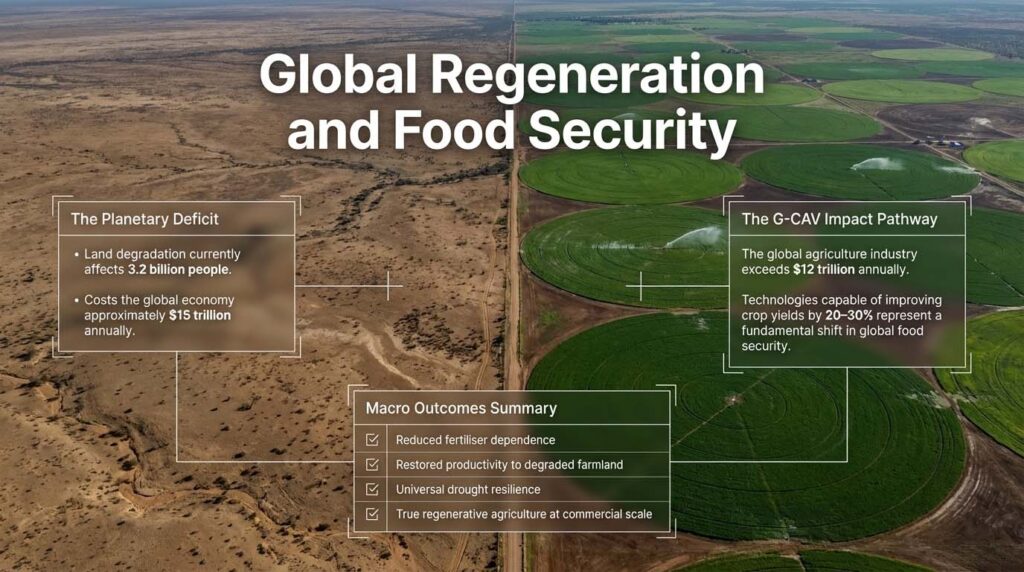
Agriculture is one of the world’s most important industries. It sits at the centre of food security, land productivity, environmental resilience, and long-term national stability. That gives the G-Cav™ agriculture platform unusually strong strategic relevance.
Global Cavitation is seeking partnership discussions with major market-facing sales and distribution companies capable of taking this technology into broadacre farming, horticulture, greenhouse systems, hydroponics, nurseries, orchards, and regenerative agriculture markets.
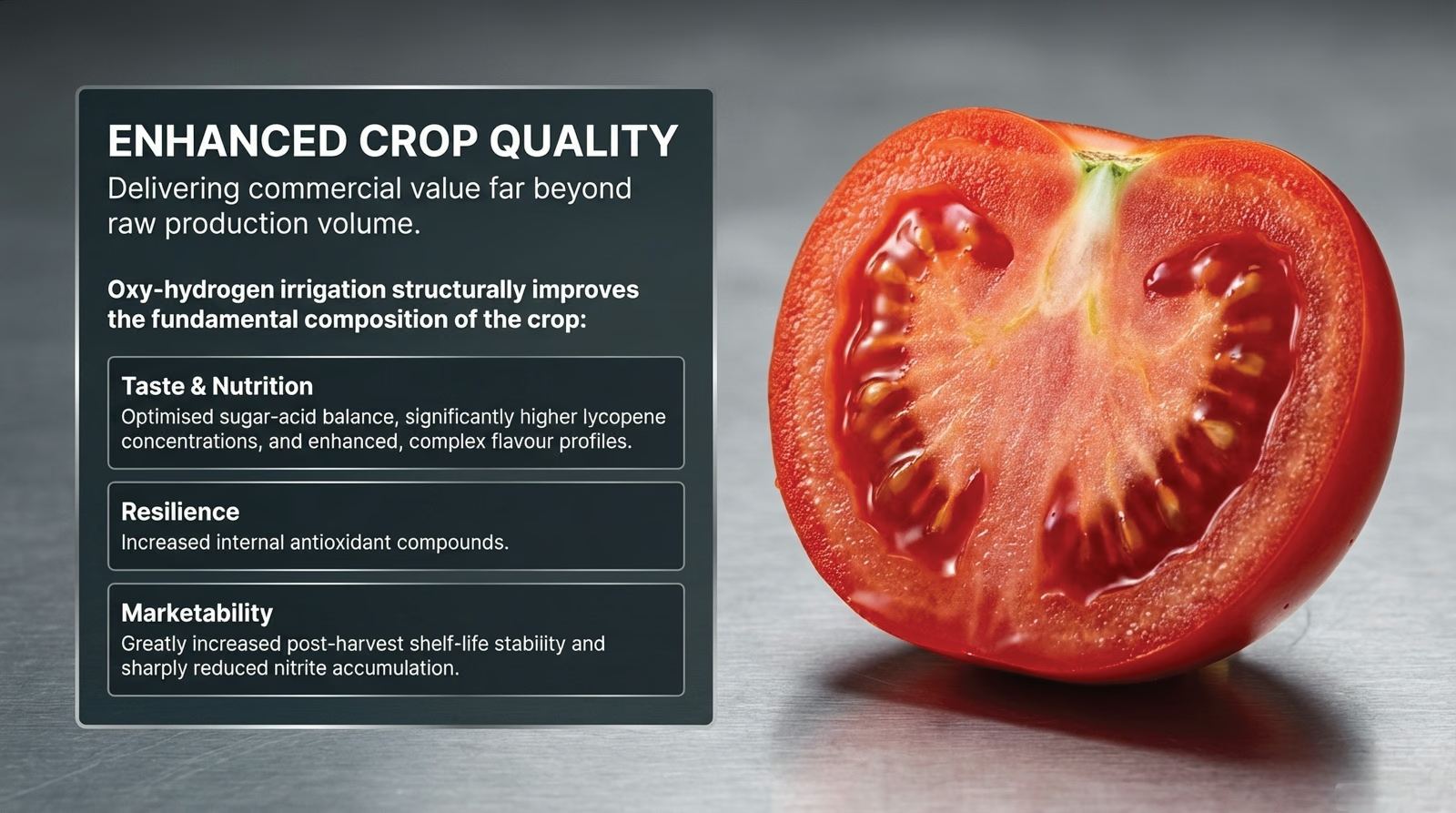
The agriculture case is not limited to yield. Reported crop-quality outcomes include improved sugar-acid balance, increased antioxidant compounds, higher lycopene concentrations, stronger flavour compounds, and improved post-harvest quality in selected crops.
That matters because many agricultural markets are driven as much by quality as by tonnage. In horticulture, protected cropping, premium produce, and export-oriented systems, better crop quality can be commercially as important as higher yield.
The resilience story is equally important. Hydrogen-related biological support is linked to stronger performance under drought, salinity, heat, heavy metals, and pathogen pressure. In a more volatile agricultural environment, resilience is not a side benefit. It is one of the strongest reasons a biological optimisation platform becomes commercially attractive.
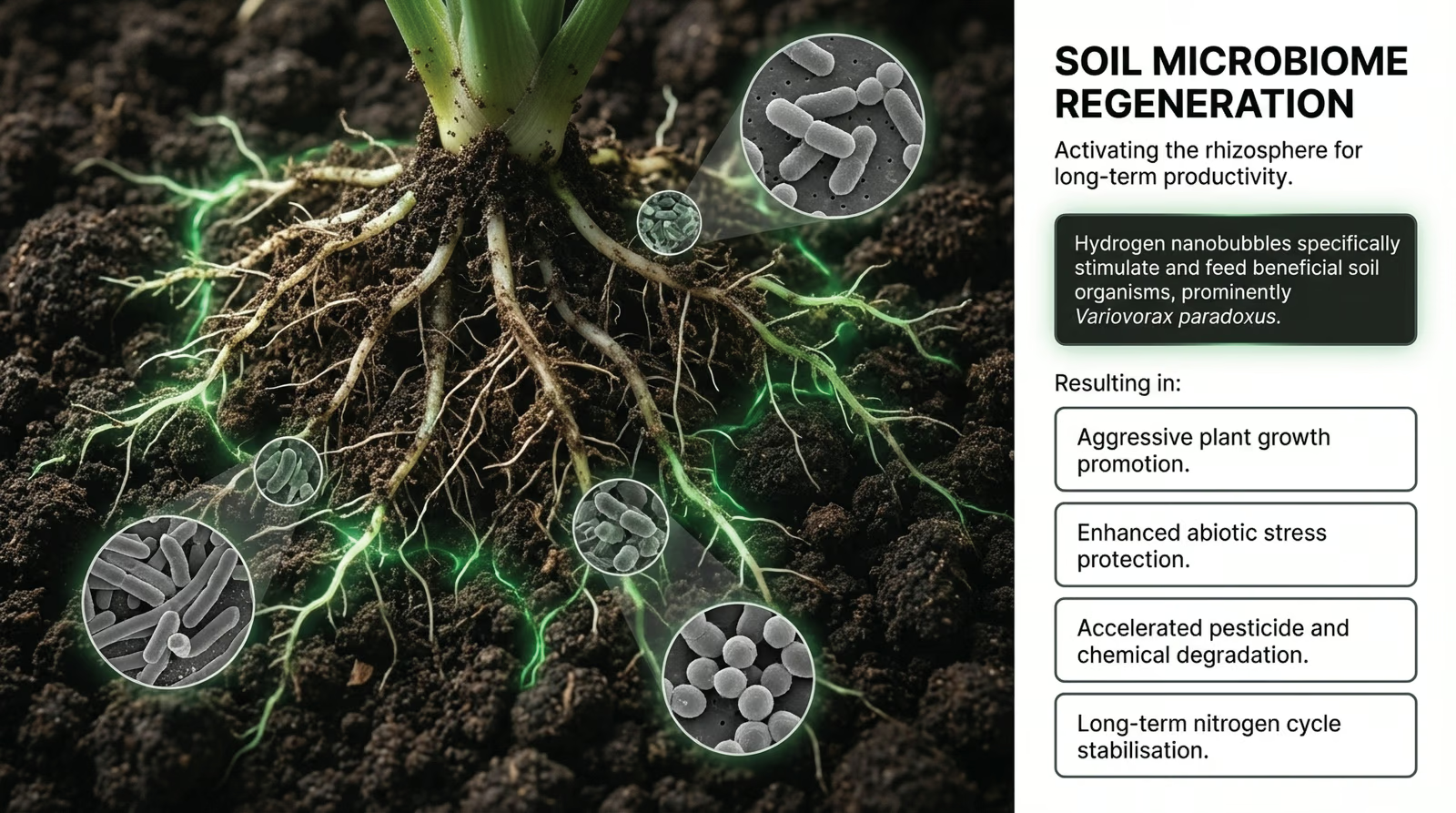
One of the strongest differentiators in the agricultural material is the soil biology and regenerative framing. G-Cav™Agriculture is not presented only as an above-ground crop enhancer. It is also positioned as a platform that can influence the microbial ecosystem of the rhizosphere and the broader biological condition of the soil.
The capability statement specifically highlights the stimulation of beneficial microbial activity and points to organisms such as Variovorax paradoxus, which are associated with plant growth promotion, abiotic stress protection, pesticide-residue degradation, and support of nitrogen-cycle stability.
That framing matters because many agricultural technologies improve output while quietly degrading the system around them. G-Cav™Agriculture is being positioned differently: as a pathway that may support microbial regeneration, healthier aerobic conditions, stronger root systems, and broader long-term soil function.
Presented carefully, that aligns the platform with regenerative agriculture, biological optimisation, and longer-horizon land productivity rather than only short-term input substitution.
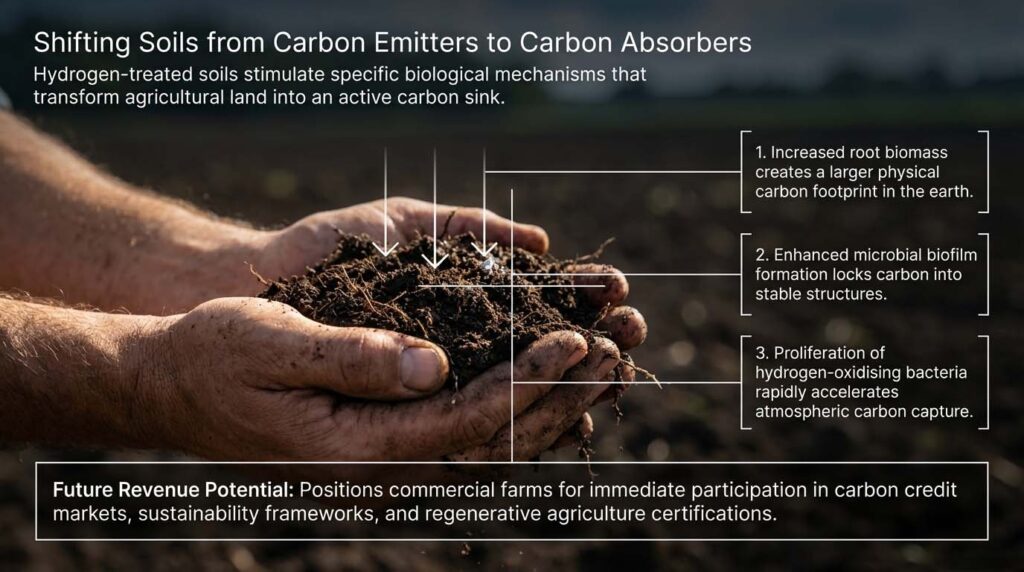
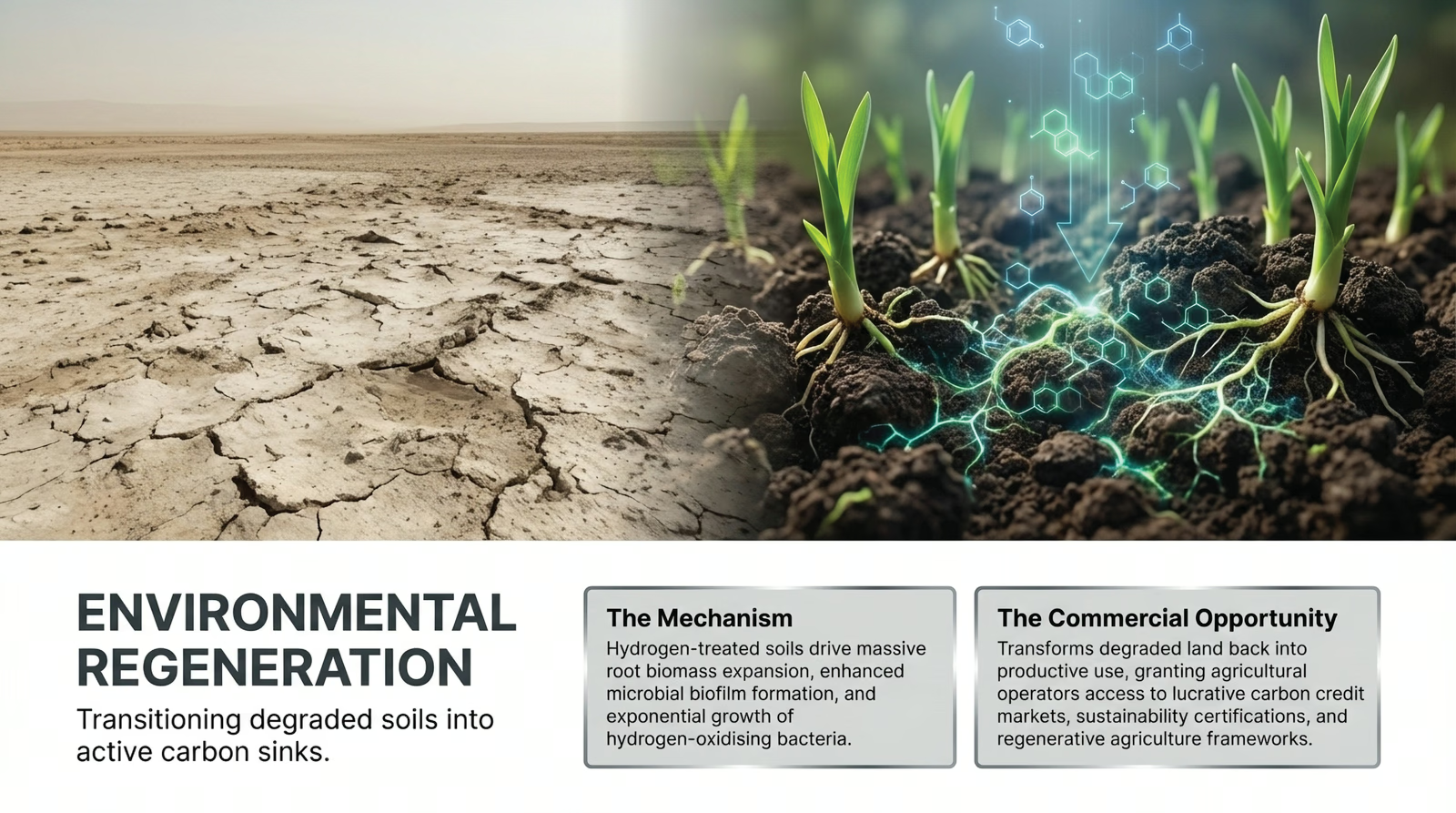
We also want to introduce you to a wider strategic layer: the potential relationship between hydrogen-treated soils, microbial dynamics, root biomass, and carbon behaviour. Hydrogen-exposed soils may shift toward stronger carbon absorption through increased root biomass, enhanced microbial biofilm formation, and hydrogen-oxidising bacterial activity.
This should be considered as a crucial future-facing strategic relevance rather than as an overclaimed carbon-market promise. The practical point is that stronger root development, healthier microbial systems, and improved soil structure may increase the relevance of the platform in regenerative agriculture, sustainability programs, and longer-term land-restoration models.
Reported results also indicate 70–80% improvement in nitrogen and phosphorus uptake and greater than 50% improvement in potassium uptake. These are commercially important signals because they link the platform not only to output, but to nutrient efficiency and input productivity.
These results are not a promise of identical outcomes across every crop and climate, but they provide a credible performance direction strong enough to justify field deployment, crop-specific trials, and region-specific validation.
G-Cav™ is designed to integrate directly into existing irrigation infrastructure, including drip irrigation pump circuits, centre pivots, sprinkler mains, and flood irrigation pumps. The platform improves the functional quality of irrigation water by delivering oxygen, hydrogen, and ozone through a practical field-deployment format.
Oxygen (nature’s electron receiver) supports cellular respiration and helps maintain aerobic conditions around the root zone. In practical terms, that supports nutrient uptake, root vigour, and resistance to the stagnation and anaerobic stress that can compromise crop performance.
Molecular Hydrogen (nature’s electron donor) is directly associated with ATP production, improved yield, stronger flavour development, and better stress tolerance. It is extremely valuable as a biological support pathway relevant to difficult growing conditions such as heat, salinity, drought, heavy metals, and pathogen pressure.
No. Ozone is a strong oxidant and is used for irrigation-system sanitation, not plant metabolism. Its role is to help control algae, biofilm, and unwanted biological load within the irrigation system or source water, improving hygiene and delivery integrity. Sanitising the water and eliminating biological and pathogen threats before entering the farm environment represents major profitability variation potential.
The agriculture platform is positioned for deployment across greenhouse and hydroponic systems, orchards, horticulture, and broadacre irrigation mains. It is intended to begin with crop-specific pilots and scale where field results and economics justify wider rollout.