
Improve dissolved oxygen, nutrient-solution performance, root health, and crop-cycle consistency through nanobubble gas infusion integrated into recirculating hydroponic systems.
Hydroponics is one of the clearest commercial environments for precision gas infusion because the system is already engineered, measurable, and highly responsive. When the quality of the recirculating solution improves, the effect shows up directly in root health, nutrient uptake, crop timing, and operating stability.
Hydroponic production is highly efficient when the root environment remains stable. It becomes expensive when that stability breaks down. Dissolved oxygen can fall under warm conditions, recirculating solution can drift biologically, root-zone stress can accumulate, and small imbalances can quickly translate into slower growth, weaker root systems, inconsistent crop timing, or avoidable disease pressure.
Many growers respond by adjusting nutrients, temperature, sanitation programs, or crop scheduling. Those interventions can be necessary, but they often treat symptoms rather than the underlying gas-liquid conditions inside the nutrient solution itself.
Hydroponics is a strong fit for the G-Cav™ platform, it improves the functional quality of the circulating solution rather than adding another disconnected input into an already controlled system.
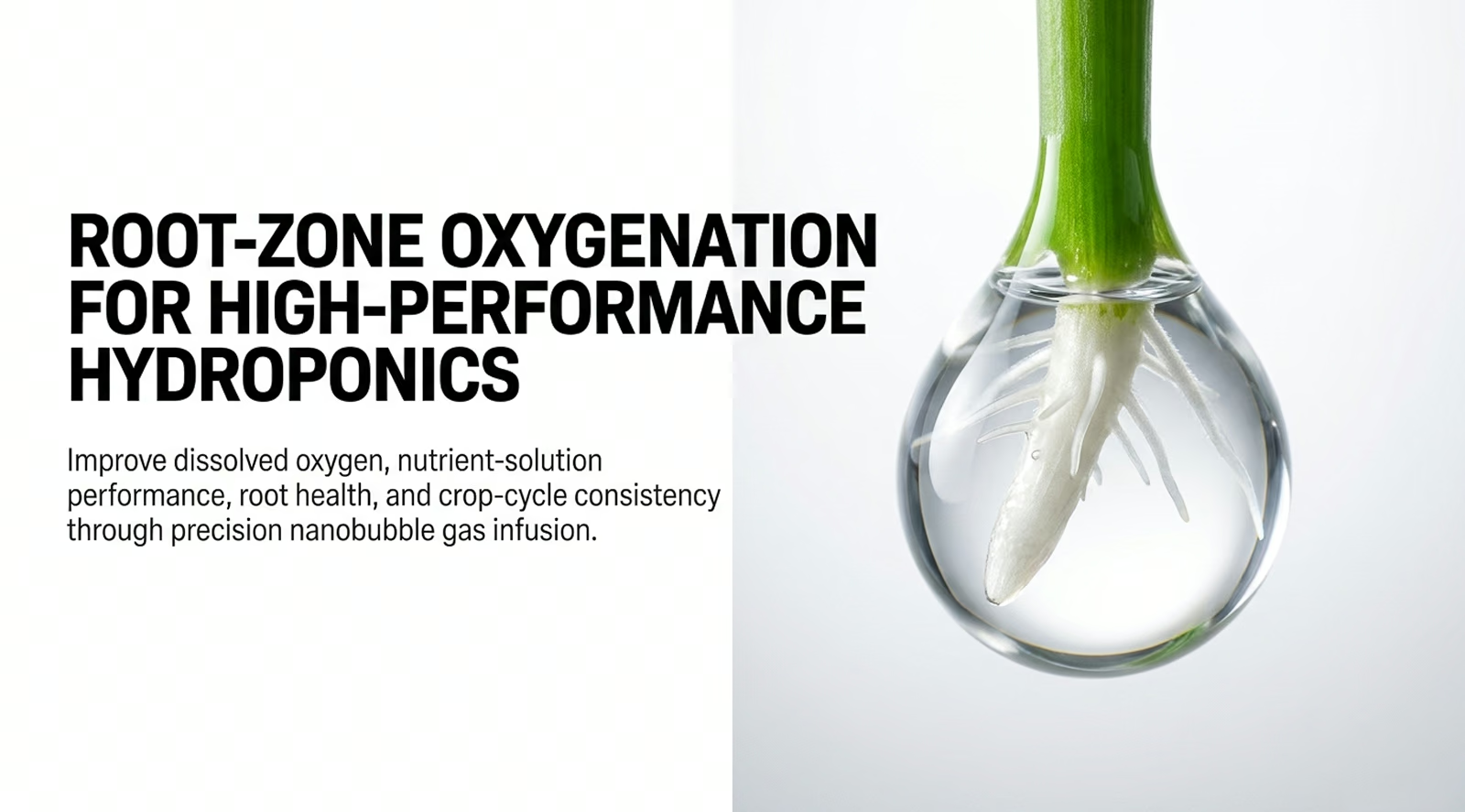
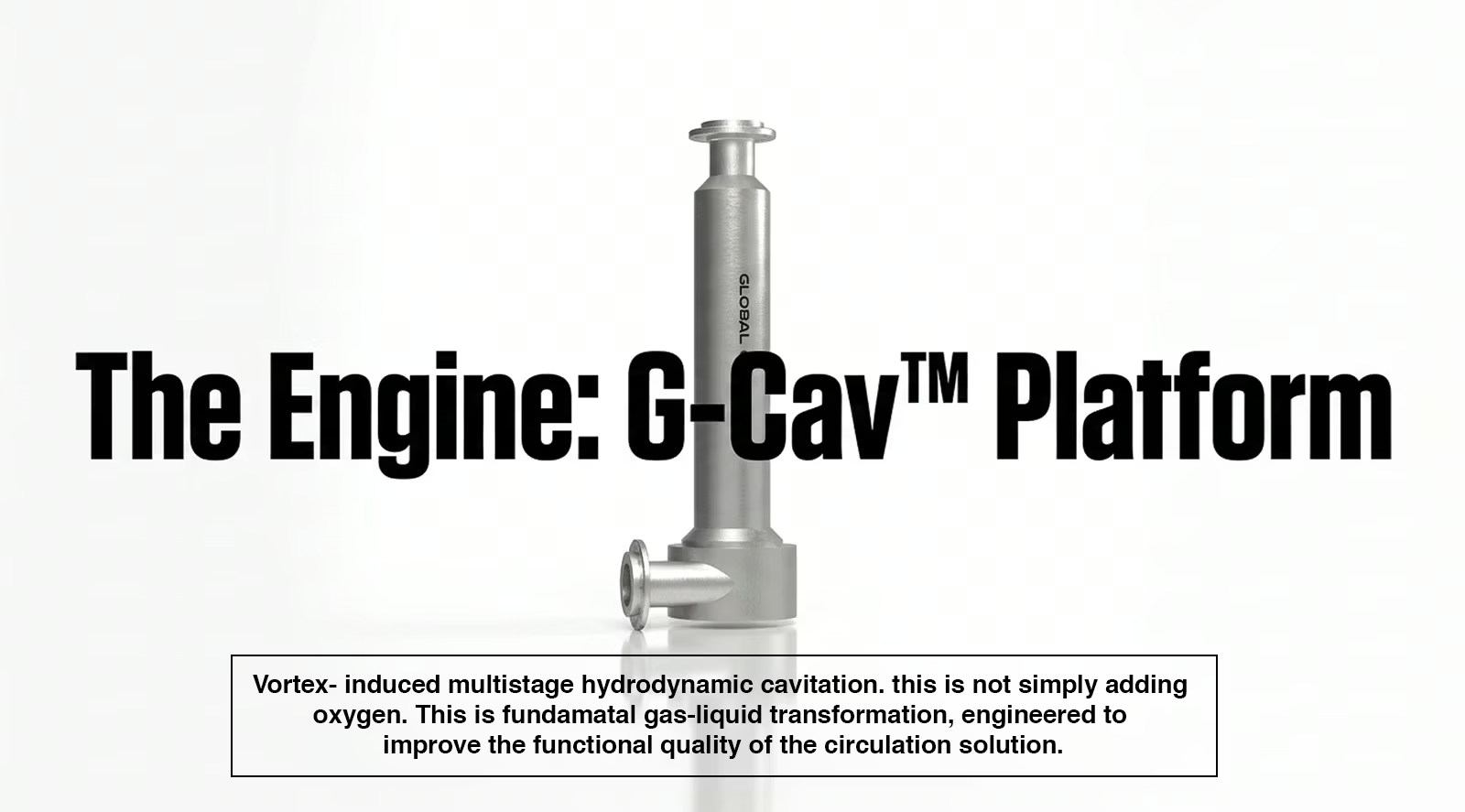
G-Cav™ uses vortex-induced multistage hydrodynamic cavitation to generate extremely fine gas structures with very large surface area and rapid dissolution potential. In a hydroponic circuit, that matters because gas transfer is not an abstract process variable. It directly affects how well the roots can respire and how effectively the plant can maintain energy production and nutrient uptake.
Nanobubbles differ from conventional bubbles because they are far smaller, expose much more gas-water surface area, and dissolve into the liquid much more effectively. That changes the quality and availability of dissolved gas within the recirculating solution.
In practical terms, the goal is not simply to add air. The goal is to improve the quality, availability, and interaction profile of dissolved gases inside the nutrient circuit so the crop operates in a stronger physiological environment from the beginning.
Hydroponics can benefit from the same three-gas framework used across the broader agriculture platform, but the commercial emphasis is different in a soilless environment.
Oxygen is the primary root-zone gas. It is the primary electron receiver in ATP production, supporting nutrient transport, and the aerobic conditions needed for a healthy rhizosphere around the root mass. In hydroponics, where roots sit directly in or beside the recirculating solution, oxygen availability is one of the fastest routes to visible performance change.
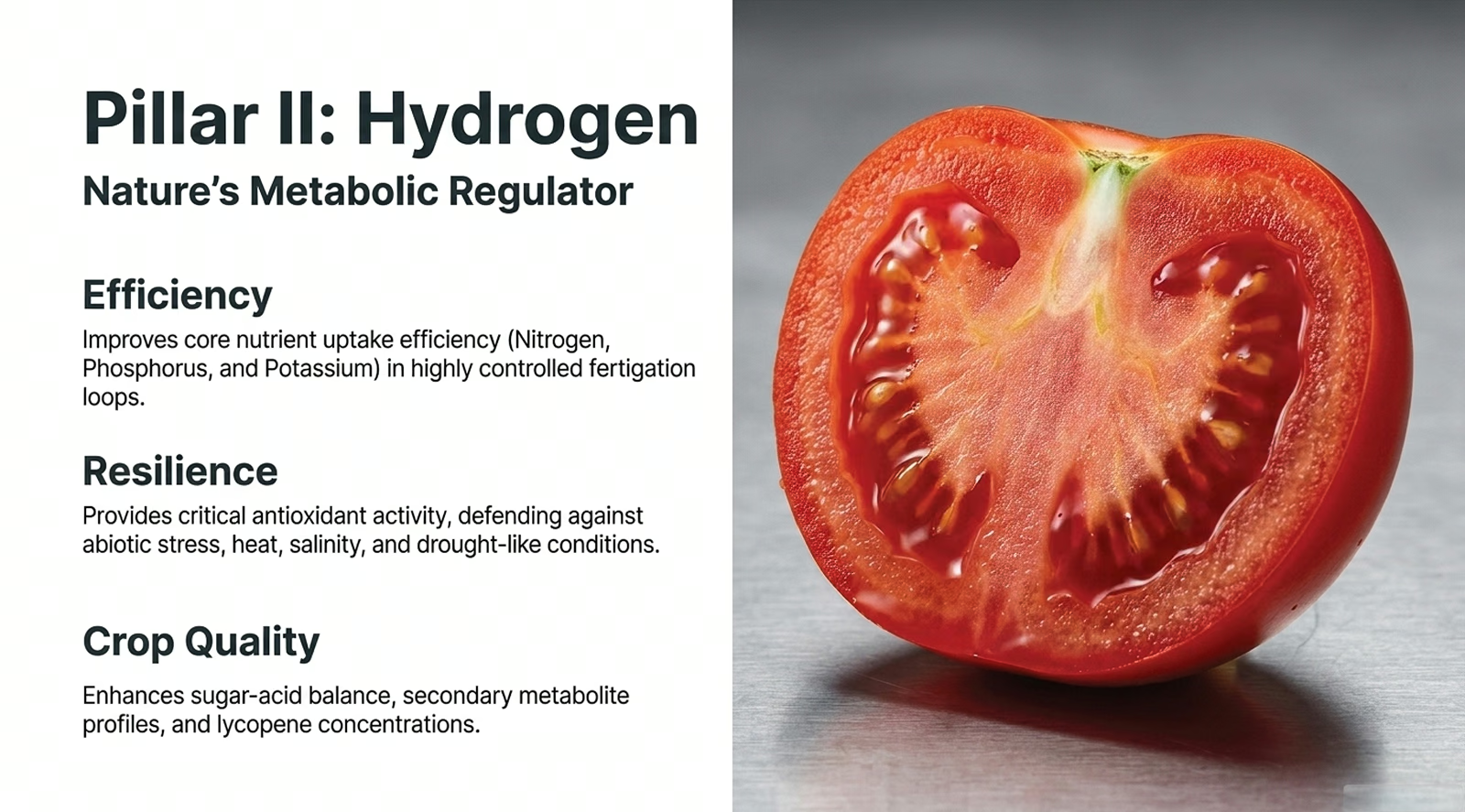
Hydrogen is the metabolic support gas. As nature’s primary electron donor it is a fundamental driver of mitochondrial activity, stress resilience, and efficient biological function under biotic or abiotic pressure. In controlled-environment production, that matters because even small stresses can reduce consistency and slow crop progression through the cycle.
Ozone is the sanitation gas. Its role is not root nutrition, but recirculating-system hygiene. In suitable treatment points, it can help suppress algae, biofilm, and pathogen pressure in the water-management infrastructure so the delivery pathway remains cleaner and more stable.
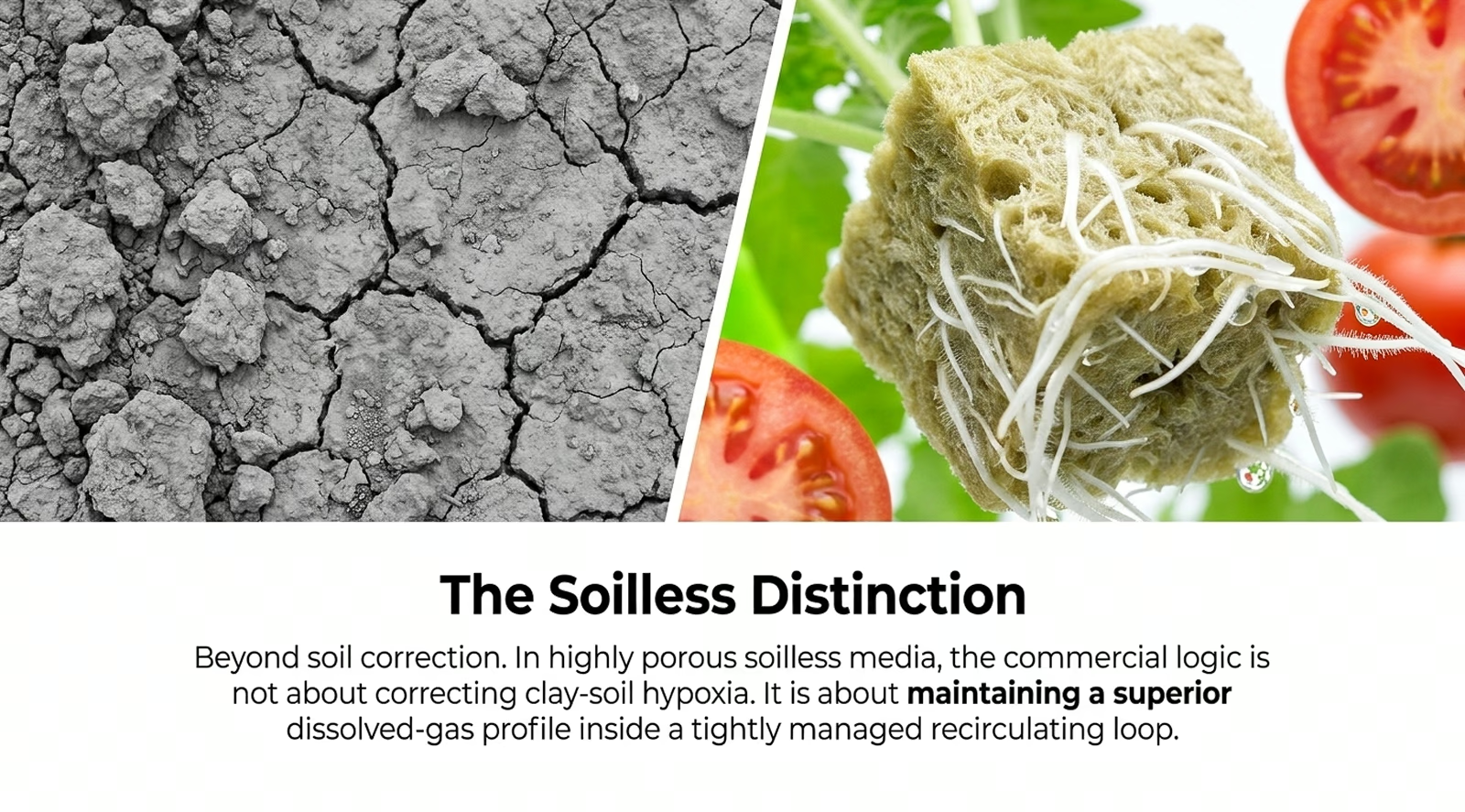
Hydroponics requires one important distinction: the value proposition is not exactly the same as in soil or heavy-clay irrigation systems. In soil systems, oxygenated irrigation often works by correcting oxygen limitation created by slow re-aeration after irrigation. In highly porous soilless media such as rockwool and perlite, that exact field-soil oxygen limitation model does not apply in the same way.
That does not weaken the hydroponics case. It sharpens it. In hydroponics, the strongest commercial logic is not about correcting clay-soil hypoxia. It is about maintaining a better dissolved-gas profile inside a tightly managed recirculating solution, supporting stronger root-zone performance, system hygiene, and crop consistency in a high-control environment.
Hydrogen is even more relevant here because its biological role is plant-centred rather than soil-centred, and ozone remains relevant because biosecurity and water quality are critical in recirculating systems.
The most credible commercial outcomes in hydroponics are stronger root-zone oxygen availability, healthier root systems, more stable nutrient-solution performance, support for faster or more consistent crop cycling, and reduced biological instability in recirculating water.
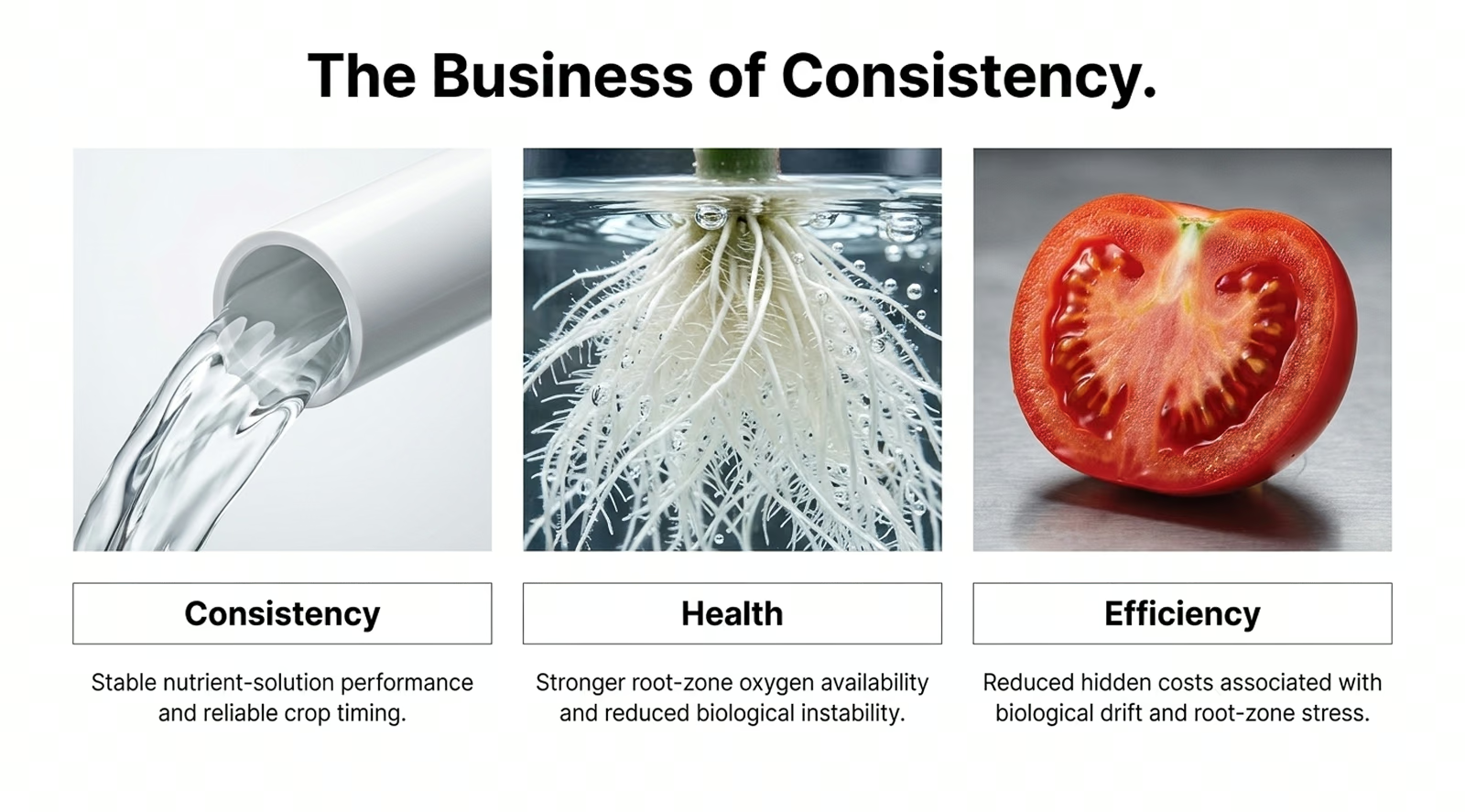
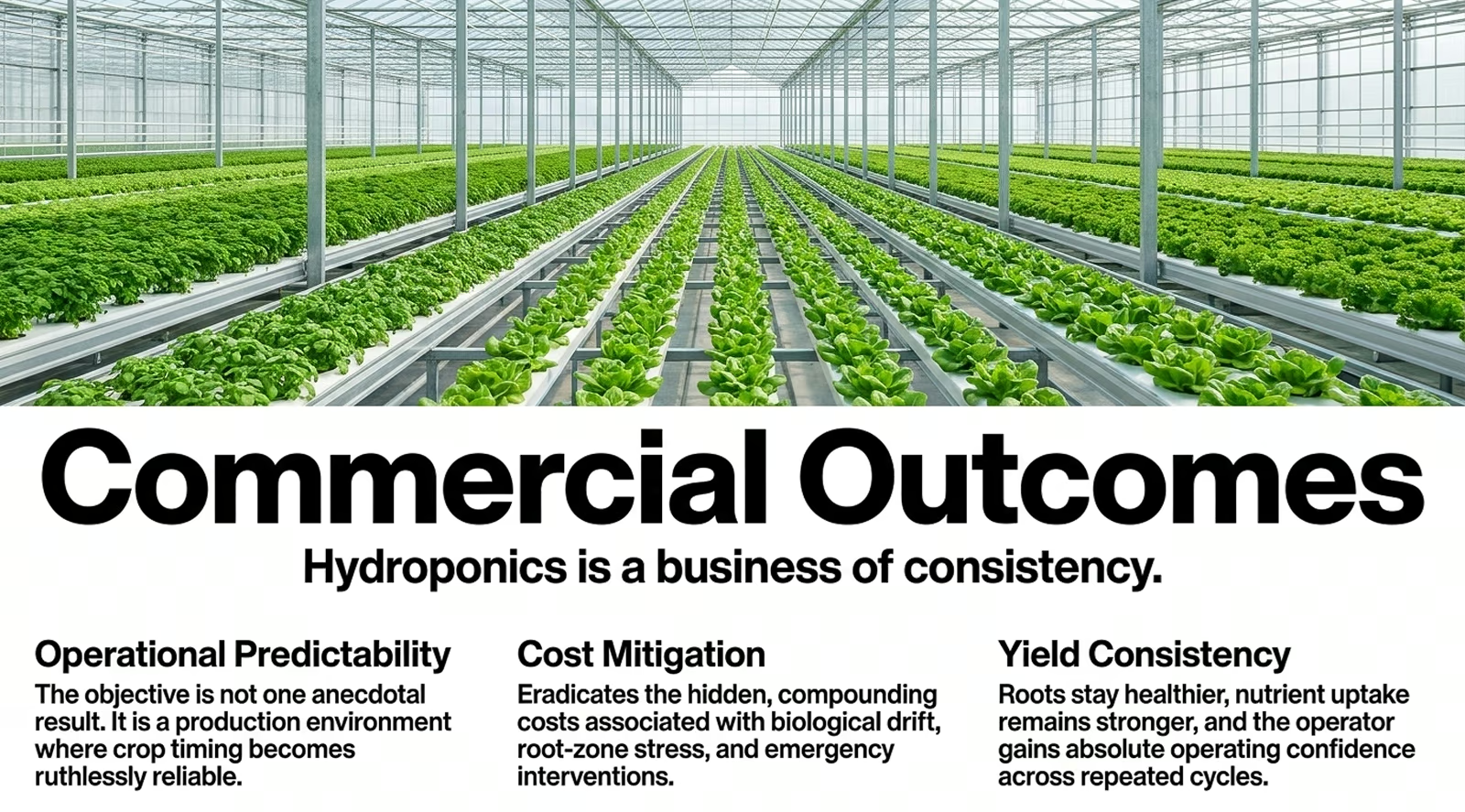
Hydroponics is a business of consistency. The objective is not one anecdotal result. It is a production environment where roots stay healthier, nutrient uptake remains stronger, crop timing becomes more reliable, and the grower has more operating confidence across repeated cycles.
That is where gas infusion becomes commercially meaningful. It strengthens the root environment, improves the quality of the circulating solution, and can reduce the hidden costs associated with biological drift and root-zone stress.
The wider agriculture literature behind the G-Cav™ platform strengthens the hydroponics story in three areas: stress resilience, nutrient efficiency, and produce quality. Molecular hydrogen has been associated with improved ATP-related energy pathways, stronger antioxidant defence, increased secondary metabolite profiles and better performance under salinity, heat, drought-like stress, heavy metals, and pathogen pressure.
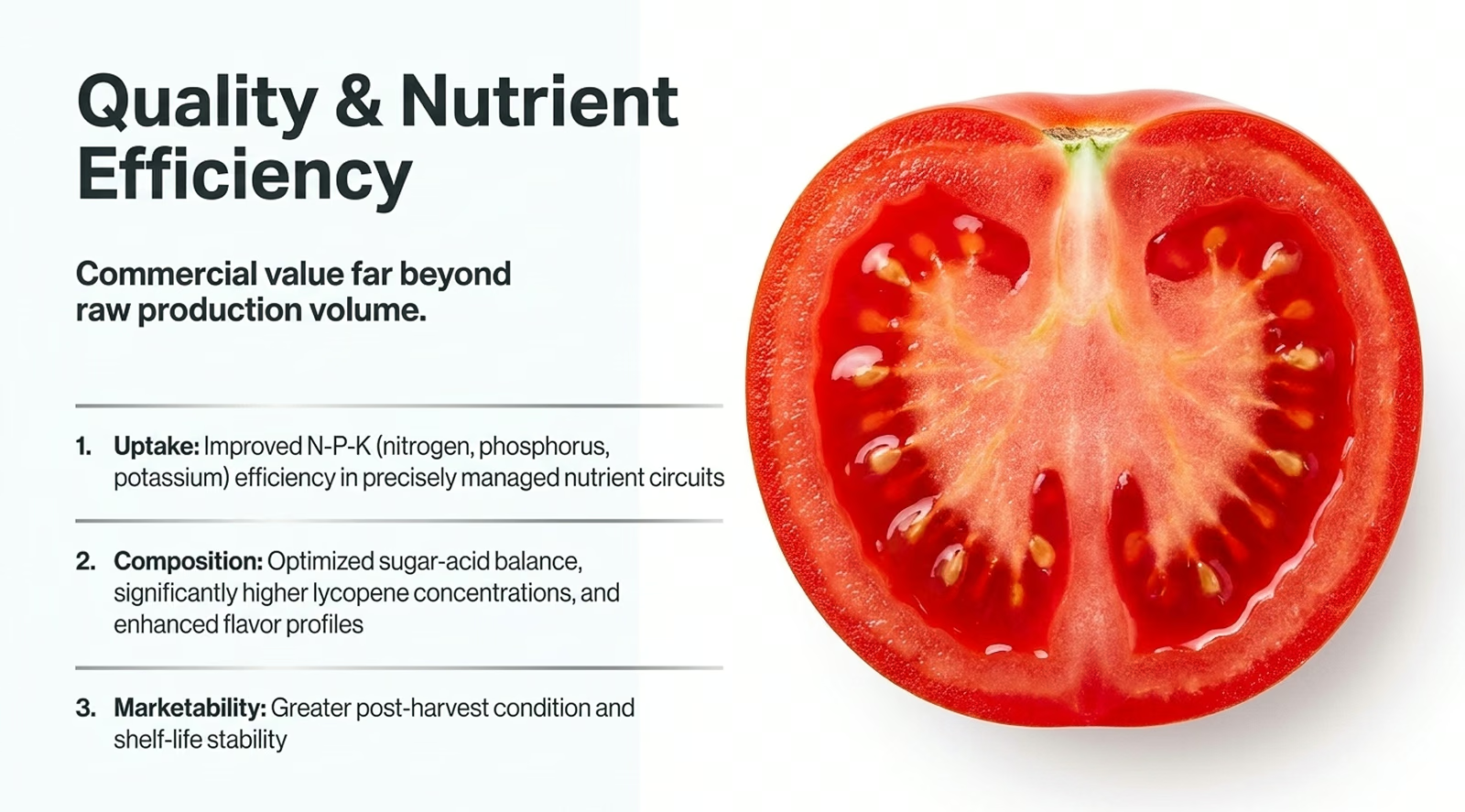
Hydrogen-supported systems have also shown stronger nutrient uptake efficiency, including improved nitrogen, phosphorus, and potassium uptake in crop studies. In a hydroponic setting, where nutrient management is already precise and expensive, any improvement in how efficiently the plant uses the circulating solution has commercial relevance.
Quality matters as well. Reported improvements in sugar-acid balance, antioxidant compounds, flavour-related compounds, and post-harvest condition in horticultural crops support the broader idea that better gas-infused water can influence not just growth, but final crop quality.
Hydroponics is not one single system type. G-Cav™ can be integrated into nutrient-film technique systems, deep water culture, greenhouse recirculating loops, fertigation circuits, and other controlled-environment agriculture systems where water is already being pumped, recirculated, or conditioned.
The strongest commercial fit is where the grower values measurable control, stable recirculation, and a practical pilot-to-scale pathway. Because the platform installs inline with existing pump circuits, it can be evaluated without forcing a complete redesign of the growing system.
That ease of integration matters. A hydroponic operator does not want another complex subsystem that disrupts production. The platform needs to enter the existing solution-management pathway cleanly, then prove itself through root response, crop consistency, and operating economics.
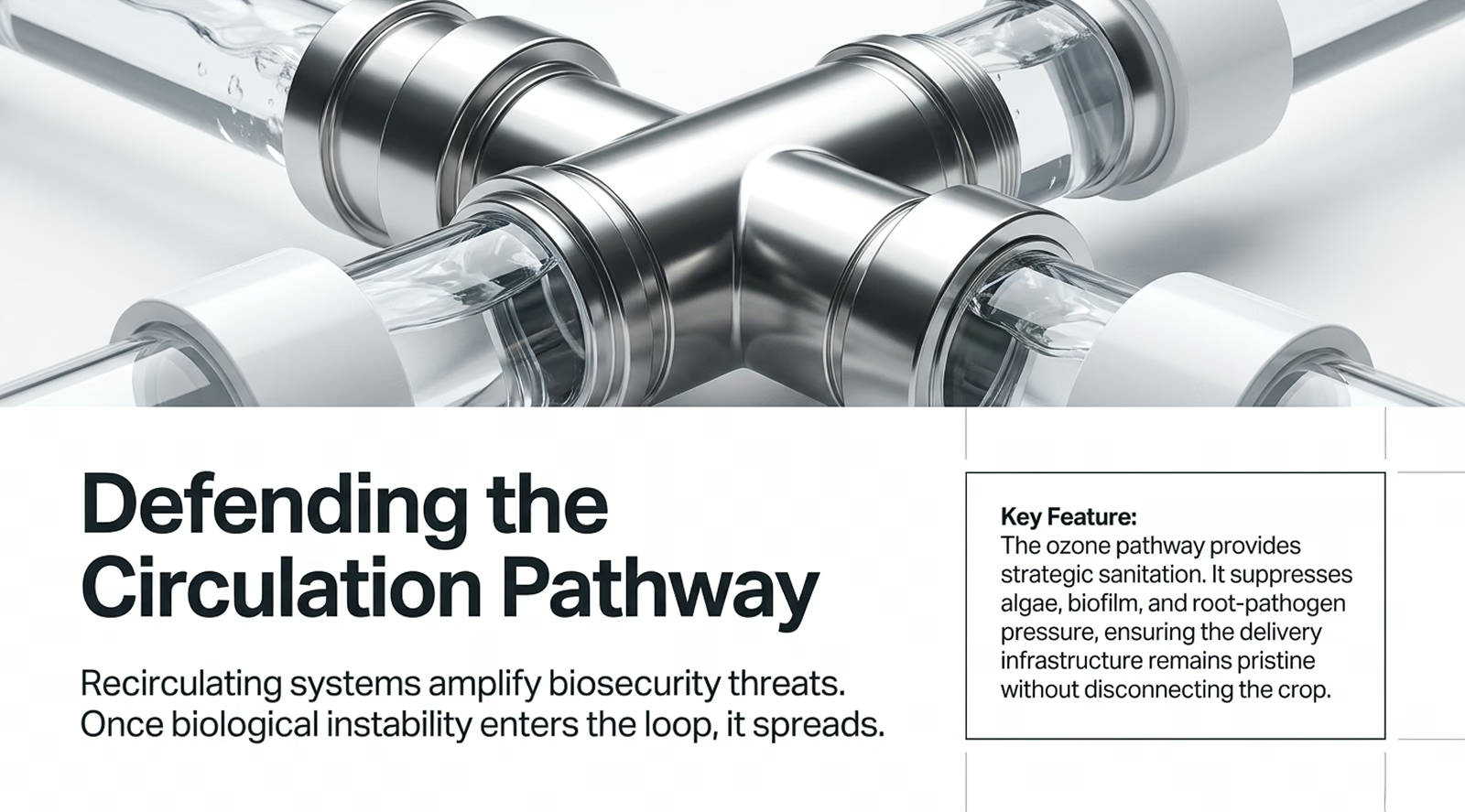
Recirculating hydroponic systems are highly efficient, but they can also amplify biosecurity problems when algae, biofilm, or root-pathogen pressure begins to build in the water circuit. Once biological instability enters the loop, it can spread quickly across the production system.
That is where the ozone pathway adds strategic value. Used appropriately, it can support cleaner irrigation and recirculation infrastructure, reduce biological fouling, and strengthen the hygiene of the delivery system itself.
This makes hydroponics a broader process platform story rather than only a root-oxygenation story. The same installed system can help support root performance, solution quality, and the sanitation of the circulation pathway.
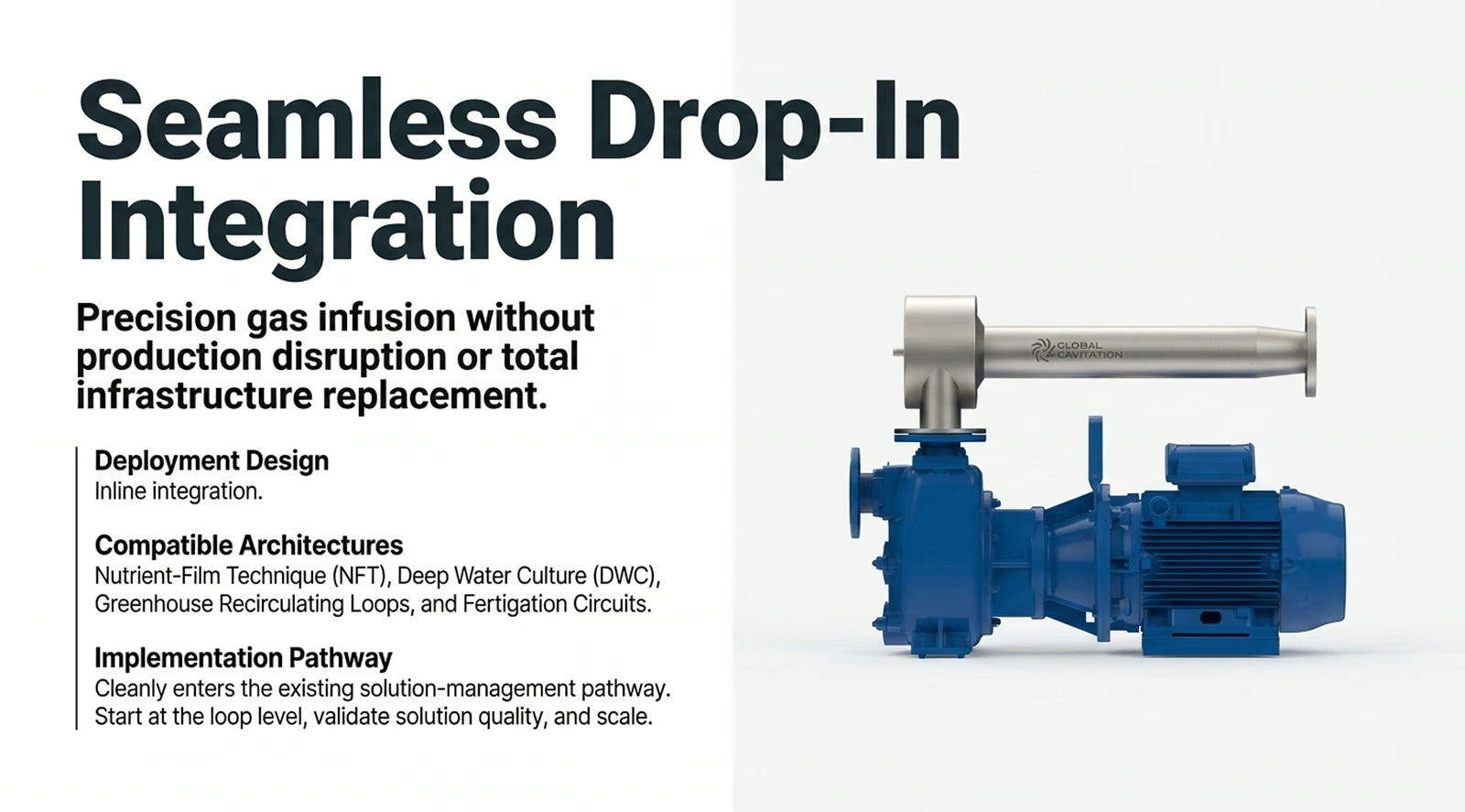
The inline design of G-Cav™ is one of its strongest practical advantages. It can integrate with existing irrigation and recirculation systems without requiring total infrastructure replacement. That is particularly important in controlled-environment agriculture, where downtime, complexity, and retrofit friction all affect adoption decisions.
The broader agriculture product range also supports this fit, with smaller units already aligned to greenhouse and hydroponic flow requirements and larger units available where recirculating volumes or multi-zone systems require higher throughput.
That gives hydroponics operators a realistic pilot pathway: start at the loop level, validate the effect on solution quality and crop response, then scale into broader deployment if the economics justify it.
Hydroponics demonstrates an important point about the wider Global Cavitation platform: one core cavitation and gas-infusion engine can be adapted to a high-control agricultural environment just as effectively as it can be adapted to irrigation, aquaculture, wastewater, or industrial treatment contexts.
For the right partner, hydroponics can sit inside a broader controlled-environment agriculture and horticulture licensing strategy. The market already understands the value of root-zone management, water quality, system hygiene, and crop consistency. The opportunity is to offer a stronger platform-level solution to those same problems.
That makes Hydroponics more than a niche page. It becomes a practical entry vertical for regional partners working across greenhouses, hydroponic facilities, nurseries, protected cropping, and related high-control cultivation markets.
Hydroponics is a high-control environment where root-zone conditions, dissolved oxygen, nutrient-solution stability, and recirculating-system hygiene all affect crop performance. G-Cav™ is positioned to improve the functional quality of the recirculating solution rather than adding another disconnected input.
Oxygen is the primary root-zone gas in hydroponics. It supports root respiration, ATP production, nutrient transport, and the aerobic conditions needed for a healthy rhizosphere around the root mass.
Hydrogen is positioned as a metabolic support gas associated with mitochondrial activity, stress resilience, antioxidant response, improvement of secondary metabolite production, and more efficient biological function under pressure. In controlled-environment production, that matters because even small stresses can reduce crop consistency.
Yes. One of the core positions in this sector is CIP enhancement. The platform is presented as strengthening oxidative cleaning pathways and improving cleaning performance across hygiene-critical plant environments.
No. The hydroponics material makes a clear distinction between soil systems and soilless systems. In hydroponics, the strongest commercial logic is maintaining the essential dissolved-gas profile required by the plant, improving yield and growth rate, stronger root-zone performance, and cleaner recirculating-system hygiene in a tightly managed production environment.