
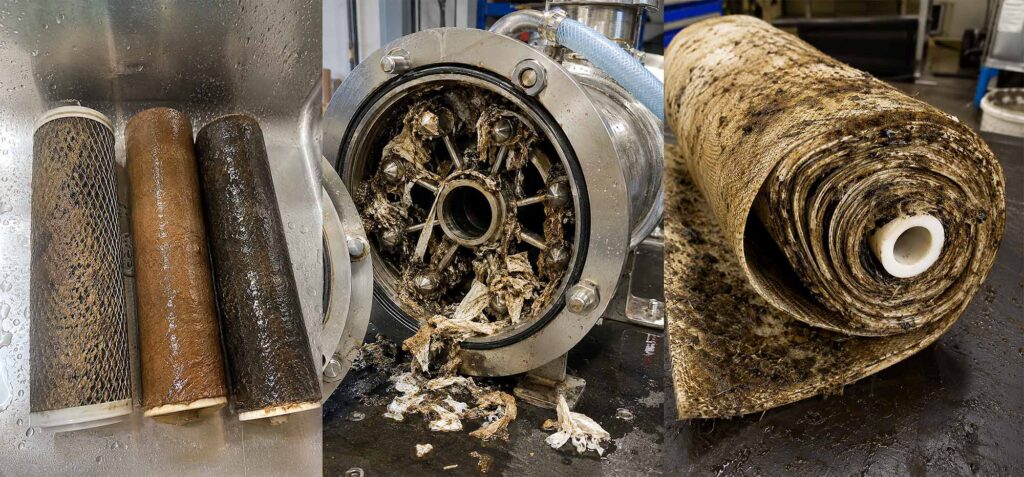
In industrial water, wastewater, aquaculture, irrigation, remediation, and process-water environments, system performance is rarely limited by design intent alone. It is often limited by what happens after installation. Fouling builds. Passages narrow. Membranes lose efficiency. Diffusers scale up. Filters blind off. Biofilm develops. Solids accumulate. Oils, surfactants, minerals, and biological load gradually reduce the effectiveness of equipment that looked efficient on paper.
This is one of the most expensive hidden problems in fluid treatment and gas-transfer systems. A system may appear technically sound at the beginning, yet become commercially weak once fouling, clogging, cleaning cycles, downtime, consumable replacement, or declining transfer efficiency are taken into account.
That is why fouling and clogging are not minor maintenance issues. They are central commercial issues. They affect uptime, operating cost, labour burden, gas-transfer performance, treatment consistency, and long-term return on capital.
In industrial water, wastewater, aquaculture, irrigation, remediation, and process-water environments, system performance is rarely limited by design intent alone. It is often limited by what happens after installation. Fouling builds. Passages narrow. Membranes lose efficiency. Diffusers scale up. Filters blind off. Biofilm develops. Solids accumulate. Oils, surfactants, minerals, and biological load gradually reduce the effectiveness of equipment that looked efficient on paper.
This is one of the most expensive hidden problems in fluid treatment and gas-transfer systems. A system may appear technically sound at the beginning, yet become commercially weak once fouling, clogging, cleaning cycles, downtime, consumable replacement, or declining transfer efficiency are taken into account.
That is why fouling and clogging are not minor maintenance issues. They are central commercial issues. They affect uptime, operating cost, labour burden, gas-transfer performance, treatment consistency, and long-term return on capital.
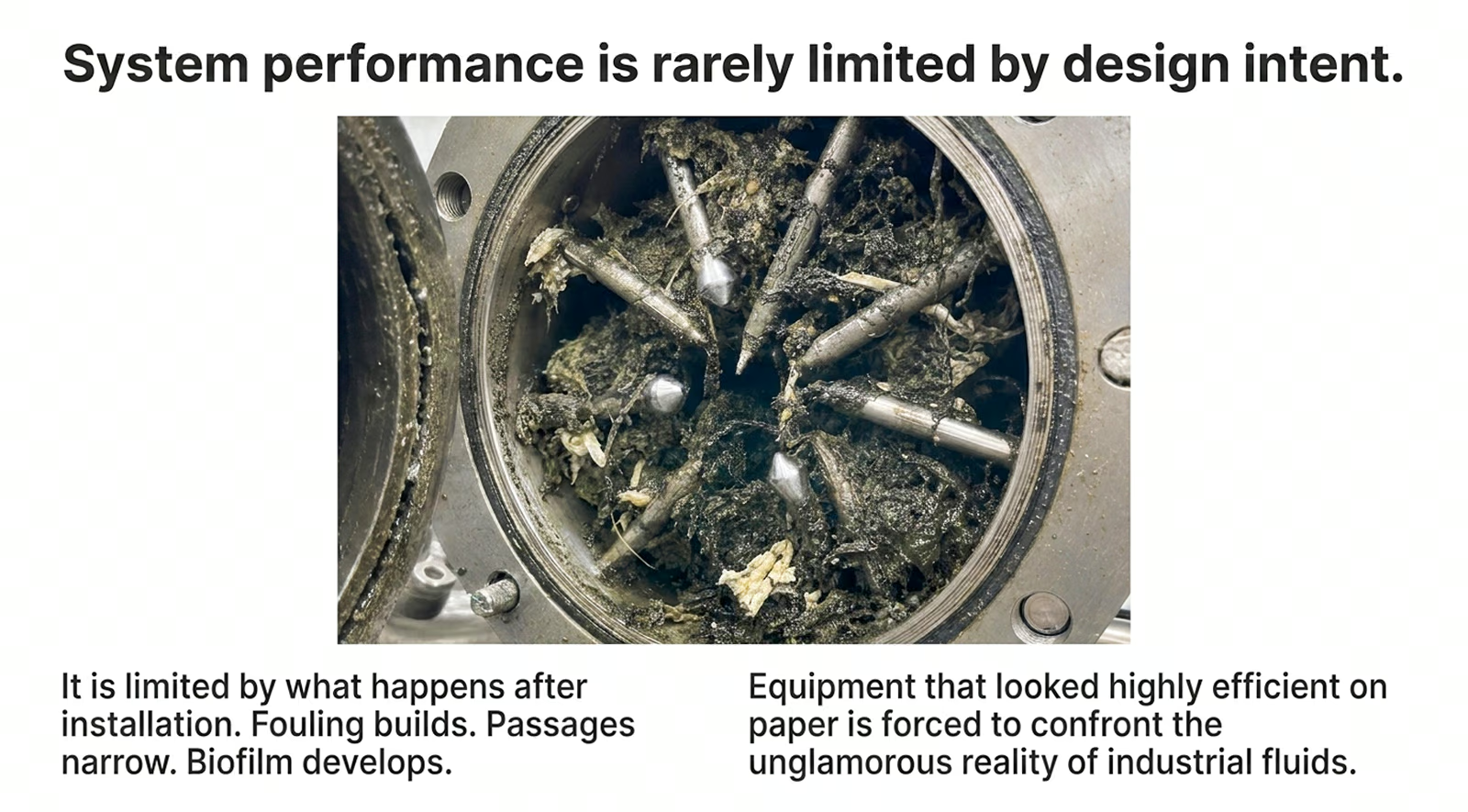
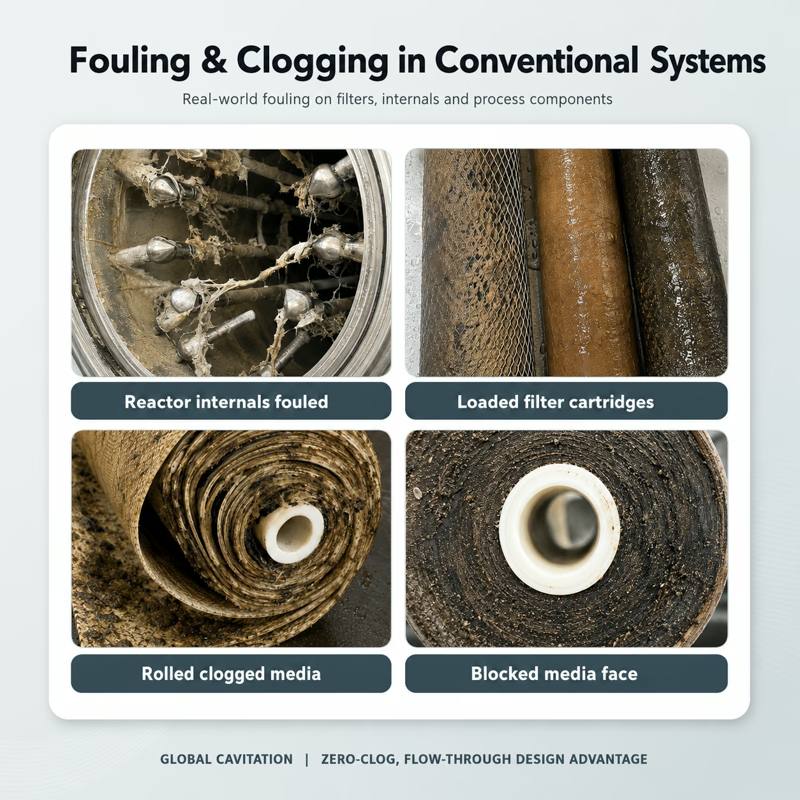
Fouling is the unwanted accumulation of material on surfaces, passages, membranes, pores, emitters, diffusers, or treatment components during operation. The exact type of fouling depends on the environment, but the effect is always the same: the system becomes less effective as contamination builds.
In practical terms, fouling may include:
Once this begins, the system often requires more energy, more cleaning, more intervention, or more replacement just to maintain minimal performance requirements.
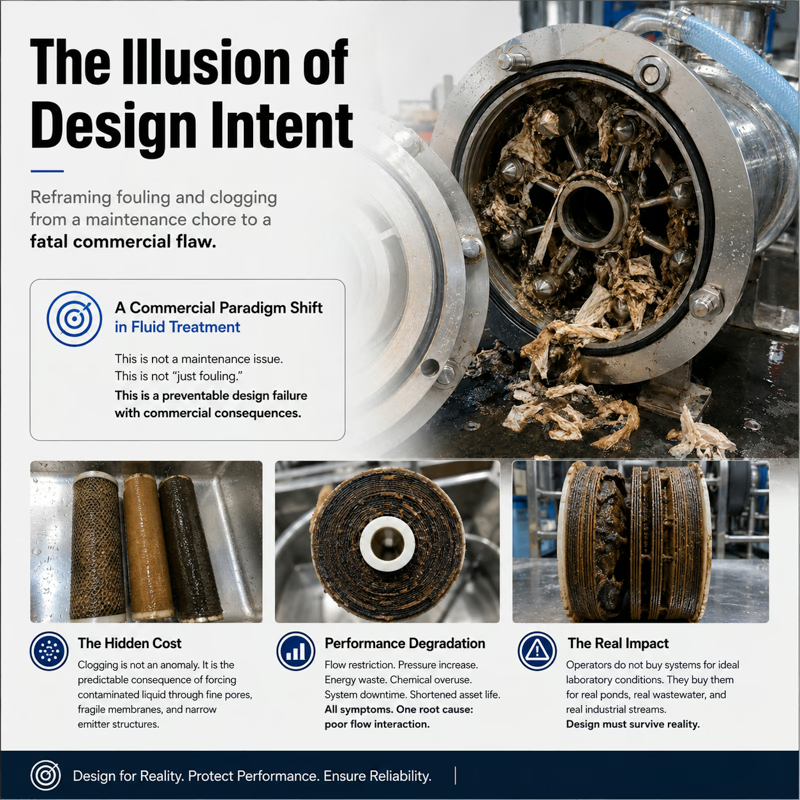
Clogging is what happens when fouling progresses far enough to restrict flow, reduce gas passage, block distribution points, or interfere with hydraulic performance.
In many conventional systems, clogging is not an unusual event. It is a predictable consequence of trying to move gas or liquid through fine pores, narrow passages, fragile membranes, emitter points, or small diffusion structures in difficult real-world fluids.
This is especially common where the operating environment contains:
In those environments, the question is not whether fouling can happen. The question is how quickly it happens, how expensive it is to manage, and whether the system can remain commercially useful once it does.
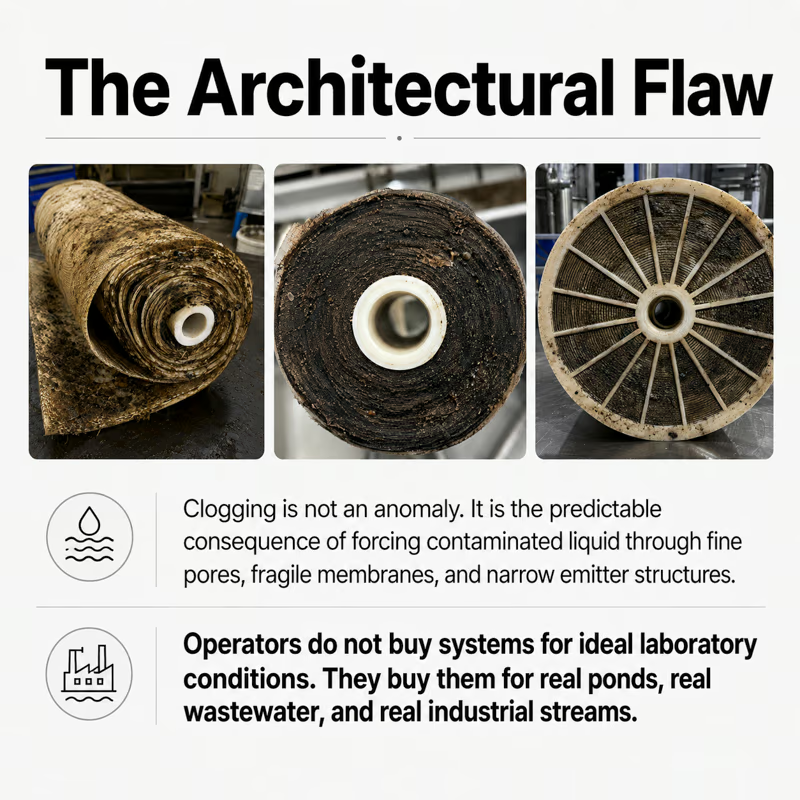
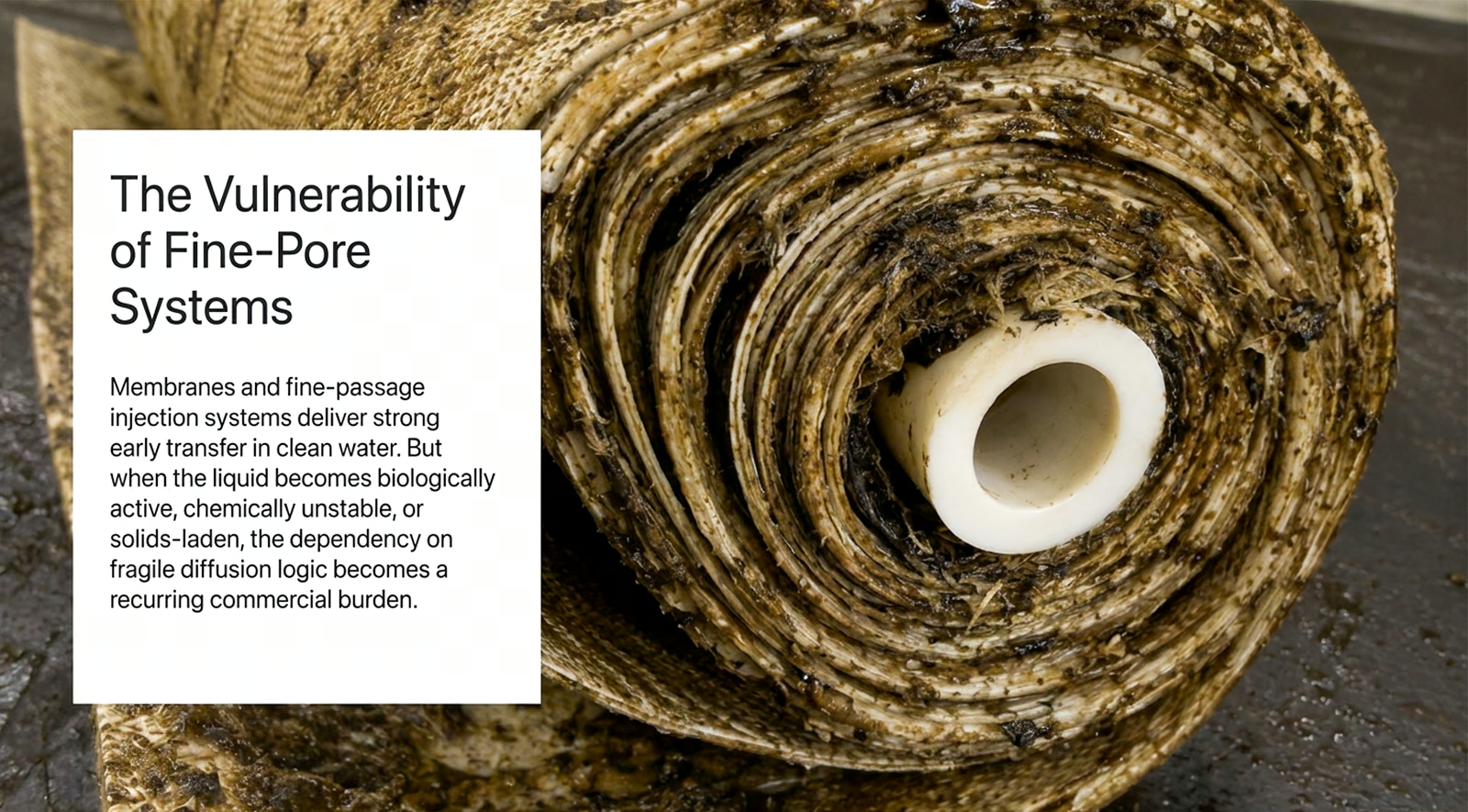
Many conventional aeration, diffusion, and membrane-based systems perform best in relatively clean conditions. Their weakness appears when the liquid environment becomes biologically active, chemically unstable, solids-laden, or contamination-rich.
A diffuser may work well at first, then lose efficiency as pores foul. A membrane may deliver strong early transfer, then scale, clog, or degrade over time. A fine-passage injection system may look precise in theory, then become maintenance-heavy in practice.
This matters because operators do not buy treatment systems for ideal laboratory conditions. They buy them for real ponds, real tanks, real process loops, real wastewater, real irrigation systems, and real industrial water streams.
Once fouling and clogging become part of the operating reality, the apparent efficiency of a conventional system can deteriorate quickly. Gas transfer drops. Cleaning frequency rises. Downtime increases. Labour cost increases. Consumables become a recurring burden. Reliability falls.
At that point, the problem is no longer only technical. It is commercial.
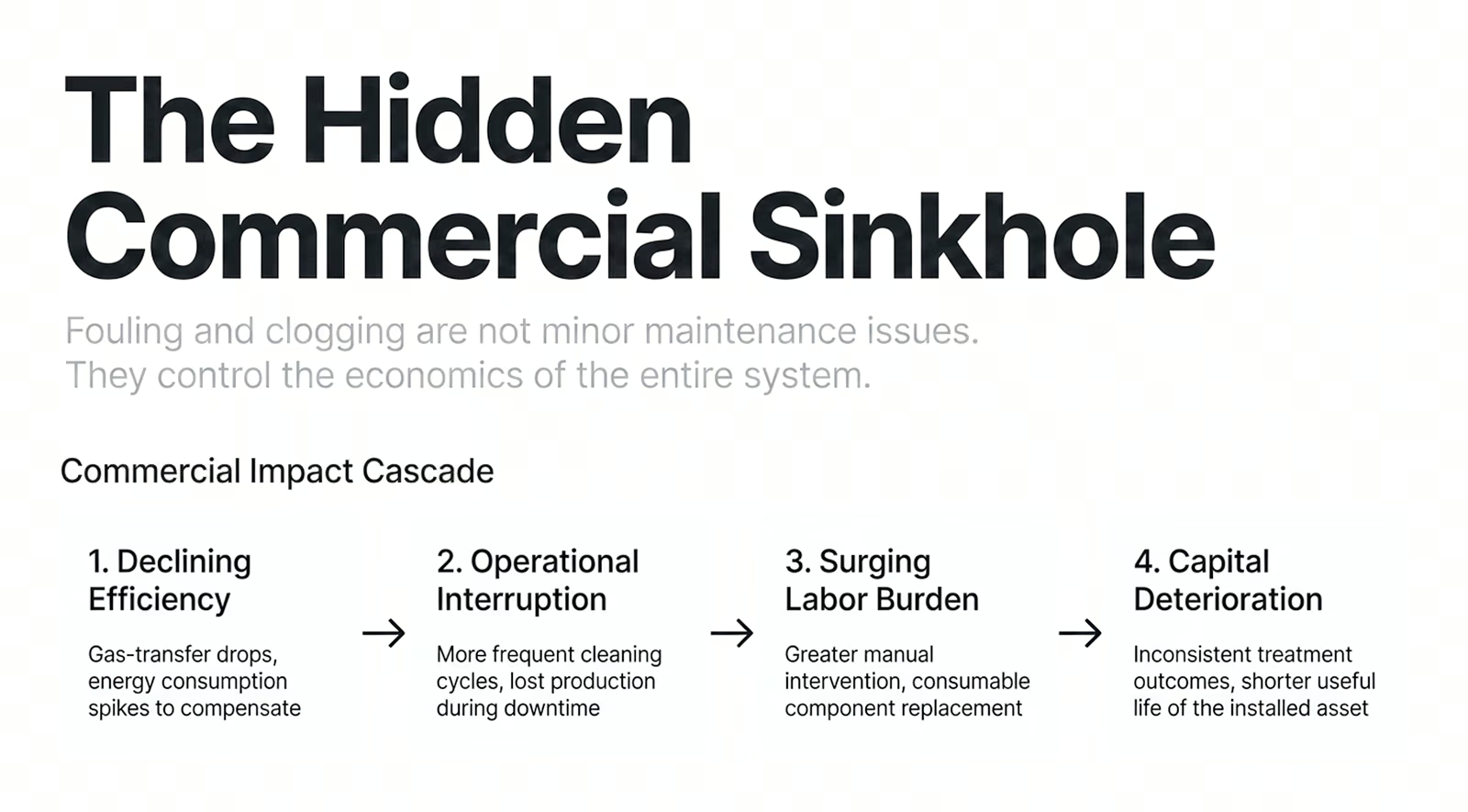
Fouling and clogging create multiple layers of cost, many of which are not obvious when the system is first specified.
These costs may include:
In some sectors, this cost appears as reduced oxygen performance. In others, it appears as blocked irrigation emitters, fouled process lines, unstable sanitation performance, or rising wastewater-treatment burden. In all cases, the underlying issue is the same: contamination is being allowed to control the economics of the system.
G-Cav™ is designed around a fundamentally different approach.
Instead of relying on clog-prone membranes, fine porous media, or fragile gas-transfer components in the active treatment zone, G-Cav™ uses vortex-induced multistage hydrodynamic cavitation to intensify gas-liquid interaction inside a flowing stream.
G-Cav™ is membrane-free. It is designed with no moving internal parts in the cavitation zone. It uses a flow-through architecture rather than a fine-pore diffusion model. It is built for environments where conventional systems often lose performance through fouling, scaling, or clogging.
This is one of the strongest reasons the platform has relevance across difficult sectors such as aquaculture, wastewater, agriculture, remediation, mining, oil and gas, and industrial process water.
The design logic is not simply about generating transfer. It is about generating transfer in a way that remains commercially usable in real operating environments.
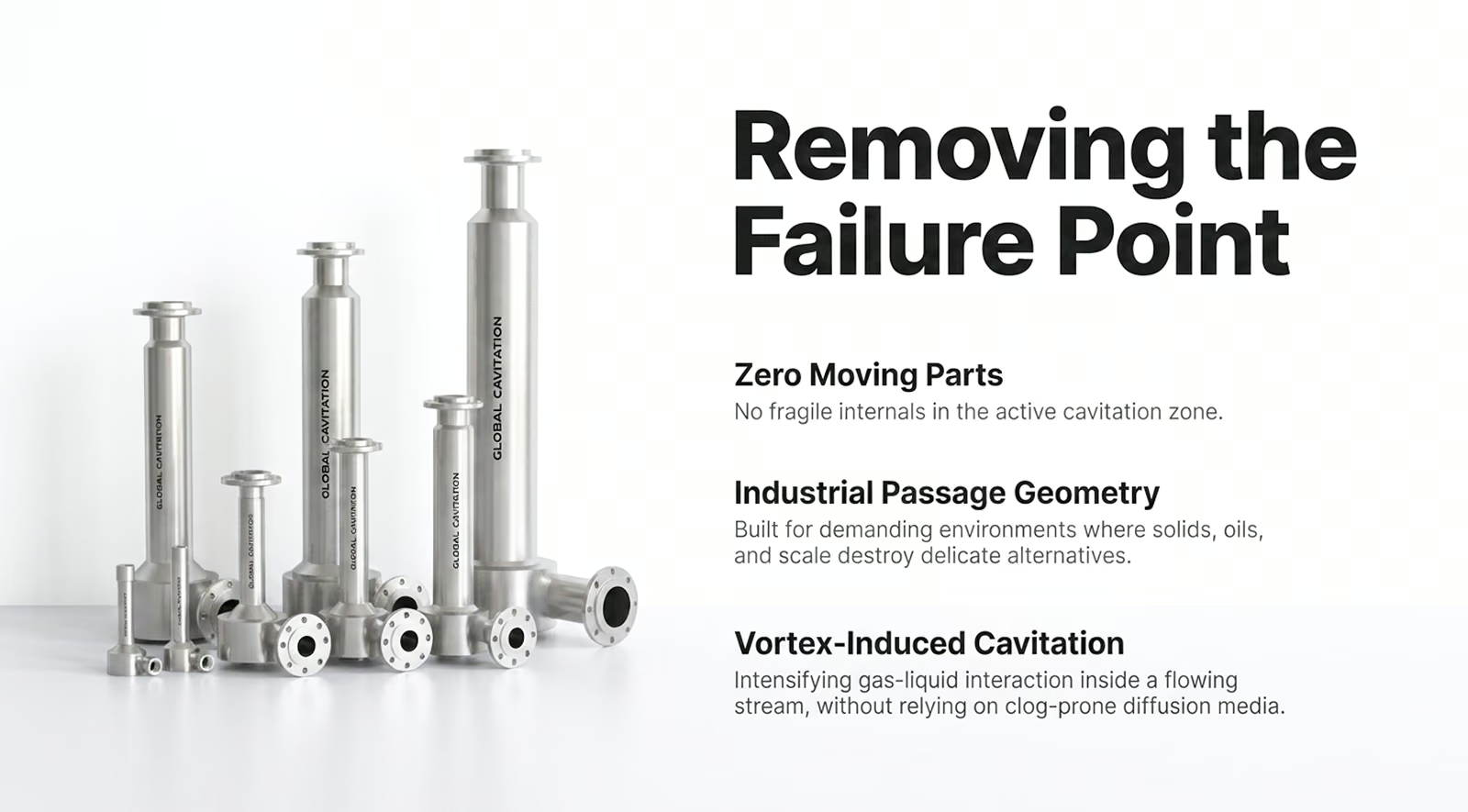
A membrane-free system removes one of the most common failure points in conventional gas-transfer architecture.
Membranes can be effective in clean, stable conditions, but they are also vulnerable. Once exposed to scale, biofilm, solids, oils, or process contamination, performance can decline, cleaning requirements rise, and replacement becomes a recurring cost.
By removing that fragile dependency, G-Cav™ offers a more robust pathway for applications where the liquid cannot be assumed to stay clean.
This does not mean no maintenance is ever required anywhere in a broader installation. It means the core cavitation and gas-infusion mechanism is not dependent on the same clog-prone diffusion logic that limits many conventional systems.
That is a major operational advantage.
Another major difference is passage geometry.
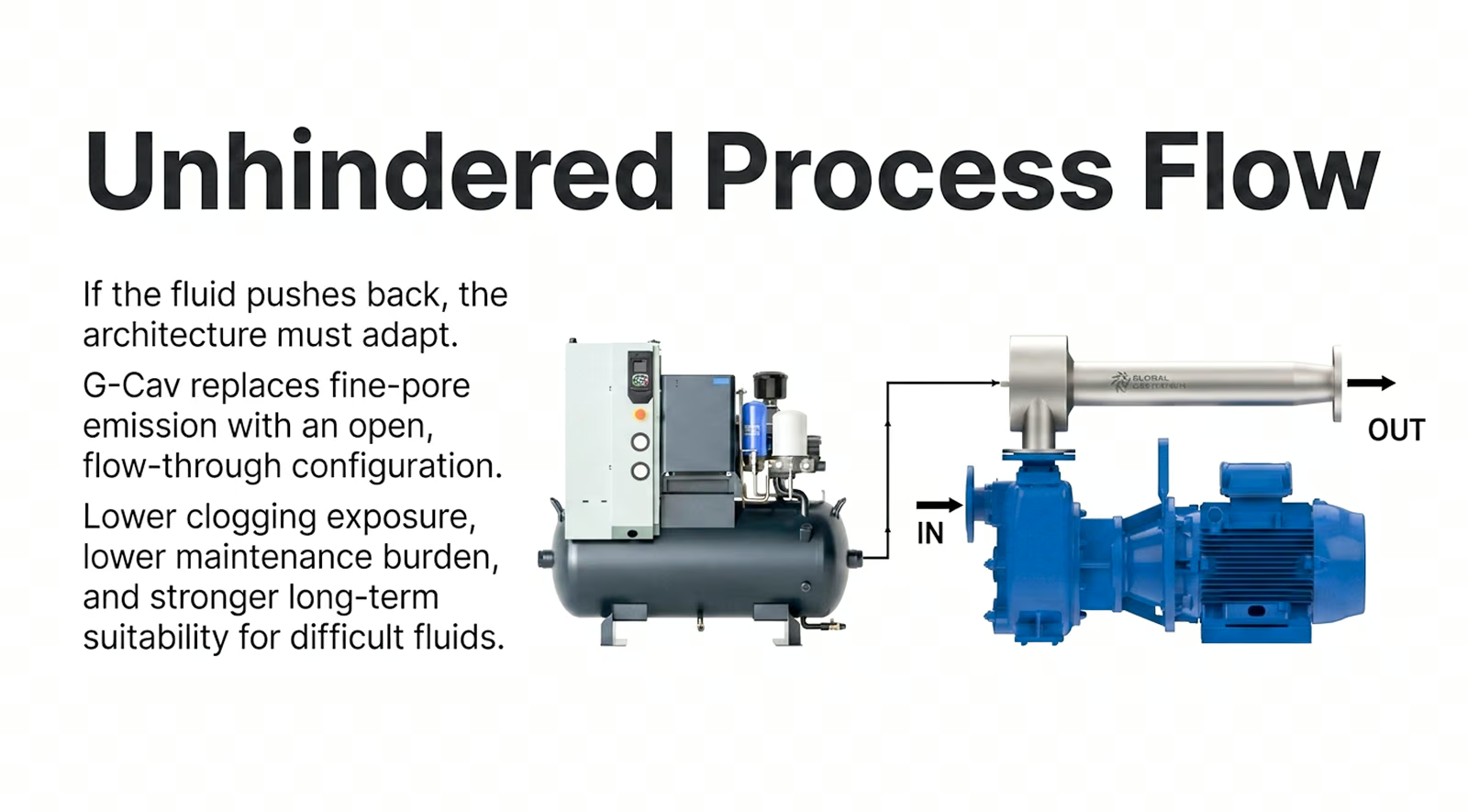
Where many conventional systems depend on small openings, porous transfer surfaces, or fine emitter structures, G-Cav™ is built around a more industrial flow-through configuration suited to moving liquids in demanding environments.
That matters because solids, biological load, surfactants, oils, and scale-forming chemistries are far less forgiving to narrow, delicate systems than to robust, open-flow process equipment.
The commercial result is straightforward: lower clogging exposure, lower maintenance burden, and stronger long-term suitability for difficult fluids.
Fouling and clogging are universal problems, but they appear differently by sector.
Agriculture and Irrigation
Blocked emitters, algae, mineral scale, and biofilm can reduce irrigation uniformity and system performance. In these environments, clean delivery pathways matter just as much as the treatment objective itself.
Aquaculture
Biofilm, solids, and organic load can undermine oxygen-delivery systems, distribution lines, and treatment consistency. Reliability matters because water quality affects live biomass directly.
Wastewater
Contaminant-rich streams create one of the hardest environments for fragile treatment systems. Oils, surfactants, solids, sludge, and unstable chemistry can quickly compromise conventional transfer and filtration equipment.
Environmental Remediation
Field systems need to remain practical in variable, contaminated, and often uncontrolled environments. Low-friction deployment matters more than delicate lab-style precision.
Mining
Process water, slurries, and chemically aggressive environments are rarely friendly to fine-pore or maintenance-sensitive infrastructure. Robustness is part of the business case.
Oil and Gas
Produced water and related process streams can carry emulsified oil, dissolved solids, bacteria, scaling precursors, heavy metals, and reactive chemistry. In that environment, anti-fouling design is not optional. It is absolutely essential.
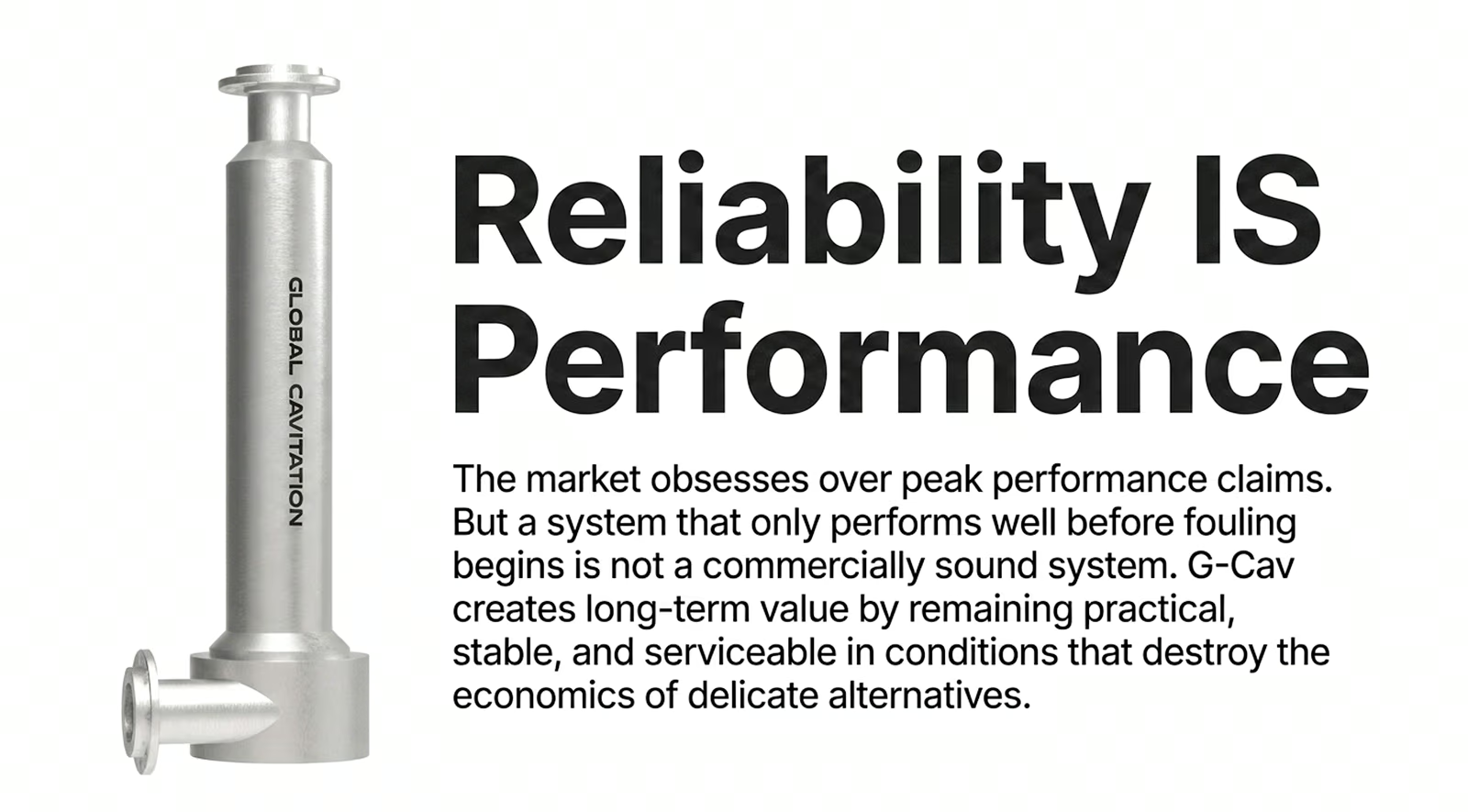
The market often focuses on peak performance claims. The more important question is long-term usable performance.
A system that performs well only before fouling begins is not necessarily the better commercial system. A system that remains practical, stable, and serviceable in difficult conditions often creates much more value over time, especially when we factor in up-time & down-time relevance.
This is where G-Cav™ has a significant strategic advantage.
Its relevance is not only in cavitation, nanobubble generation, gas infusion, flotation support, or process intensification. Its relevance is also in the fact that it is built for the kinds of operating environments where clogging and fouling destroy the economics of more delicate alternatives.
That makes the platform more than an efficiency story. It makes it a reliability story. And in industrial markets, reliability is part of performance.
When assessing any treatment or gas-transfer technology, the real question is not only:
How well does it perform on day one?
The more important question is:
How well does it keep performing once the real fluid, the real contamination, and the real operating environment, starts pushing back?
That is the question G-Cav™ is designed to answer.
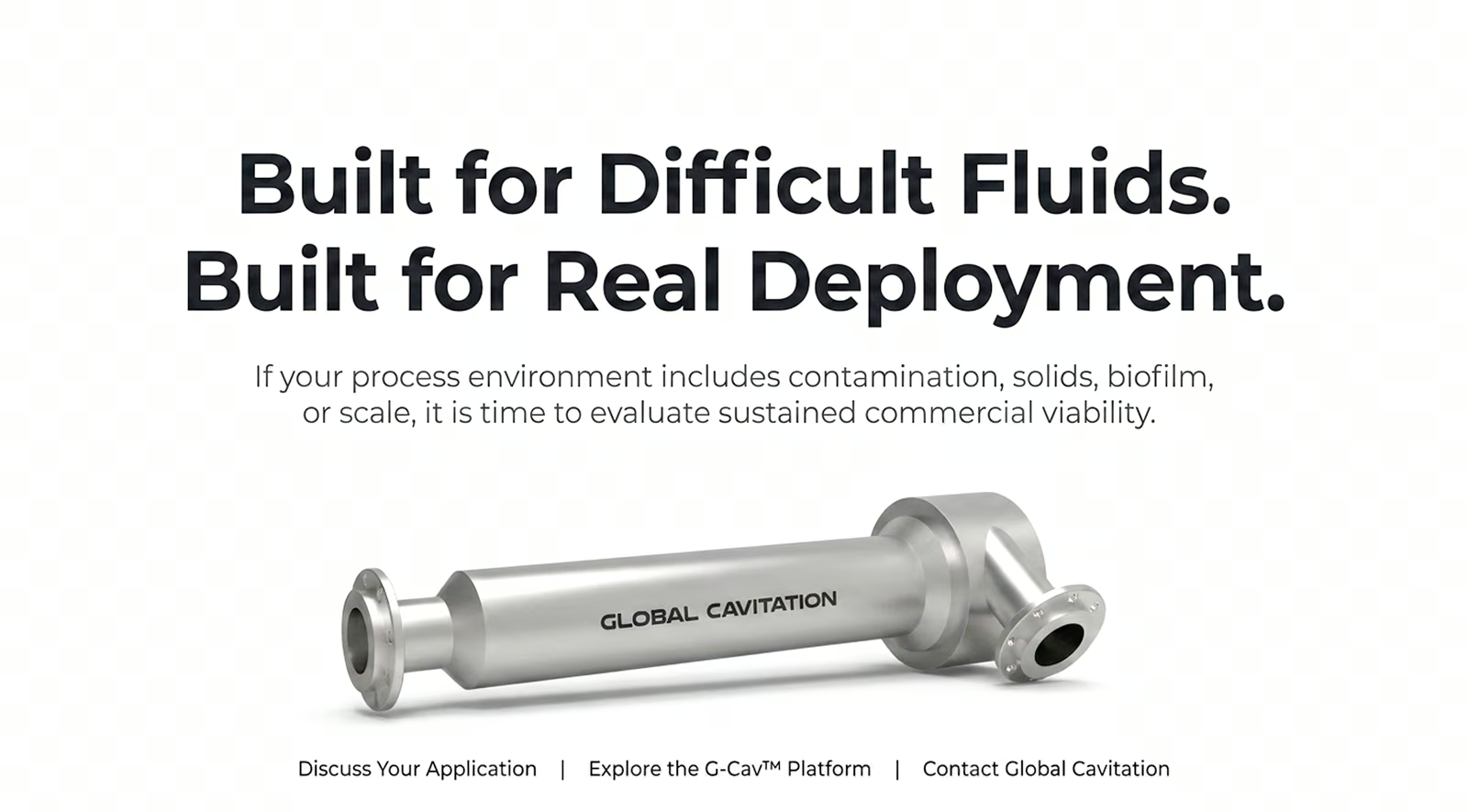
G-Cav™ uses a membrane-free multistage hydrodynamic cavitation pathway rather than a fine-pore membrane or porous diffusion surface. That gives it a stronger fit in real industrial environments where clogging and fouling can undermine conventional systems.
They rely on small transfer passages or delicate diffusion surfaces that can be affected by biofilm, mineral scale, suspended solids, oils, surfactants, and other contamination. As that builds, performance can drop and maintenance demand can rise.
Yes. G-Cav™ is specifically suited to harder operating environments where fouling pressure is a real issue, including wastewater, aquaculture, agriculture, remediation, mining, oil and gas, and other process-water applications.
It reduces dependence on the clog-prone membrane architecture used by many conventional systems. That helps lower fouling exposure and supports more durable performance in difficult fluids.
Because it affects more than maintenance. Fouling can reduce gas-transfer efficiency, increase cleaning cycles, increase labour, create downtime, shorten asset life, and make treatment performance less reliable. indicators over time.
The main advantage is architectural. G-Cav™ is built around a robust flow-through cavitation pathway that intensifies gas-liquid interaction without relying on fragile membrane surfaces, giving operators a more practical and commercially durable alternative.

Texas
Australia
Canada
South America
China
India
MENA
Southern Africa
Europe