
Improve flotation recovery, support leaching kinetics, stabilise tailings behaviour, strengthen process-water performance, and reduce plant inefficiency through one cavitation-based industrial platform.
Mining profitability is often won or lost in a small number of process variables: fine-particle recovery, reagent efficiency, oxygen availability, settling behaviour, process-water quality, and plant stability under changing ore conditions. G-Cav™ is built to target those variables directly.
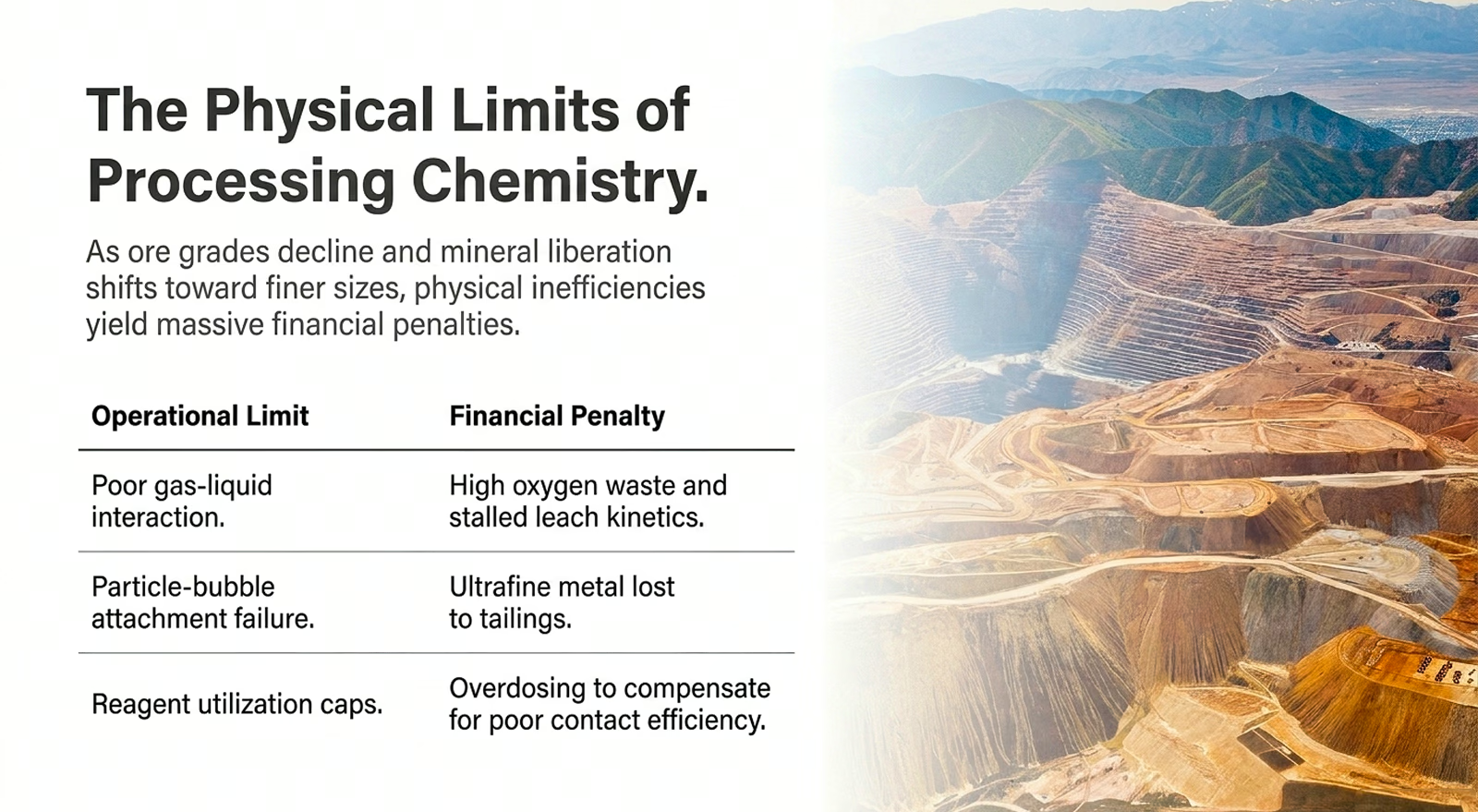
Mining operations are under constant pressure to improve recovery, reduce reagent intensity, accelerate process kinetics, manage increasingly difficult ore profiles, and stabilise downstream water and slurry behaviour. As ore grades decline and mineral liberation shifts toward finer sizes, even modest inefficiencies become expensive very quickly.
Many of the remaining losses are not caused by a lack of effort or chemistry. They are caused by limits in contact efficiency, gas-liquid interaction, particle-bubble attachment, reagent utilisation, slurry behaviour, and the quality of recycled process water.
That is where G-Cav™ fits. It is not a decorative add-on. It is a process-intensification platform designed to improve how gas, liquids, reagents, and mineral particles interact inside the plant.
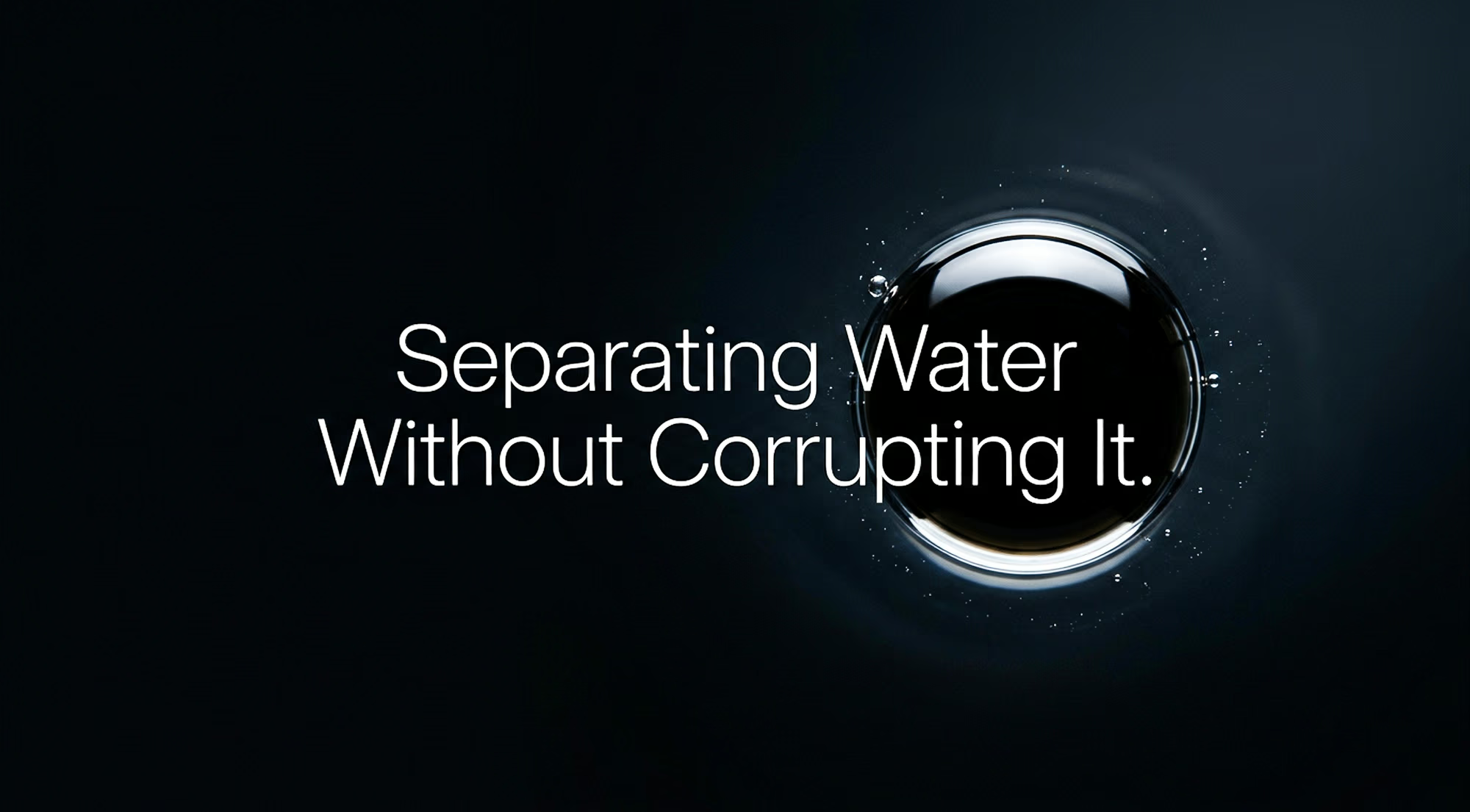
G-Cav™ uses vortex-induced multistage hydrodynamic cavitation to intensify and repeat implosive cavitation events within a flowing liquid stream. In mining environments, that matters because the platform can generate micro- and nanoscale gas structures, increase reactive surface area, improve gas transfer, and alter the interaction profile between liquids, reagents, and mineral particles.
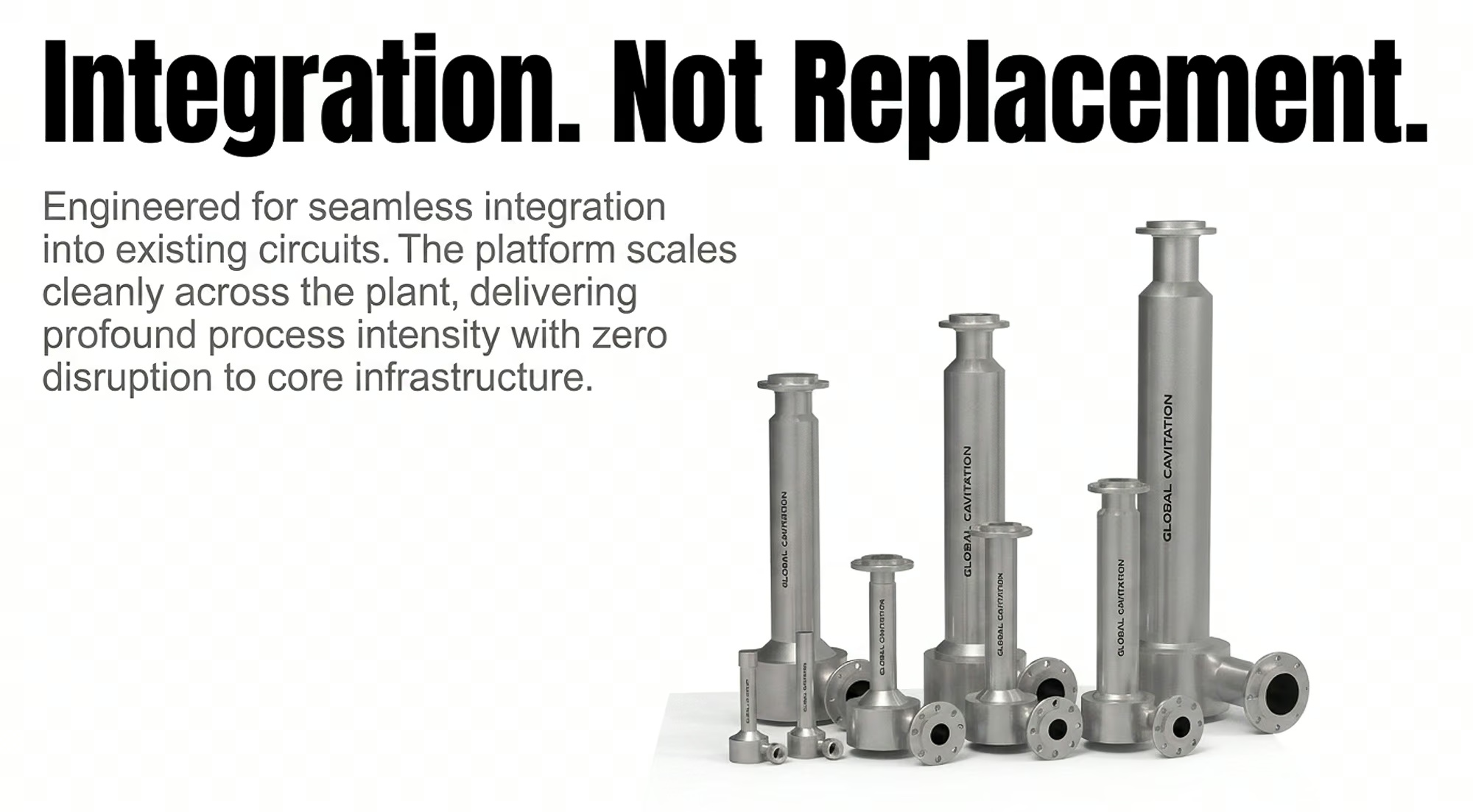
The platform is also mechanically attractive to mining operations because it is membrane-free, contains no moving parts within the reactor, and is designed for integration into existing circuits rather than complete plant replacement.
That combination of process intensity and mechanical simplicity is what makes it relevant across flotation, hydrometallurgy, tailings, mine water, and environmental compliance.
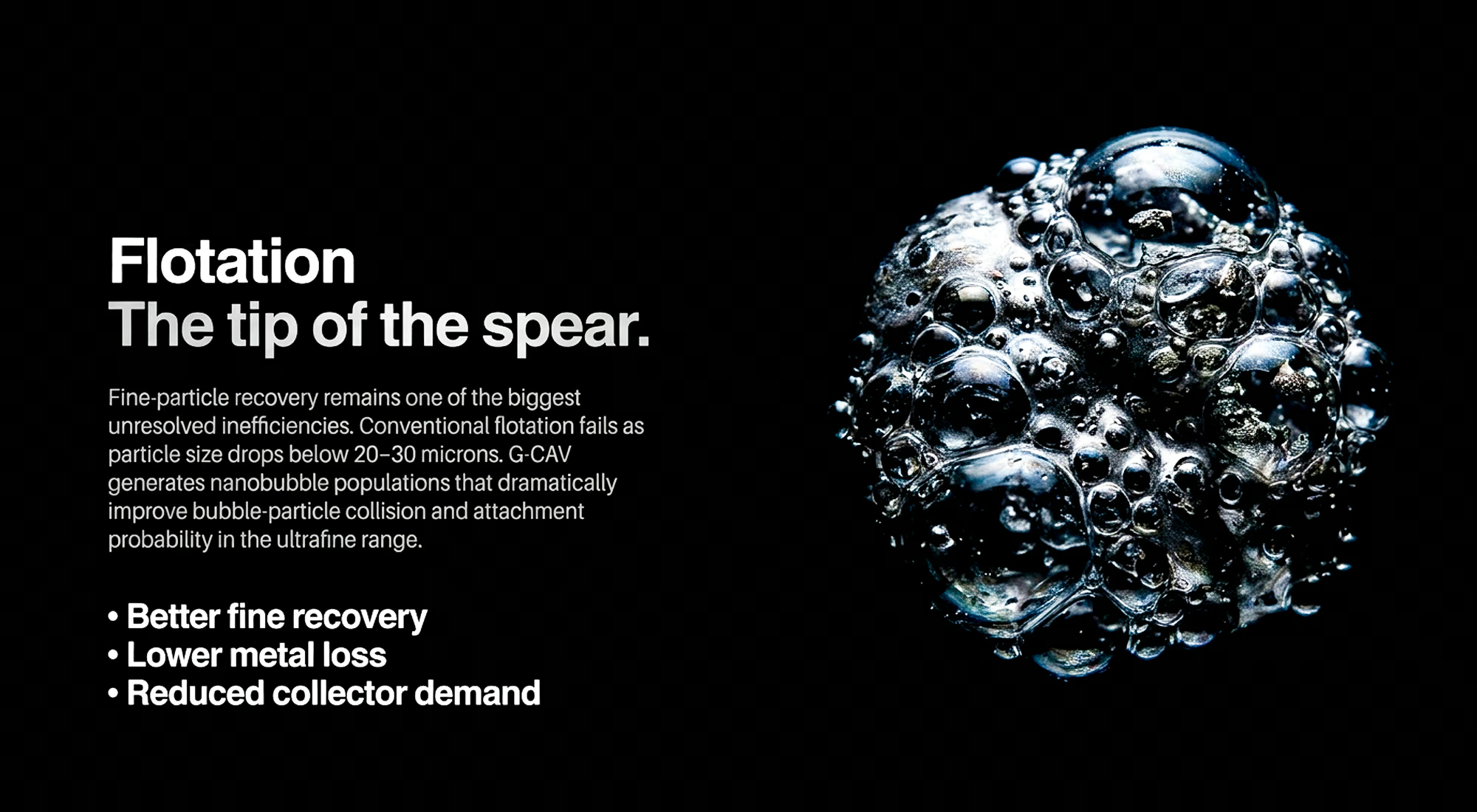
Flotation is one of the clearest mining applications for G-Cav™ because fine-particle recovery remains one of the biggest unresolved inefficiencies in modern concentrators. Conventional flotation becomes progressively less effective as particle size drops below about 20–30 microns, precisely the size range that matters more as ore grades decline and liberation gets finer.
G-Cav™ addresses this from two angles. First, nanobubble populations improve bubble-particle collision and attachment probability in the fine and ultrafine range. Second, cavitation can help condition mineral surfaces by disrupting surface films and improving the conditions for collector interaction.
The practical value is straightforward: better recovery of fine particles, less metal lost to tailings, stronger flotation behaviour in difficult ores, and potential reduction in collector and frother demand where the circuit is currently overcompensating for poor contact efficiency.
This is why flotation remains the most commercially compelling deployment pathway in many mines. It connects directly to concentrate recovery, concentrate grade, reagent cost, and overall plant economics.
Hydrometallurgical systems depend on oxygen availability, mass transfer, and solution-mineral contact. Heap leach operations, cyanide leach circuits, acid leaching, and selected bioleach systems are all influenced by how efficiently oxygen is delivered into the process solution.
G-Cav™ oxygen delivery is particularly relevant where conventional aeration wastes gas to off-gassing or struggles to maintain dissolved oxygen through large or difficult geometries. The system has demonstrated very high oxygen transfer efficiency, allowing operators to deliver a more predictable dissolved oxygen load into leach circuits.
In practical mining terms, that can support faster leach kinetics, stronger ferric regeneration behaviour in relevant systems, reduced oxygen waste, improved cyanidation performance where oxygen is rate-limiting, and better overall metal recovery or residence-time efficiency depending on the circuit.
Heap leach and hydrometallurgical oxygen delivery therefore sit as a major second application family within the mining platform, especially for copper, gold, uranium, nickel, zinc, and other oxygen-sensitive recovery systems.
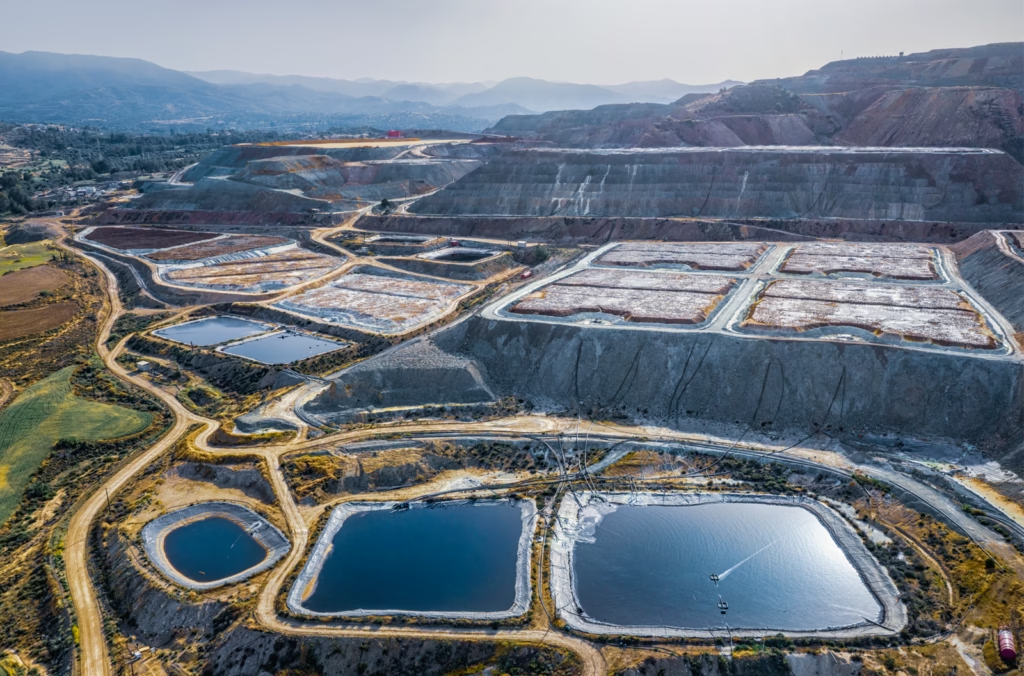
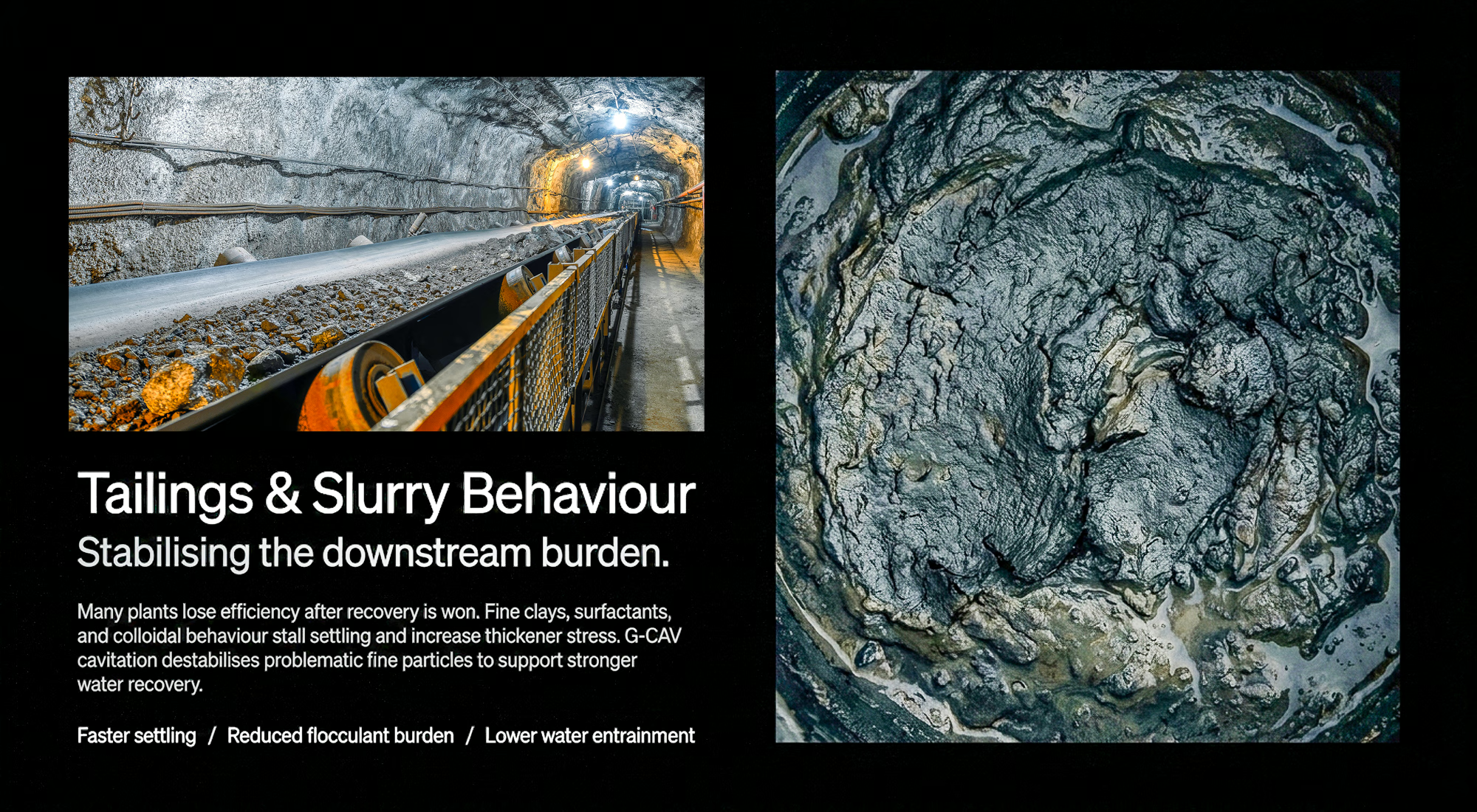
Tailings and slurry behaviour are major downstream cost drivers in modern mining. Fine clays, surfactants, and colloidal behaviour can slow settling, increase thickener stress, expand tailings-storage burden, reduce reclaim-water quality, and complicate closure obligations.
G-Cav™ is relevant here because cavitation and nanobubble interaction can alter slurry behaviour, destabilise problematic fine particles, improve thickening response, and support stronger water recovery from tailings streams.
Where these effects are realised, the commercial benefits can include faster settling, reduced flocculant burden, improved thickener performance, lower water entrainment, and reduced operational pressure on downstream tailings infrastructure.
That matters because many plants lose efficiency after recovery is won. Tailings and water instability become the hidden penalty. A platform that can improve that part of the process chain has value beyond the concentrator itself.
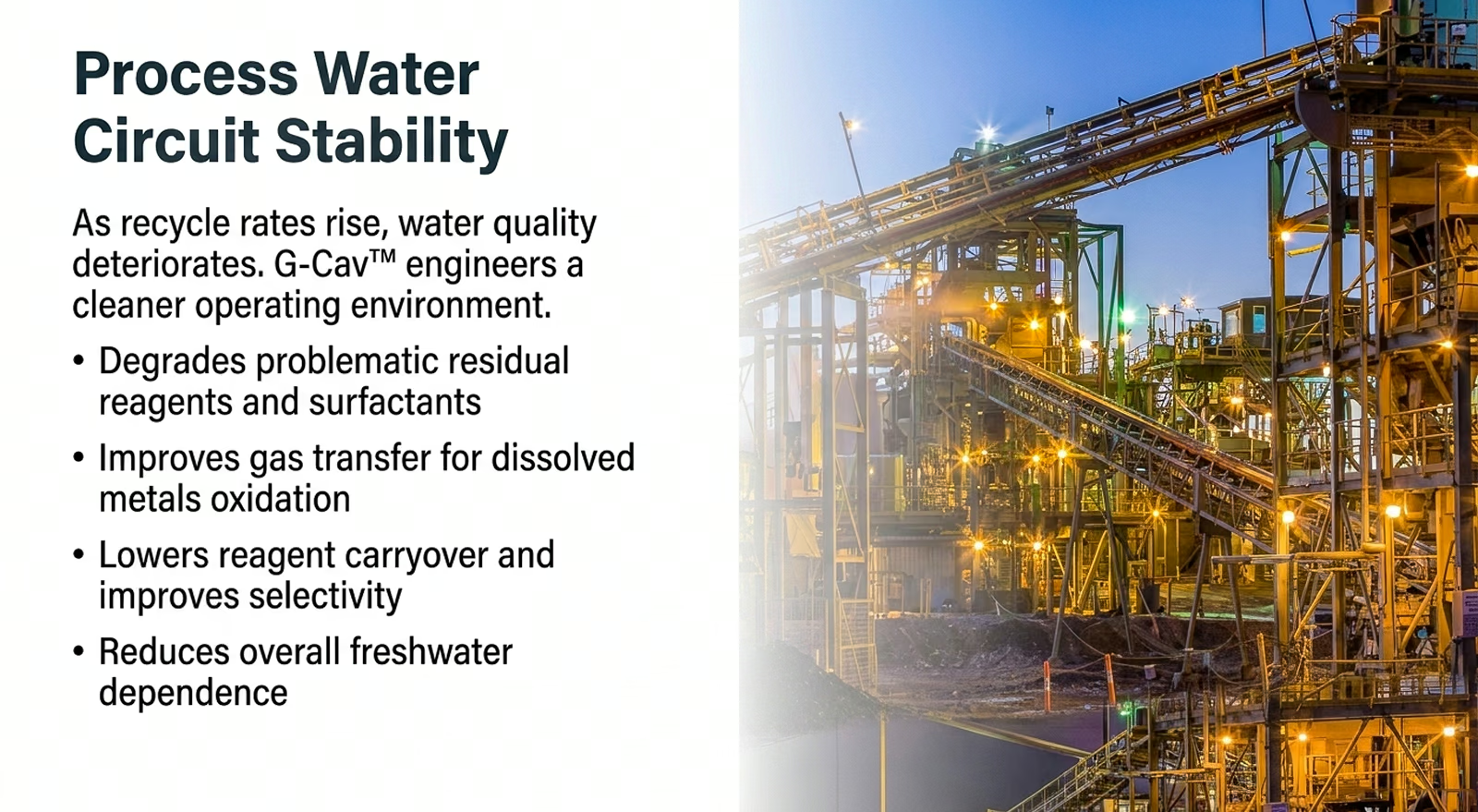
Recycled process water is increasingly unavoidable in mining, but as recycle rates rise, water quality often deteriorates. Residual reagents, surfactants, dissolved metals, organics, and unstable chemistry can all suppress flotation performance, interfere with leaching, or destabilise plant behaviour.
G-Cav™ can be positioned as part of a broader process-water optimisation pathway by helping degrade or reduce problematic residues, improve gas transfer and oxidation conditions, and support more stable recycled water entering the plant.
The benefit is not only cleaner water. It is a cleaner operating environment for the process itself: lower reagent carryover, improved selectivity, more stable circuit behaviour, and lower freshwater dependence.
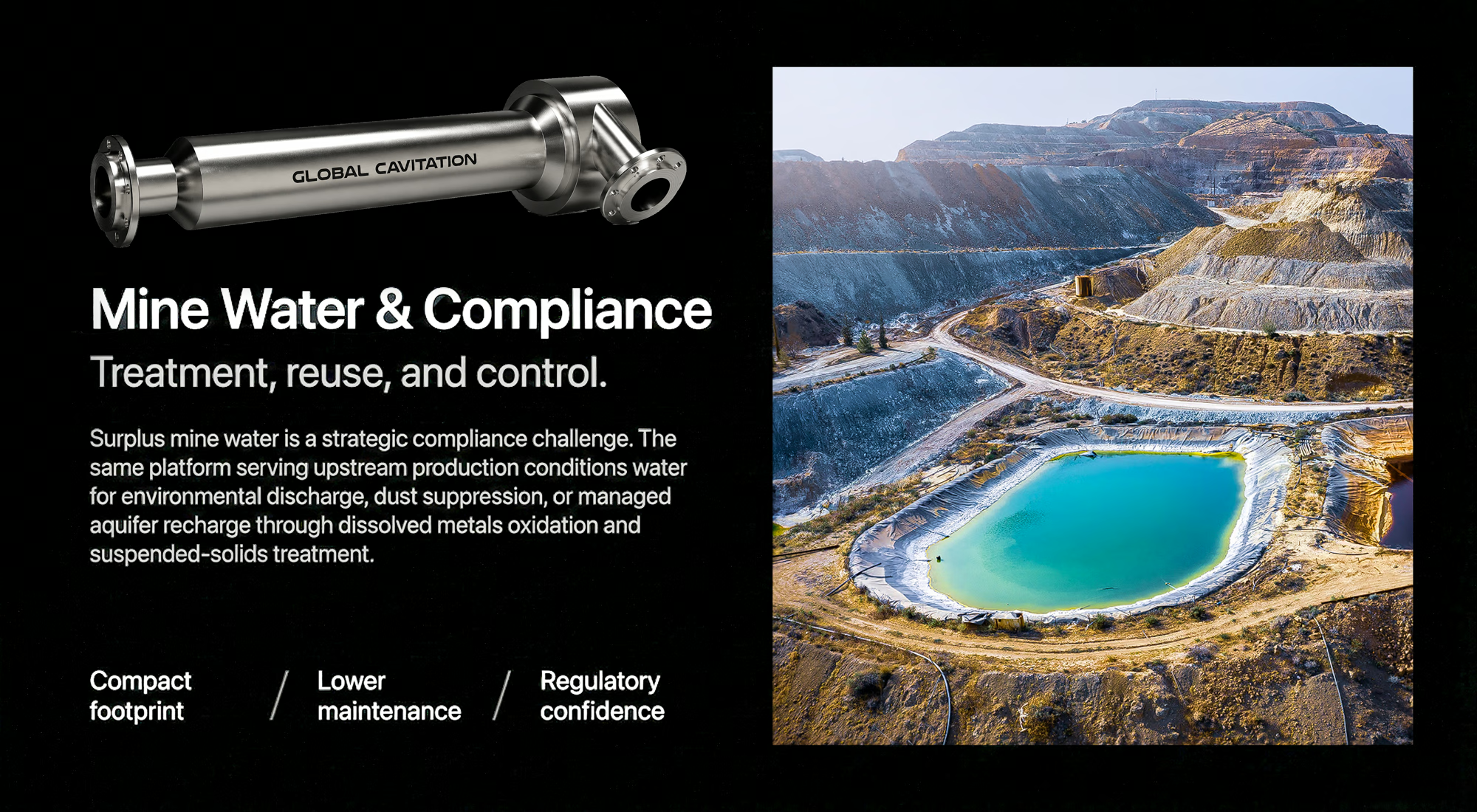
Mine dewatering and pit-water management are increasingly strategic issues, particularly in large jurisdictions where abstraction volumes are high and regulatory expectations are tightening. Surplus mine water is no longer just an operating by-product. It is a treatment, reuse, and compliance challenge in its own right.
G-Cav™ can support mine-water management through dissolved metals oxidation, improved suspended-solids behaviour, treatment for reuse, and broader water-quality conditioning before discharge or beneficial use.
This is especially relevant where operators are seeking more compact, lower-maintenance treatment options or where dewatering water must be conditioned for process reuse, dust suppression, managed aquifer recharge, or environmental discharge.
That makes mining water management an important extension of the platform rather than a separate story. The same technology can serve production performance upstream and compliance performance downstream.
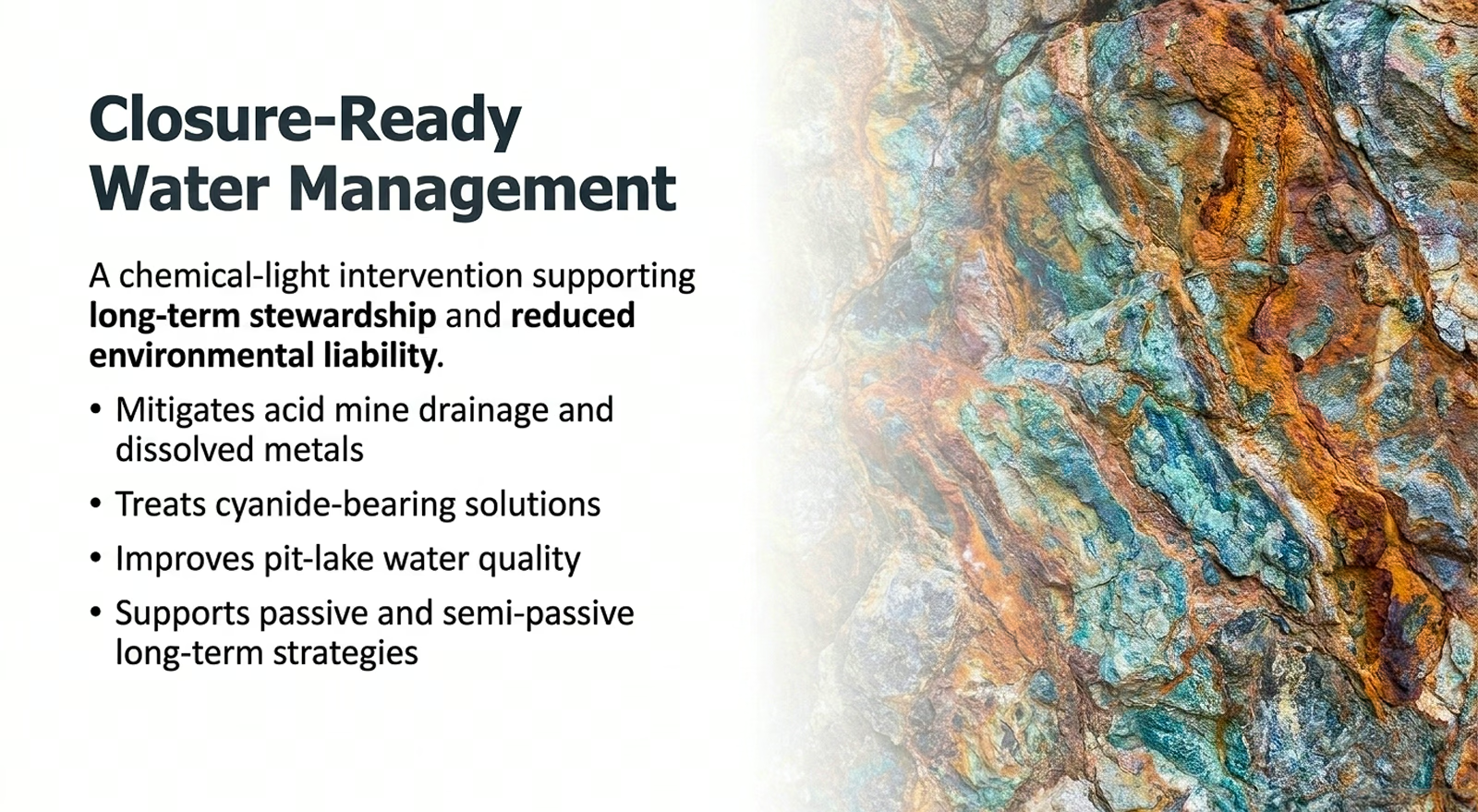
Modern mining is no longer judged only on production. It is also judged on tailings stewardship, site water quality, environmental compliance, and closure performance. Acid mine drainage, dissolved metals, cyanide-bearing solutions, pit-lake water quality, and long-term seepage management all sit inside that broader expectation set.
G-Cav™ is relevant because it provides a chemical-light, mechanically simple treatment pathway that can support oxidation, precipitation, contaminant reduction, water polishing, and passive or semi-passive long-term management strategies.
In this context, the platform supports not only operating performance but also lower environmental liability and a stronger pathway into closure-ready water management.
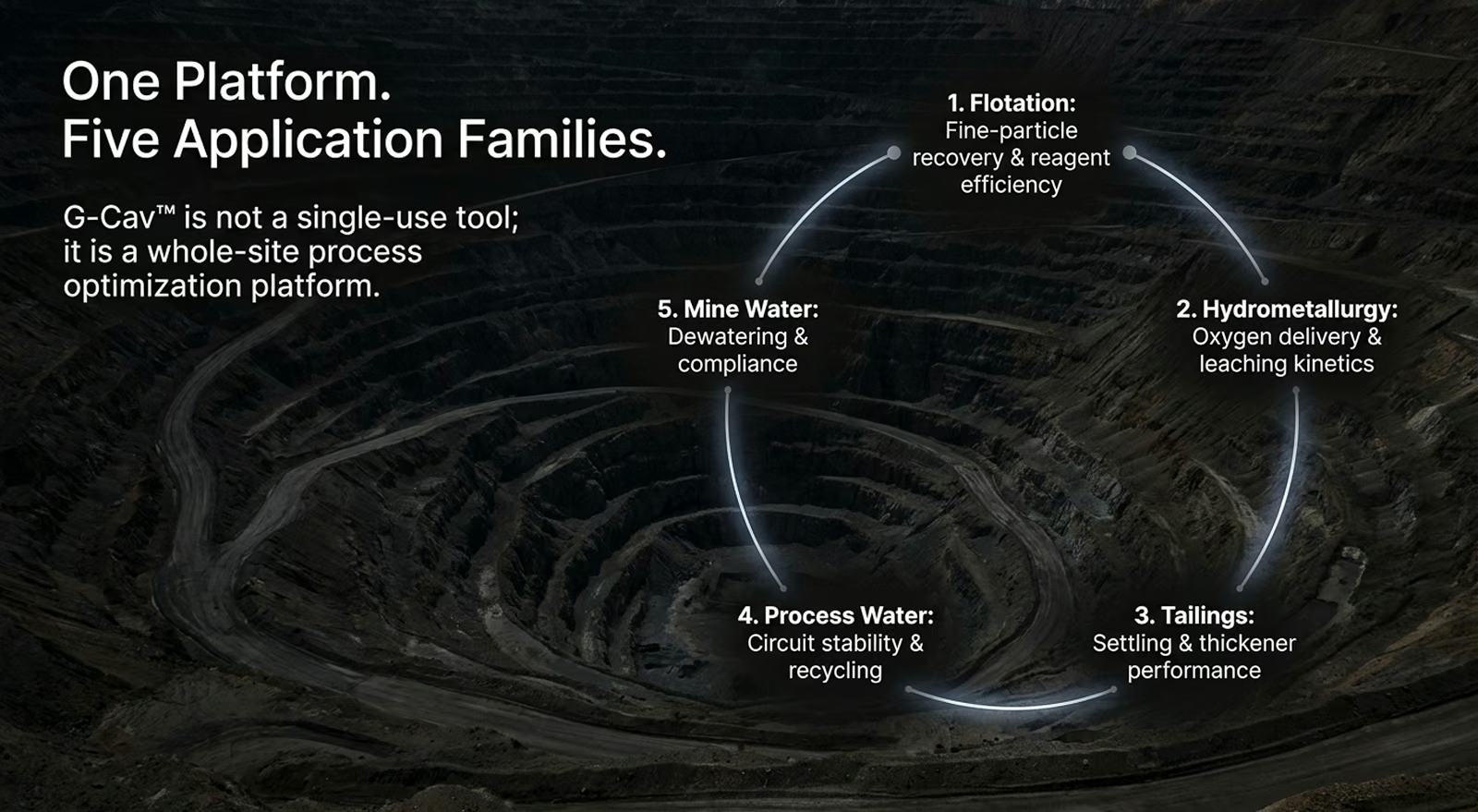
The mining platform is strongest when understood across five connected application families:
1. Flotation circuit enhancement for fine-particle recovery, selectivity, and reagent efficiency.
2. Heap leach and hydrometallurgical oxygen delivery for improved kinetics and oxygen economy.
3. Tailings, thickening, and paste behaviour for better settling and water recovery.
4. Process-water recycling and plant-water conditioning for stronger circuit stability.
5. Mine water, compliance, and closure treatment for reduced environmental burden and broader site-water control.
This framing is important because it shows mining as a platform market, not a single-use technical niche.
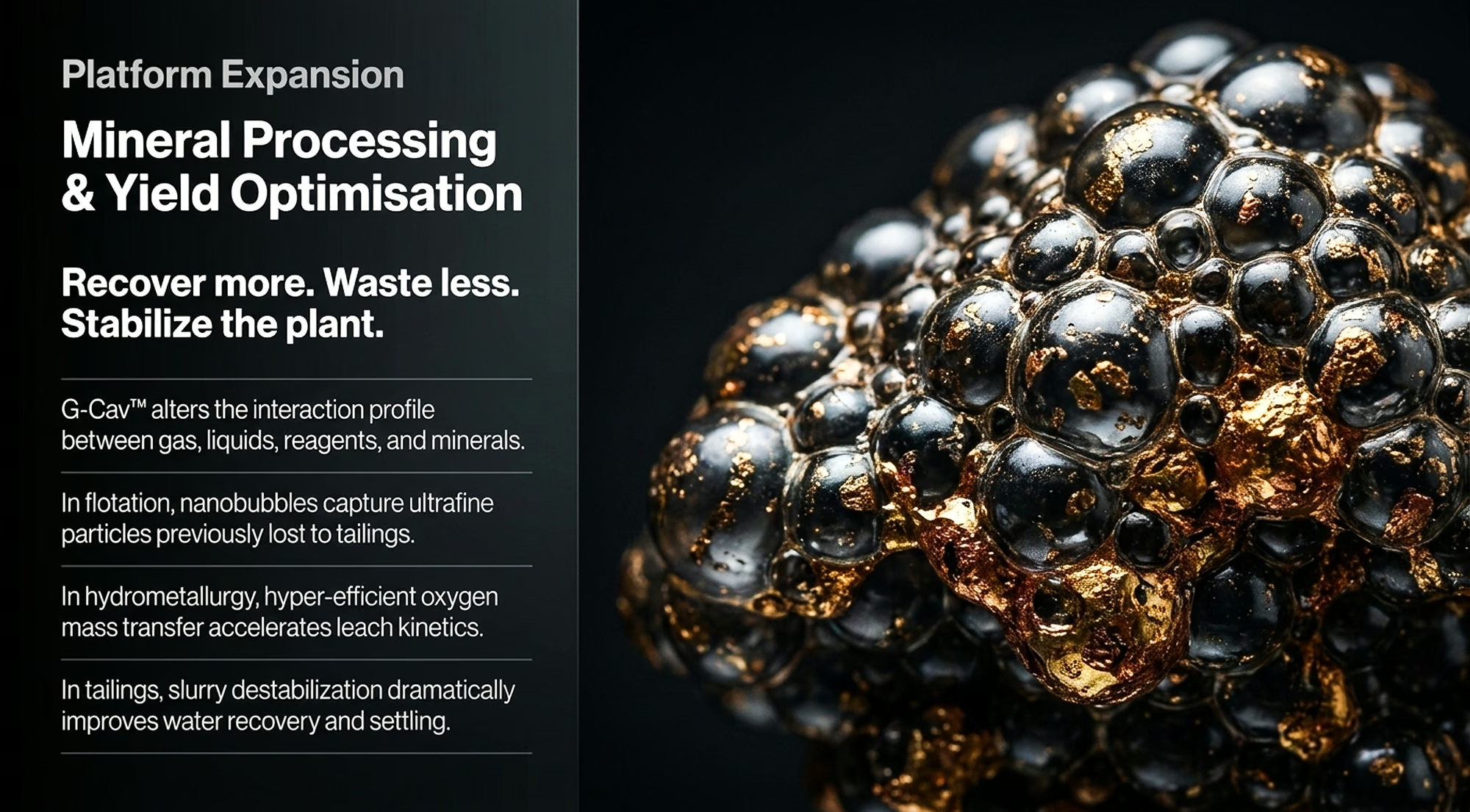
The strongest mining message is never “interesting technology.” It is “recover more, waste less, and stabilise the plant.”
That is why the commercial positioning must keep returning to the value levers that matter most to the plant managers, metallurgists, technical services teams, and project owners: improved recovery, lower fine-particle loss, better reagent efficiency, faster kinetics, stronger settling behaviour, more stable process water, and cleaner compliance performance.
Small improvements in those variables can translate into very large annual values at mine scale. That is why mining is one of the clearest sectors for serious platform adoption.
Mining is also one of the clearest examples of why Global Cavitation must be presented as a platform rather than only a product supplier. A regional or sector-focused partner with metallurgical, process, or mining-services capability could build a meaningful market position around this vertical because the platform is relevant to multiple stages of the mining value chain, not one isolated use case.
That is what makes mining commercially strategic. It can begin with one plant problem, then expand into broader circuit optimisation, site water, tailings, and environmental treatment programs.
For the right partner, mining becomes a territory-scale business category built around pilot validation, process integration, and performance-driven commercial deployment capable of utilising multiple business model preference options.
The strongest current mining fit is across flotation, leaching and hydrometallurgy, tailings and thickening behaviour, process-water recycling, and mine-water or compliance treatment. The platform is positioned as a process-intensification tool rather than a single-use add-on.
Flotation remains one of the clearest use cases because fine-particle recovery is one of the biggest unresolved inefficiencies in modern concentrators. G-Cav™ is positioned to improve gas-liquid-particle interaction and support better recovery in the fine and ultrafine range.
Yes. The platform is presented as relevant where oxygen availability, mass transfer, and solution-mineral contact directly affect recovery performance. This includes heap leach and other hydrometallurgical systems where oxygen economy and kinetics matter commercially.
Yes. Mining material also positions G-Cav™ in tailings, thickening, slurry behaviour, process-water stability, dewatering, and compliance-related water management. That is important because many sites need gains both upstream and downstream of the main recovery step.
The mining story is built around staged engineering logic, progressing from validation and pilot work into wider deployment where technical and economic fit are proven under real site conditions.