
G-Cav™ pre-treatment applies multistage hydrodynamic cavitation and oxygen nanobubble infusion to agricultural and lignocellulosic feedstocks before they enter the anaerobic digester. This accelerates hydrolysis, improves gas-transfer efficiency, and recovers significantly more methane value from difficult straw, fibrous crop residues, and other recalcitrant substrates.
Biogas economics are often constrained not by the size of the feedstock resource, but by how much of that resource can actually be converted into usable energy within a practical timeframe. G-Cav™ pre-treatment is designed to improve that conversion process where the structural barriers of lignocellulosic biomass and conventional aeration methods are limiting performance.
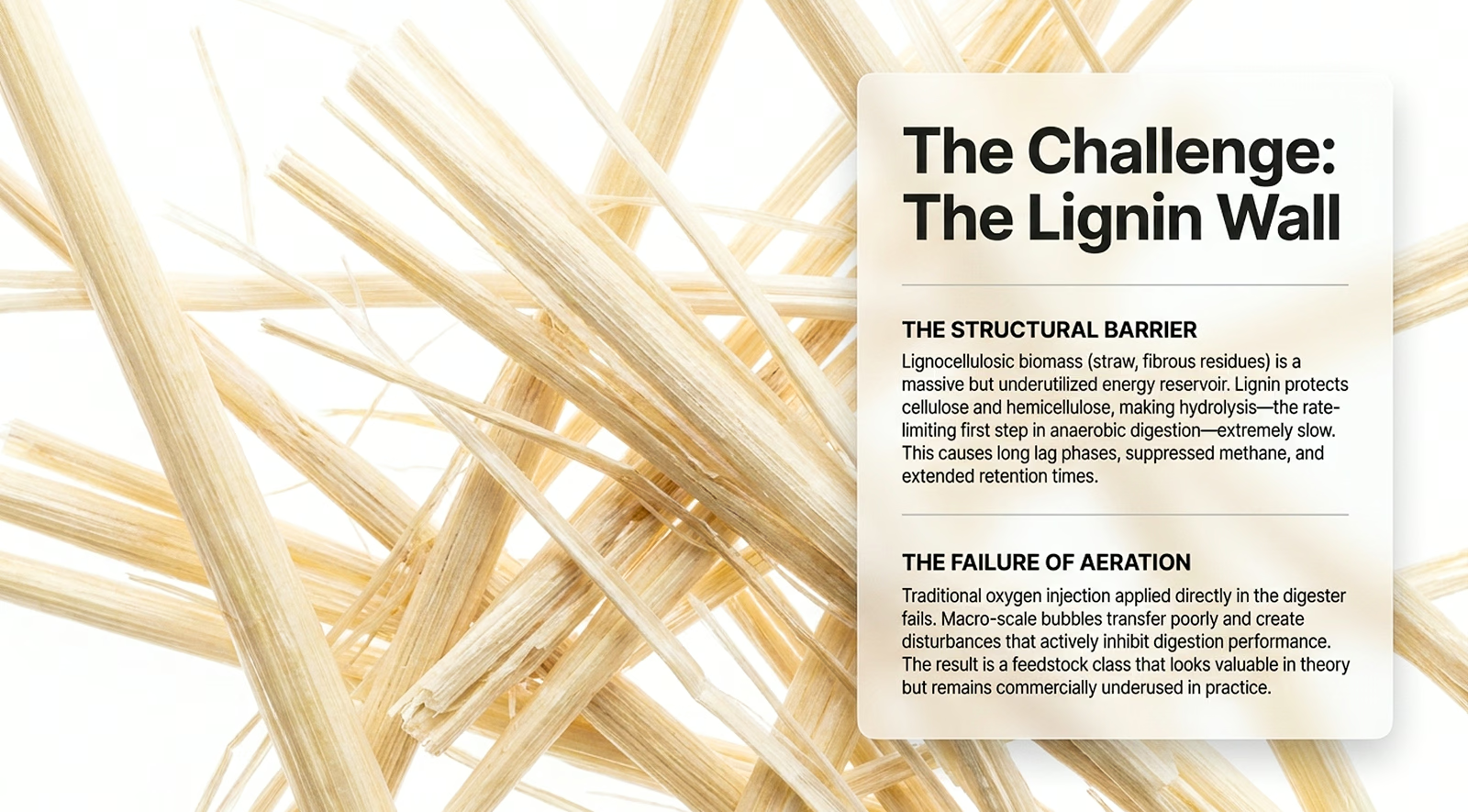
Lignocellulosic biomass such as straw, fibrous crop residues, and other recalcitrant feedstocks represents a large but underutilised energy reservoir for the biogas industry. The core difficulty is structural. Lignin protects cellulose and hemicellulose from rapid biological access, making hydrolysis — the rate-limiting first step in anaerobic digestion — extremely slow. This results in long lag phases, suppressed methane potential, and extended hydraulic retention times.
Traditional oxygen injection or aeration applied directly in the digester often fails to solve this problem. Macro-scale bubbles transfer poorly into the biology and can create disturbances that do little to improve — and in some cases actively inhibit — digestion performance. The result is a feedstock class that looks valuable in theory but remains commercially underused in practice.
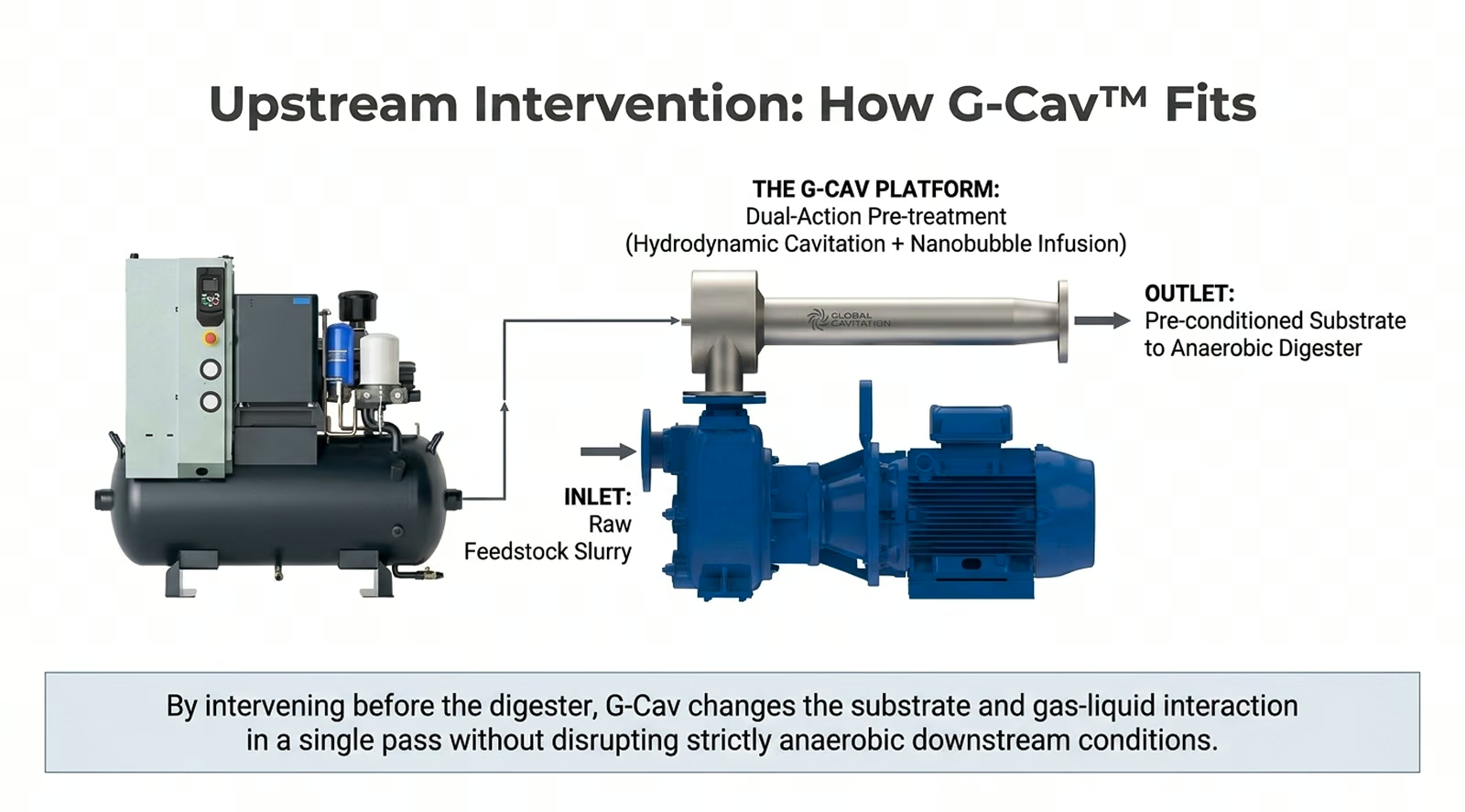
G-Cav™ is deployed as an inline pre-treatment step on the feedstock slurry upstream of the anaerobic digester. It combines two synergistic effects in a single pass: hydrodynamic cavitation that physically disrupts difficult biomass structure, and oxygen delivered in highly bio-available nanobubble form rather than through conventional coarse gas injection.
This pre-treatment changes both the substrate and the gas-liquid interaction before the material ever reaches the methanogenic community. Fibrous material becomes more accessible through particle-size reduction and surface-area increase, while oxygen nanobubbles enable controlled oxidative preconditioning that supports rapid uptake by facultative organisms without disrupting the strictly anaerobic conditions inside the digester.
The outcome is not simply more gas going into the liquid. It is a fundamentally different quality of feedstock preparation that changes how difficult substrates behave once inside the digestion cycle.
One of the clearest commercial problems in biogas is the “lignin wall.” Lignin acts as a protective barrier around digestible cellulose and hemicellulose, slowing hydrolysis and limiting methane recovery.
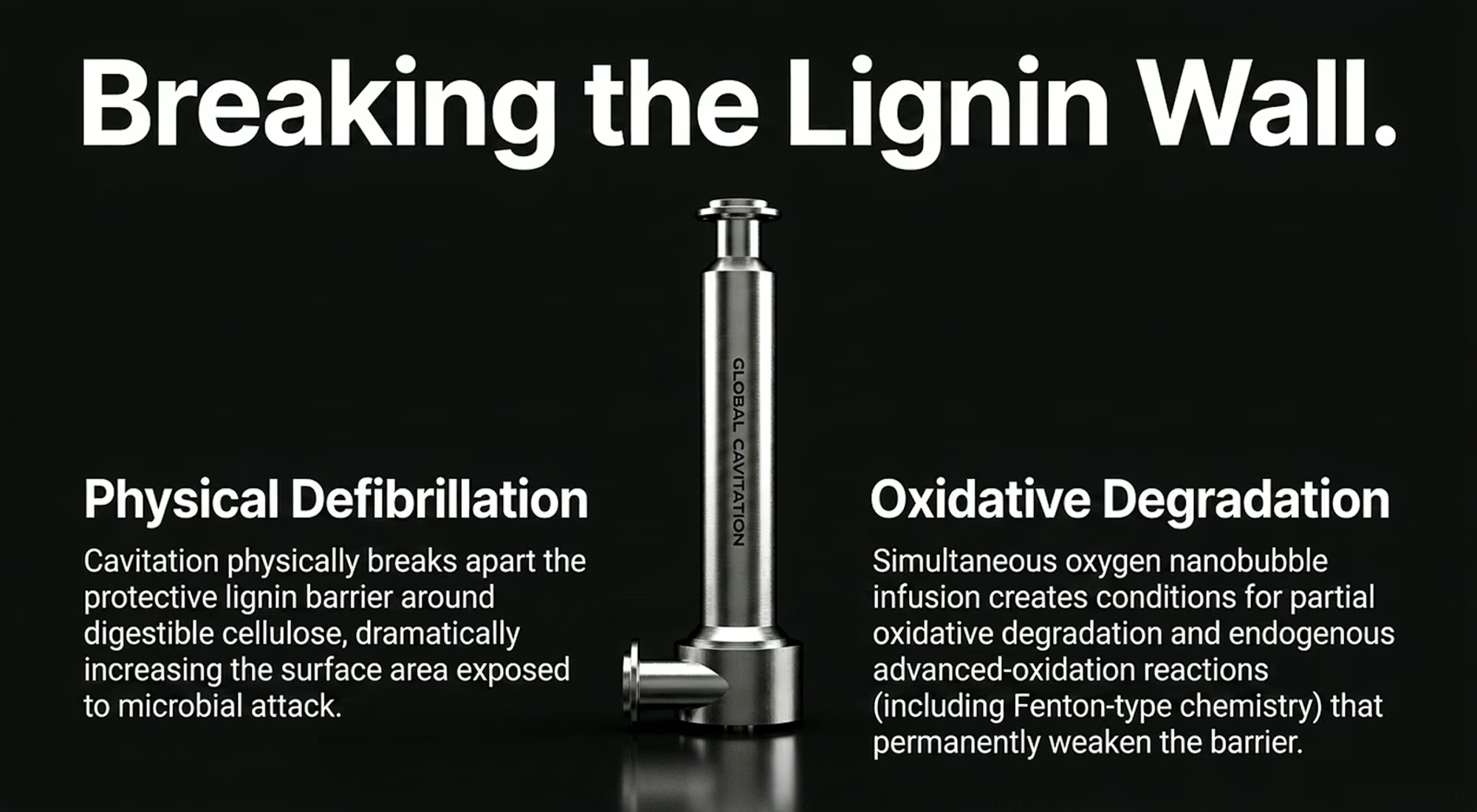
G-Cav™ pre-treatment addresses that constraint from two sides. Cavitation physically breaks apart and defibrillates the recalcitrant structure, dramatically increasing accessible surface area. Simultaneously, oxygen nanobubbles create the conditions for partial oxidative degradation of lignin and endogenous advanced-oxidation reactions (including Fenton-type chemistry) that further weaken the barrier.
That is why the platform is especially relevant to difficult biomass. It does not simply accelerate what is already easy to digest. It is designed to unlock value from substrates that are often treated as slow, low-value, or operationally frustrating.
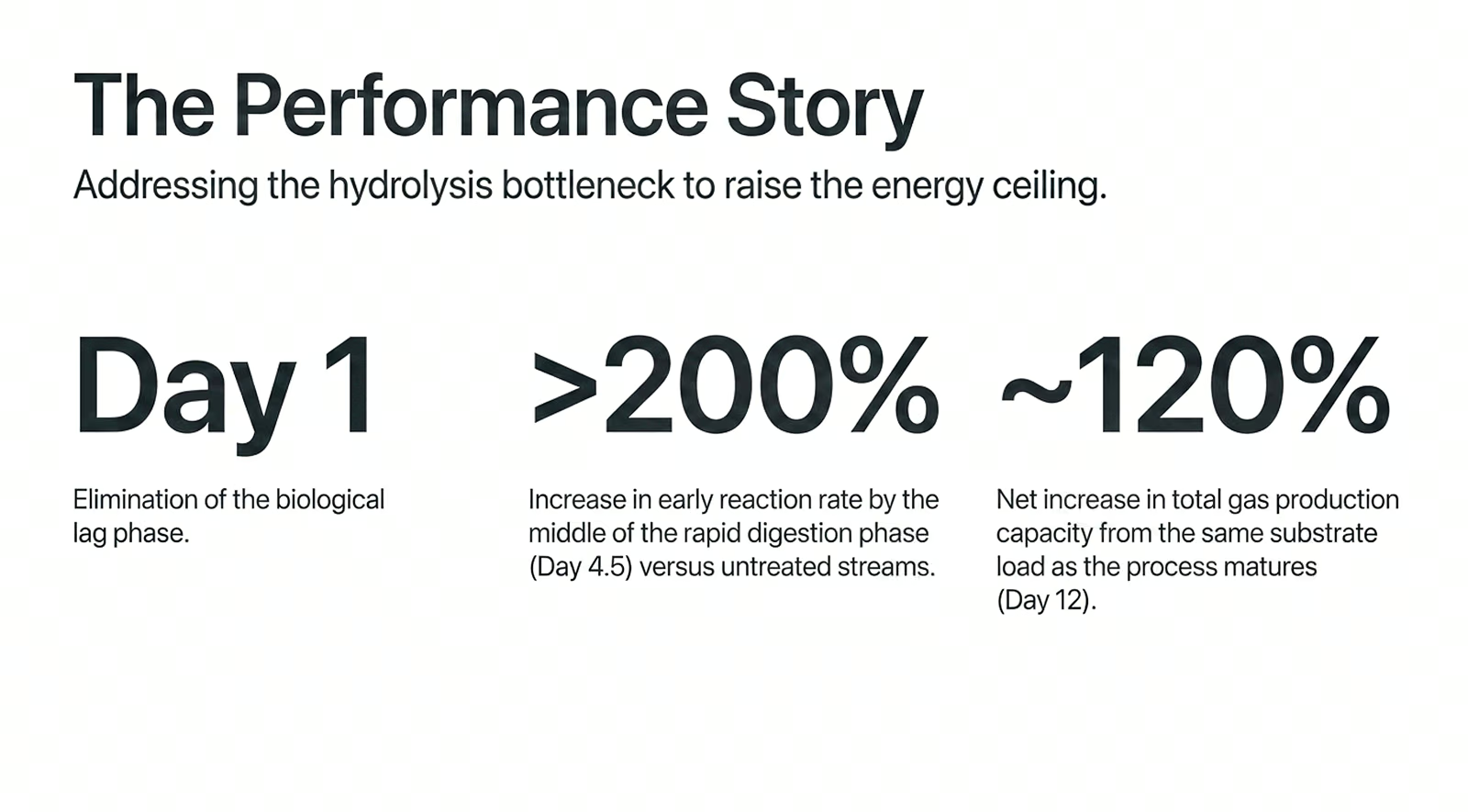
Comparative testing has shown a strong performance difference between G-Cav™ pre-treatment and both untreated controls and conventional oxygen-only approaches in difficult lignocellulosic substrates. The reported performance pattern is commercially significant: elimination of the biological lag phase, a greater than 200% increase in early reaction rate, and a substantial increase in total gas yield over the digestion cycle.
By the middle of the rapid digestion phase (Day 4.5), G-Cav™-treated streams reached roughly three times the reaction rate of untreated streams. As the digestion process matured (Day 12), total yield remained materially higher (~120% net increase in production capacity from the same substrate load), showing that the pre-treatment is not only creating a faster start but a higher energy ceiling.
These outcomes are the logical result of addressing the hydrolysis bottleneck: cavitation reduces particle size and explodes surface area, while oxygen nanobubbles enable oxidative preconditioning that makes the remaining lignin barrier far more susceptible to microbial attack inside the digester.
The strongest biogas proof point comes from the 29-day comparative trial on recalcitrant straw lignin. In that trial, conventional competitor aeration (Mazzei-type injector) underperformed even the untreated control baseline, while G-Cav™ pre-treatment achieved a much higher methane yield.
The reported numbers are commercially striking: the competitor aeration stream yielded 76 Nml CH₄/gVS compared with an untreated control baseline of 85 Nml CH₄/gVS, while G-Cav™ pre-treatment reached 250 Nml CH₄/gVS — a 194% increase versus the untreated control and a 229% increase versus the inhibited competitor stream.
This outcome is exactly what the dual-mechanism pre-treatment is engineered to deliver. Physical disruption plus controlled oxidative chemistry removes the lignin barrier that conventional aeration cannot address — and in many cases worsens.
Trials are important. These trials produced these results, using a particular feedstock under certain conditions, pressures and temperatures. Results will differ from site to site as the circumstances, conditions and parameters also change between sites.
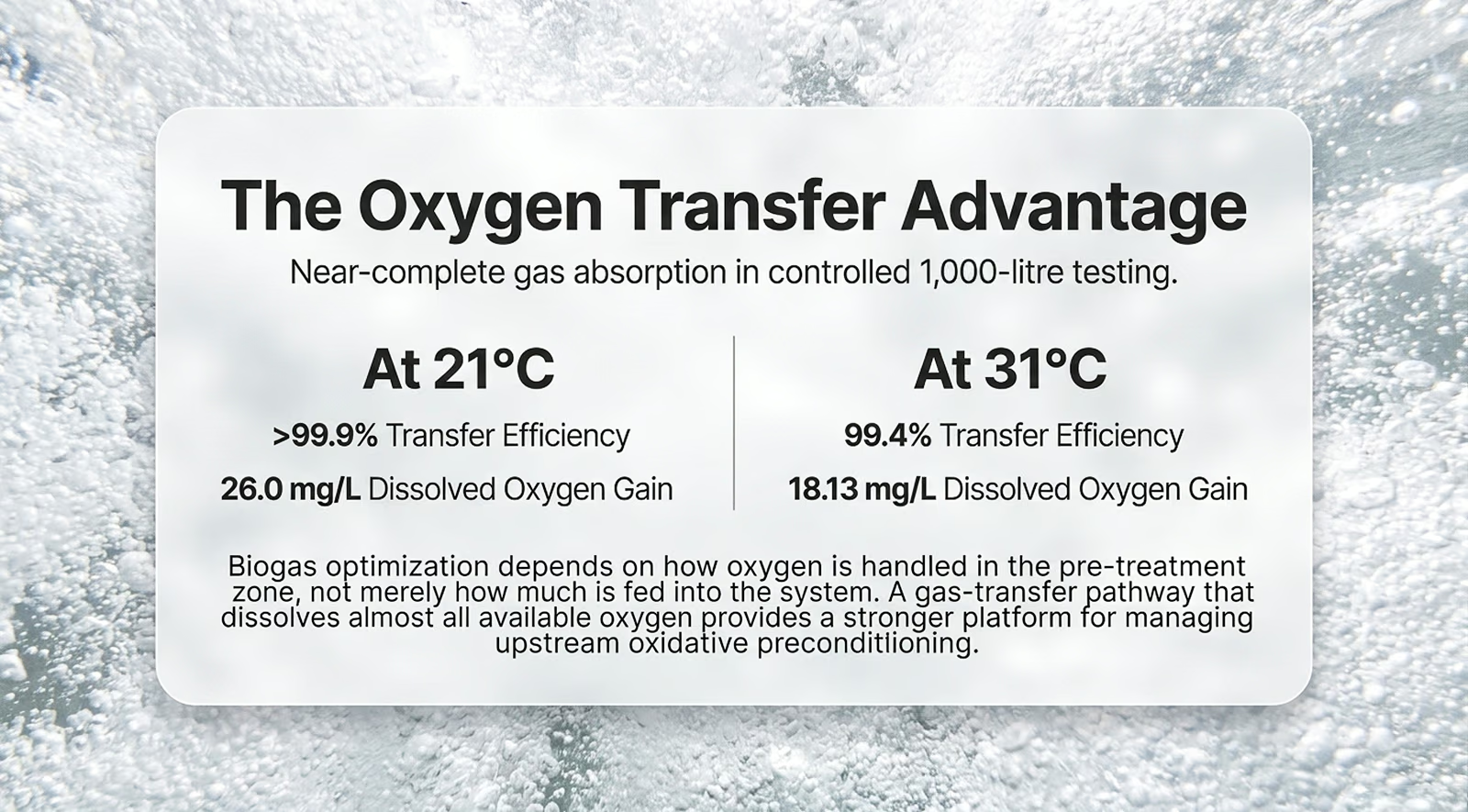
The oxygen-transfer capability of G-Cav™ strengthens the biogas pre-treatment case further. In controlled testing using a 1,000-litre water volume, the system demonstrated near-complete gas absorption with greater than 99.9% oxygen transfer efficiency at 21°C and 99.4% at 31°C.
Single-pass dissolved oxygen gains reached 26.0 mg/L at 21°C and 18.13 mg/L at 31°C. That level of transfer efficiency matters because biogas optimisation depends on how oxygen is handled in the pre-treatment zone, not merely on how much is fed into the system.
A gas-transfer pathway that dissolves almost all available oxygen gives operators a much stronger platform for managing upstream oxidative preconditioning than conventional aeration approaches that lose large amounts of gas before it ever participates in the process.
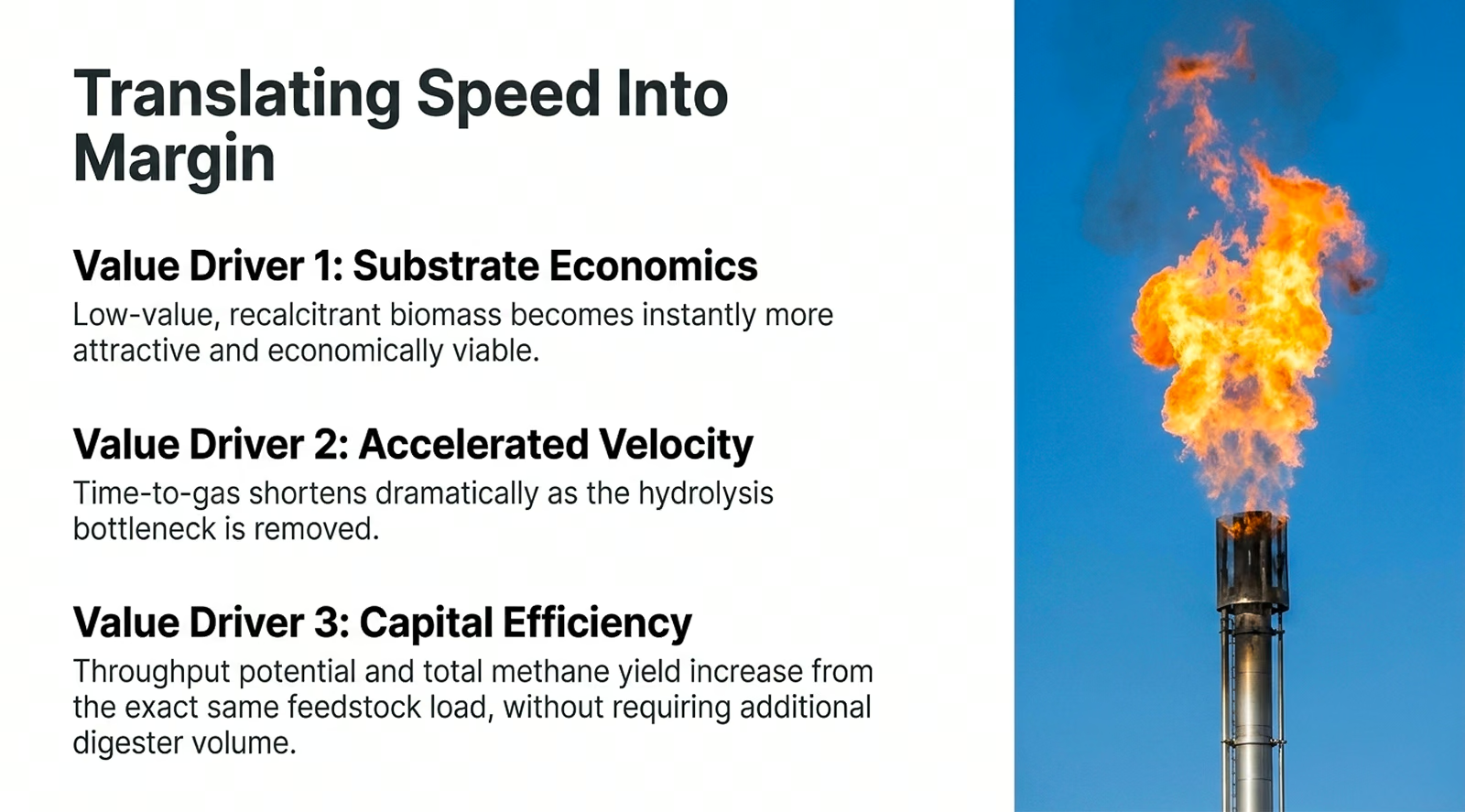
The commercial case for G-Cav™ pre-treatment in biogas is direct. When difficult lignocellulosic material is broken down faster, exposed more effectively to biology, and converted into higher total methane yield before it enters the digester, substrate economics improve immediately.
Low-value biomass becomes more attractive. Time-to-gas shortens. More of the same feedstock is converted into useful energy. Throughput potential increases without additional digester volume. The plant is no longer constrained by the same lag and underperformance profile that difficult substrates normally impose.
This changes the economics of feedstock selection and opens a more practical pathway for operators seeking to monetise agricultural residues, fibrous waste streams, and other recalcitrant biomass resources.
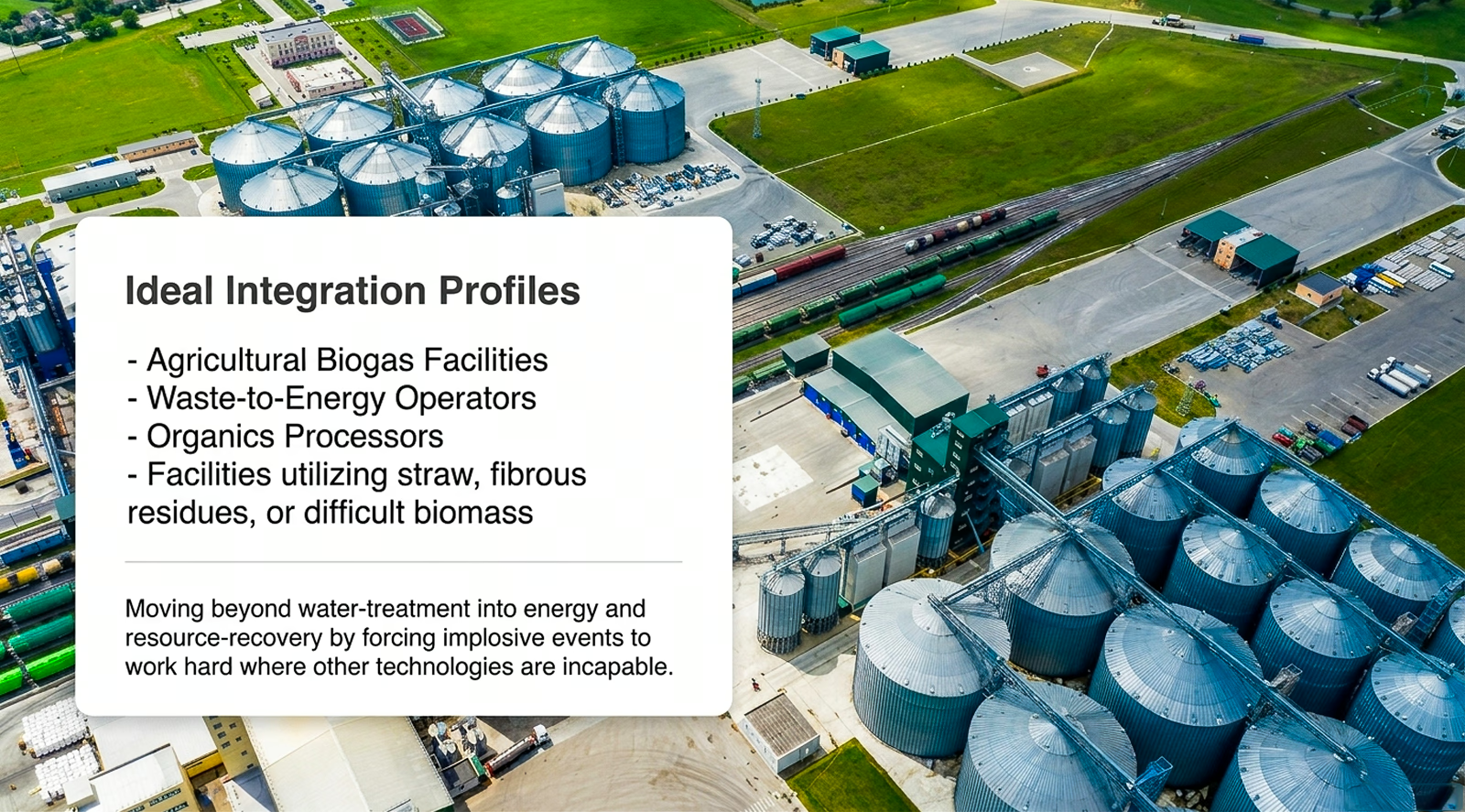
G-Cav™ pre-treatment is especially relevant for anaerobic digestion operators handling straw or fibrous residues, agricultural biogas facilities, waste-to-energy operators, organics processors seeking stronger substrate economics, and industrial partners building energy and resource-recovery opportunities in markets where difficult biomass is abundant.
This is one of the clearest examples of the broader G-Cav™ platform moving beyond conventional water-treatment categories into energy and resource-recovery applications through targeted feedstock pre-treatment. Consecutive cavitation induced implosive events working hard where other technologies are incapable.
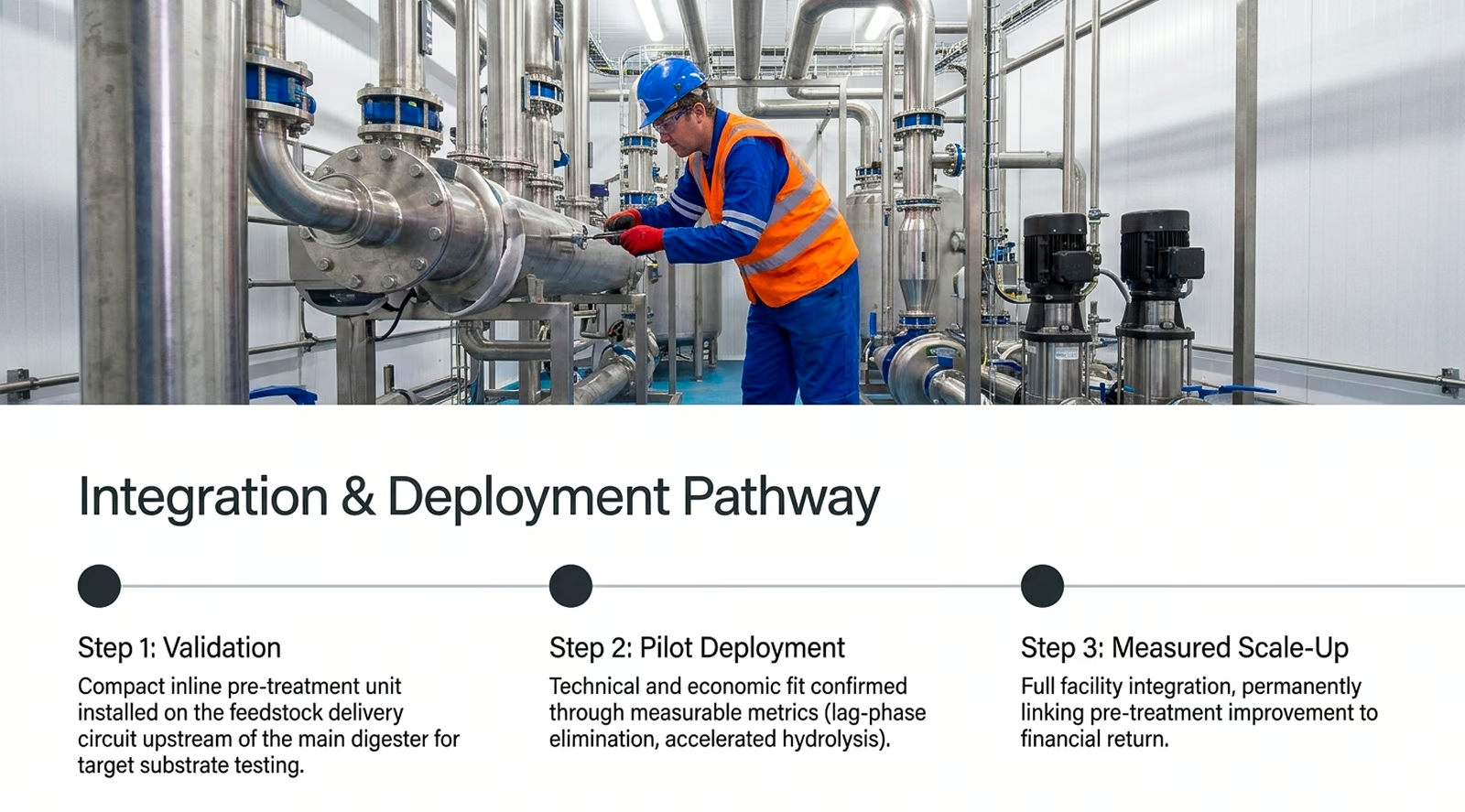
The strongest deployment pathway is structured and practical. G-Cav™ is installed as a compact inline pre-treatment unit on the feedstock delivery circuit, upstream of the main digester. Operators can begin with validation trials against the target substrate, then move into pilot deployment and measured scale-up once the technical and economic fit is confirmed.
That matters because serious biogas operators do not adopt new process technology through broad claims alone. They adopt it through evidence, site relevance, and a clear link between pre-treatment improvement and financial return.
G-Cav™ fits that approach well because the value drivers are measurable: lag-phase elimination, accelerated hydrolysis and reaction rate, total yield increase, and stronger utilisation of difficult feedstocks — all achieved before the material reaches the digester.
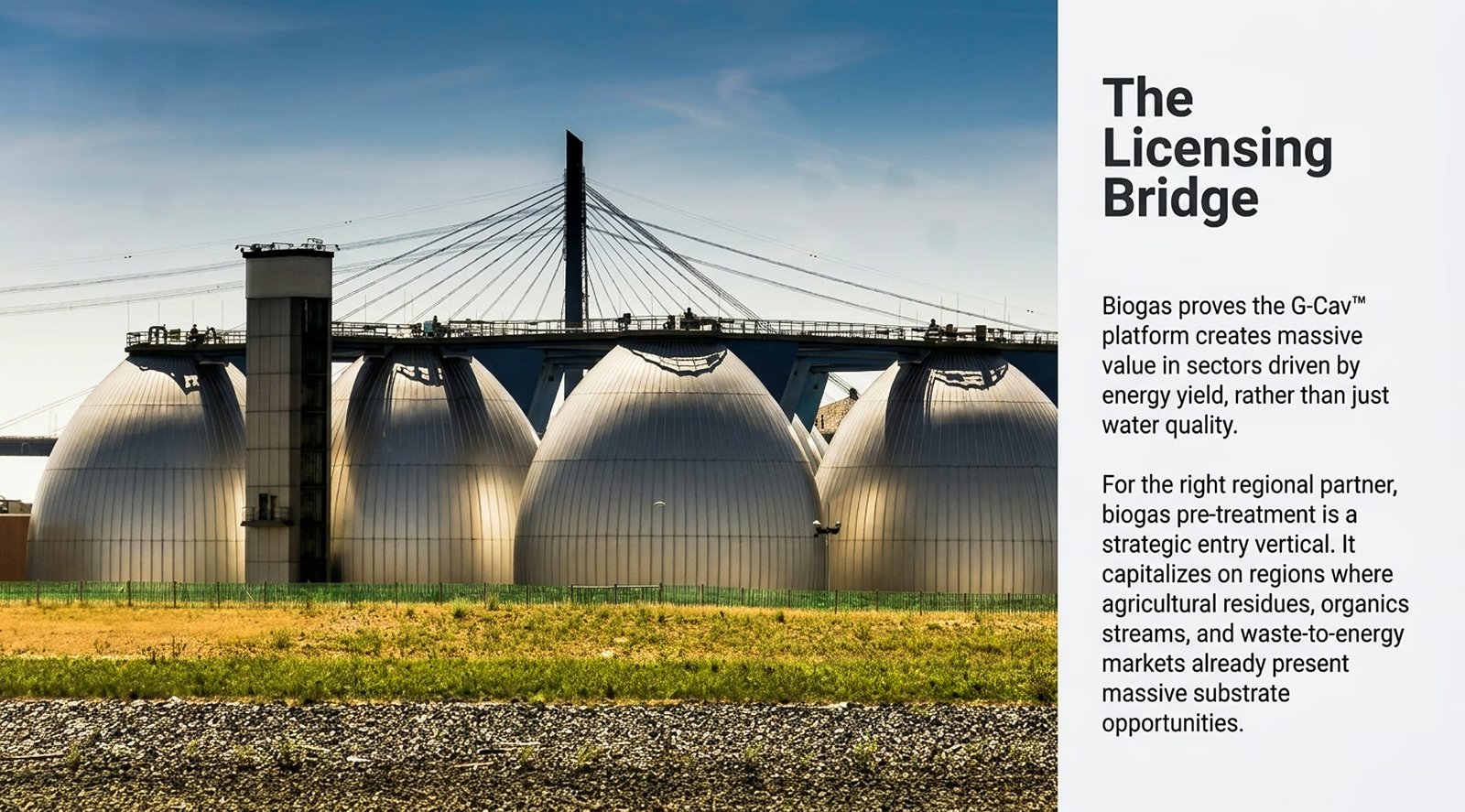
Biogas strengthens the licensing story because it shows the platform can create value in sectors where the primary commercial driver is energy yield rather than only water quality.
In the right territory, a licensing partner may see biogas pre-treatment as a strategic entry vertical, particularly where agricultural residues, organics streams, and waste-to-energy markets already create strong substrate opportunity.
That makes biogas more than a single application. It becomes a regional business-building pathway inside the broader G-Cav™ platform.
Conventional systems such as paddlewheels, blowers, diffusers, and venturi injectors create larger bubbles with short contact time, so a significant share of the oxygen (only 21% of air anyway) can escape before dissolving. G-Cav™ uses multistage hydrodynamic cavitation to create far finer gas structures, ensuring the oxygen is dissolved, and making sure the oxygen gets to where it is supposed to be, in the water.
Yes. The platform is designed to complement existing aeration infrastructure rather than requiring a full rebuild. Existing systems can continue to provide bulk aeration while G-Cav™ is used as a precision top-up and control platform when the BOD is at its peak, and the crop fully matures to harvest targets.
Lignin acts as a protective barrier around digestible biomass, making hydrolysis slower and reducing how much methane can be recovered. G-Cav™ addresses that problem by physically breaking apart and defibrillating the recalcitrant structure while improving oxidative process interaction upstream of digestion.
The current biogas material positions G-Cav™ as improving both digestion kinetics and as a result, total methane recovery. The reported story is not only a faster start, but also a materially higher gas yield from difficult biomass compared with untreated or conventionally aerated streams.
The strongest fit is in agricultural biogas, waste-to-energy, and organics processing environments where operators are trying to unlock more value from difficult biomass that would otherwise digest slowly or underperform commercially.