
Three-Gas Nanobubble Irrigation: Oxygen, Hydrogen and Ozone for Agriculture
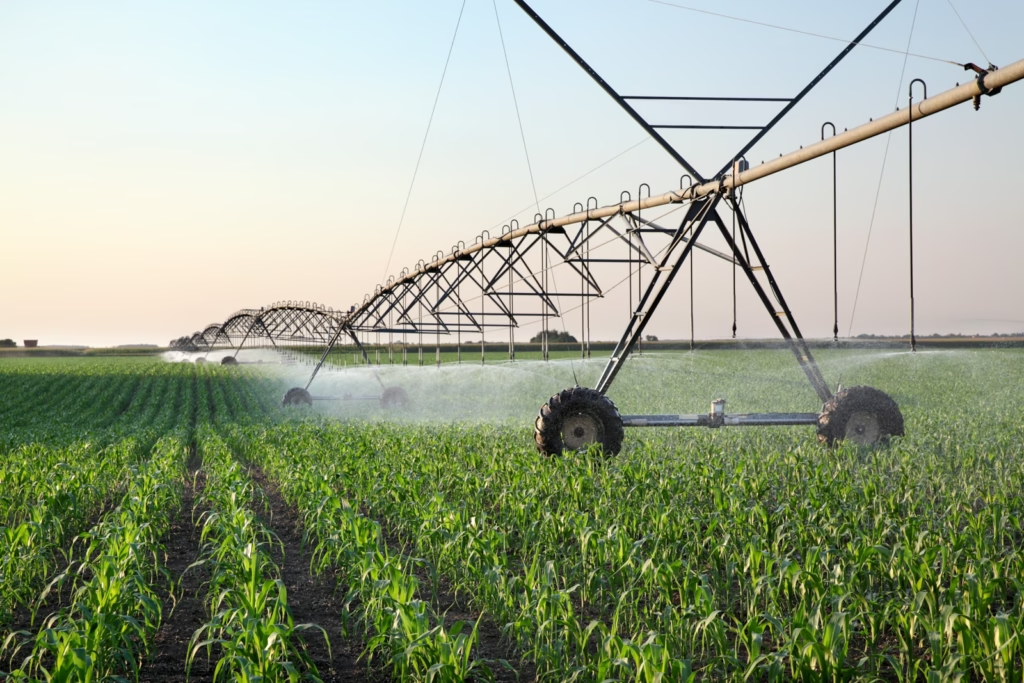
Agriculture is under pressure from multiple directions: water scarcity, soil degradation, rising fertiliser costs, climate stress, disease pressure and increasing demand for cleaner production. Conventional inputs such as fertilisers, pesticides and fungicides still matter, but they are delivering diminishing returns in many systems. G-Cav™ offers a different lever: improving plant performance through the irrigation water […]
How Gibbs Adsorption and Hydrodynamic Cavitation Enable Sub-Micro Flotation
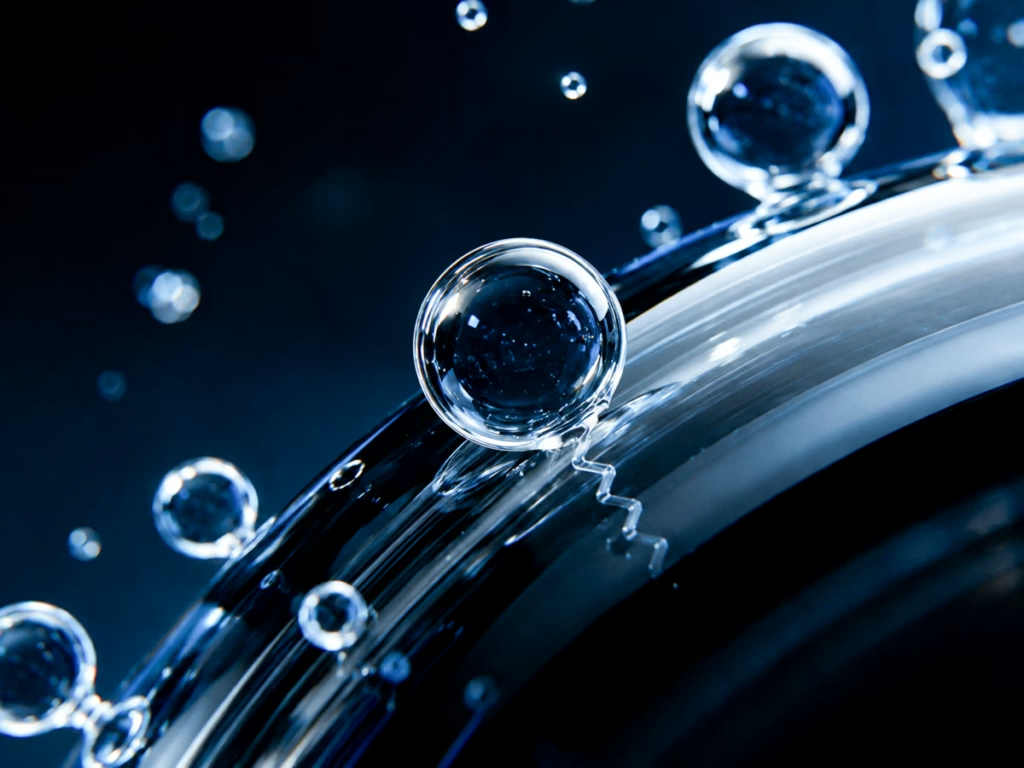
Stable emulsions are one of the hardest problems in industrial water treatment. Oils, fats, surfactants and hydrophobic contaminants can remain suspended in water long after gravity separation should have removed them. The reason is not simply poor settling. It is interfacial chemistry. When surfactants stabilise oil droplets, they reduce the interfacial tension between oil and […]
Why Gas Dissolution Efficiency Depends on Surface Area — and Why Nanobubbles Change Everything

Why Gas Dissolution Efficiency Comes Down to Surface Area Most gas-transfer systems waste gas for one simple reason: the bubbles are too large. Whether the application is aquaculture, mining, agriculture, environmental remediation or industrial water treatment, the same physical constraint applies. Gas can only dissolve into water across the boundary where gas and liquid meet. […]