

Abstract This paper describes the physical mechanism by which G-Cav™ vortex-induced multistage hydrodynamic cavitation achieves the simultaneous removal of emulsified oils, dissolved surfactants, and hydrophobic contaminants from aqueous streams. Two coupled processes are at work: cavitation-driven emulsion breaking, in which transient implosive pressure events mechanically disrupt stabilised oil-water interfaces; and Gibbs adsorption interfacial scavenging, in which the nanoscale bubble population generated by cavitation creates a gas-water interfacial area of sufficient magnitude to drive measurable surfactant depletion from the bulk water phase. The interaction between these two processes is self-reinforcing — surfactant depletion reduces re-emulsification potential, which in turn preserves the separation achieved by emulsion breaking. The combined effect is a progressive restoration of bulk water surface tension toward that of clean water, and the thermodynamic expulsion of hydrophobic contaminants to a skimmable surface foam. Field validation of this mechanism was conducted on Permian Basin produced water, yielding 64.6% total oil and grease removal in a single pass with no chemical addition.
Key Concepts
Global Cavitation Group Holdings Pty Ltd · globalcavitation.com · info@globalcavitation.com · +61 7 4028 3830 |
1. The Problem of Stable Emulsions
An emulsion is a dispersion of one liquid within another in which the two phases do not ordinarily mix — most commonly oil droplets suspended in water. In the absence of any stabilising agent, two immiscible liquids will separate by gravity over time, with the less dense phase rising to the surface. The separation is driven by the reduction in interfacial energy that occurs when droplets coalesce and the total oil-water interfacial area decreases.
The problem introduced by surface-active agents — surfactants — is that they arrest this process. Surfactant molecules are amphiphilic: one end of the molecule is polar and water-attracting (hydrophilic), while the other end is non-polar and water-repelling (hydrophobic). At an oil-water interface, surfactant molecules spontaneously adsorb with their hydrophobic tails oriented into the oil phase and their hydrophilic heads remaining in the water phase. This molecular monolayer at the droplet surface reduces the interfacial tension between the two phases — which is precisely the thermodynamic force that would otherwise drive coalescence.
A surfactant-stabilised emulsion can resist gravity separation indefinitely. The droplets are too small to settle rapidly and the interfacial film around each droplet prevents the droplet contact and merging that would produce larger, faster-settling aggregates. Conventional separation technologies — gravity tanks, plate coalescers, inclined surface separators — rely on the same gravitational driving force that the emulsion is chemically designed to defeat. They are structurally unable to break a well-stabilised emulsion without external intervention.
The chemistry that makes emulsions useful — in lubricants, cutting fluids, process chemicals, and food products — is precisely the chemistry that makes them resistant to treatment in wastewater. Breaking a stable emulsion requires energy input at the molecular scale, at the interfacial film, not bulk mechanical energy applied to the whole fluid. |
The relevant question for treatment engineering is therefore not how to improve the settling conditions but how to attack the interfacial film itself — how to disrupt the surfactant monolayer that prevents droplet coalescence and phase separation. This is the first function of hydrodynamic cavitation in the G-Cav™ system.
2. Hydrodynamic Cavitation: Mechanism and Architecture
Cavitation is the formation and collapse of vapour cavities — bubbles — within a liquid subjected to rapid pressure change. When local pressure drops below the vapour pressure of the liquid, dissolved gases come out of solution and the liquid itself can locally vaporise, forming a cavity. When the surrounding pressure recovers, that cavity collapses. The collapse is not a gentle process.
2.1 The Collapse Event
The implosive collapse of a cavitation bubble concentrates the kinetic energy of the collapsing liquid into a vanishingly small volume over an extremely short time. Peak pressures at the collapse point have been measured in the range of hundreds to thousands of atmospheres; temperatures at the cavity centre transiently reach several thousand Kelvin. The collapse also generates a liquid microjet — a high-velocity stream of liquid directed toward any nearby solid surface or interface — and a pressure shockwave that propagates outward through the bulk liquid.
It is the pressure shockwave, not the temperature or the jet directly, that is mechanically relevant to emulsion breaking. As a shockwave passes through a region containing emulsified oil droplets, it applies a transient mechanical impulse to the interfacial film surrounding each droplet. If the impulse is of sufficient magnitude, it disrupts the adsorbed surfactant monolayer — the molecules are displaced from their equilibrium orientation at the interface. With the interfacial film disrupted, adjacent droplets that come into contact are no longer prevented from merging by the protective surfactant layer. Coalescence occurs. The merged, larger droplets now behave according to Stokes’ law — rising velocity scales with the square of droplet diameter — and phase separation proceeds.
2.2 The Multistage Vortex Architecture
Single-stage cavitation — one pressure drop event — generates one population of cavitation events. The G-Cav™ design generates cavitation through a vortex-induced flow path in which the fluid passes through a series of successive implosion chambers within a single reactor pass. The geometry is specifically engineered to produce the low-pressure zone necessary for cavity formation, followed immediately by the pressure recovery zone that drives implosive collapse, and to repeat this sequence along the length of the reactor.
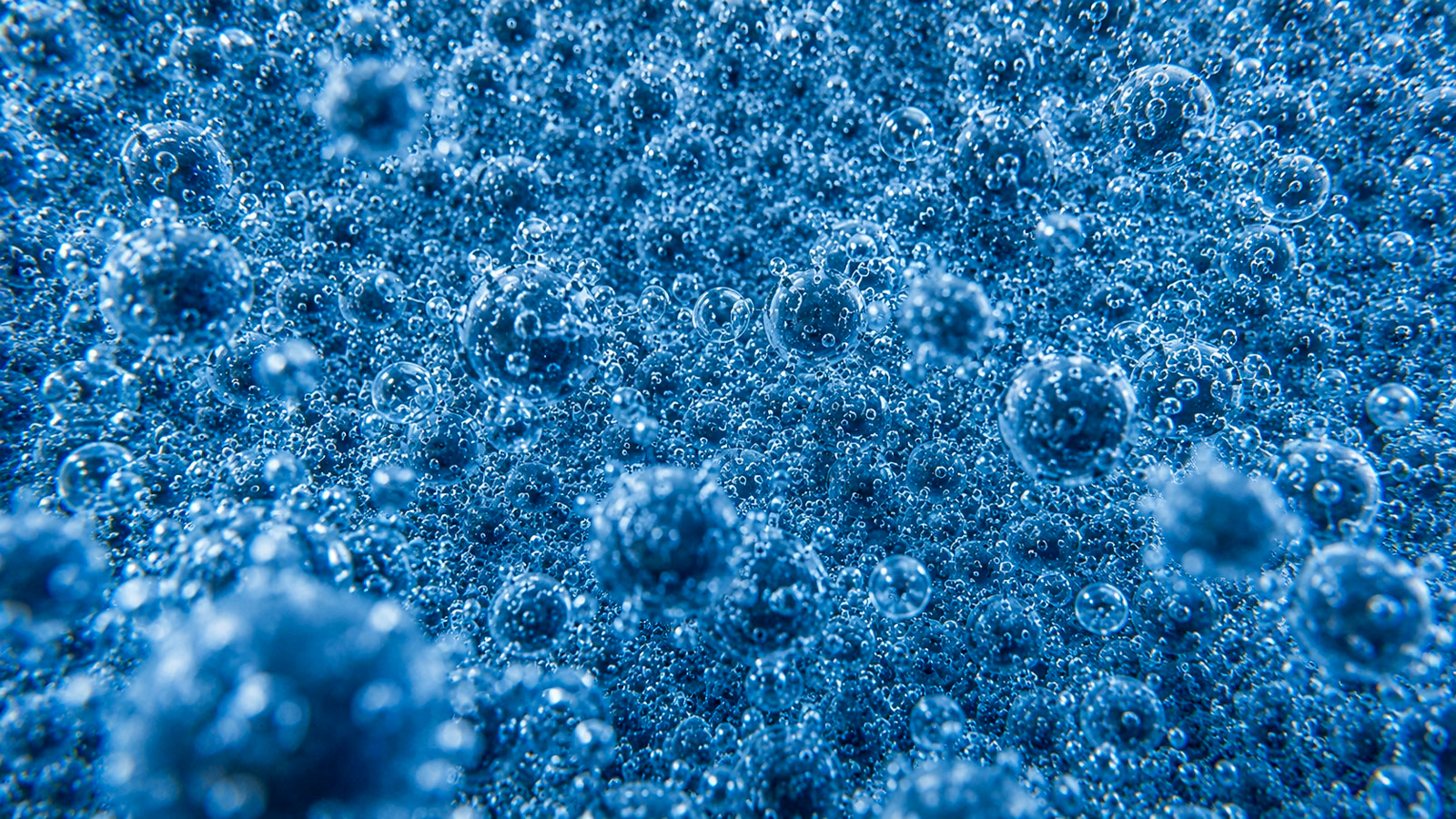
The practical effect of successive implosion chambers is cumulative energy delivery. Each stage builds on the dispersion and emulsion disruption achieved by the preceding stage. Gas that enters the first chamber as a large bubble is fragmented by successive collapses into progressively smaller structures. By the final stage, the gas-water dispersion contains a distribution of bubble sizes extending from the micro- to the nanoscale — a population geometry that is critical to the second mechanism described in Section 3.
The vortex geometry also isolates the implosion zone within the fluid itself — the high-energy collapse events occur within the liquid core of the vortex, not adjacent to the reactor wall. This protects the hardware from erosive cavitation damage while concentrating the shockwave energy in the bulk fluid where the emulsion exists. |
The absence of membranes, diffusers, or porous media in the G-Cav™ architecture is not a peripheral feature — it is a direct consequence of the mechanism. The cavitation event generates its own bubble population from the bulk liquid and injected gas; there is no surface through which gas must pass by diffusion and no surface through which it can accumulate fouling deposits. The reactor is mechanically simple precisely because the physics does not require complexity.
2.3 Gas Independence
The cavitation mechanism that breaks emulsions and fragments injected gas into nanoscale bubbles is driven by pressure dynamics — the geometry of the flow path and the pump-generated pressure differential. It is not driven by the chemical composition of the injected gas. Air, nitrogen, oxygen, ozone, and carbon dioxide all cavitate under the same conditions; the choice of gas determines what chemical interactions occur at the bubble surface and in the bulk liquid after the bubble population is generated, not whether the bubble population forms.
This has a direct practical consequence: for applications where the treatment objective is physical separation only — oil removal, surfactant stripping, surface tension restoration — air is the optimal gas feed. Air is available at atmospheric pressure, requires virtually no compression or storage infrastructure, and can be drawn into the cavitation chamber by the pump suction pressure differential alone. For applications where a specific chemical reaction with the liquid phase is also required, the gas source can be switched to ozone or oxygen using the same reactor and the same flow path.
3. Gibbs Adsorption: The Thermodynamic Scavenging Mechanism
The second mechanism operating within G-Cav™ treatment is thermodynamic rather than mechanical, and it operates simultaneously with the cavitation emulsion-breaking process described in Section 2. Understanding it requires returning to the fundamental behaviour of surfactant molecules at gas-water interfaces.
3.1 The Gibbs Adsorption Isotherm
The Gibbs adsorption isotherm is a thermodynamic relationship derived from the condition of equilibrium at an interface between two phases. It states that the surface excess concentration of a solute at an interface — the amount of solute per unit interfacial area in excess of what would be present if the bulk concentration extended uniformly to the interface — is related to the rate at which surface tension changes with bulk solute concentration.
For surfactants, this relationship takes a specific and important form. Because surfactant molecules reduce surface tension (their fundamental property), the surface tension decreases as bulk surfactant concentration increases. The Gibbs equation then requires that the surface excess — the surfactant concentration at the interface relative to the bulk — must be positive. This means that surfactant molecules preferentially accumulate at gas-water interfaces, driven by the thermodynamic drive to reduce total interfacial energy.
Γ = − (1/RT) · (dγ/d ln c) |
Gibbs adsorption equation — Γ: surface excess (mol/m²), γ: surface tension (N/m), c: bulk concentration (mol/L)
The practical interpretation is straightforward: given any gas-water interface, surfactant molecules in the adjacent water will spontaneously migrate to that interface. This is not a slow diffusion-limited process at the concentrations typical of industrial and municipal process water — the thermodynamic driving force is strong, and the kinetics are fast relative to the residence times in any practical treatment vessel. The migration is spontaneous and continuous as long as a concentration gradient exists between the bulk water and the interface.
3.2 The Nanobubble Cloud as Distributed Interface
The significance of the nanobubble population generated by G-Cav™ is the total gas-water interfacial area it creates. Interfacial area scales inversely with bubble radius — for a fixed volume of injected gas, smaller bubbles provide more total interface. The relationship is not linear: halving bubble radius doubles the interfacial area per unit volume of gas.
Bubble diameter | Bubbles per litre of gas | Total interface per litre of gas |
1 mm (conventional DAF) | ~1.9 × 10⁶ | ~6 m² |
100 µm (microbubble) | ~1.9 × 10⁹ | ~60 m² |
1 µm (sub-micron) | ~1.9 × 10¹⁵ | ~6,000 m² |
70 nm (nanobubble, G-Cav™) | ~5.6 × 10¹⁸ | ~85,700 m² |
The numbers in the table above are computed from simple geometry (surface area = 4πr² per bubble, volume = (4/3)πr³ per bubble, total area = 3V/r where V is the gas volume and r is bubble radius). At 70-nanometre bubble diameter, 1 litre of injected gas generates approximately 85,700 square metres of gas-water interface — and 20 litres, a modest injection volume for any industrial treatment vessel, produces approximately 1.7 million square metres — distributed throughout the treatment volume, in contact with all of the water simultaneously, not concentrated at a point or surface.
The Gibbs adsorption mechanism operates across every square metre of this interface. Surfactant molecules in the bulk water experience the thermodynamic pull of the interface at every point throughout the vessel. The effective contact area between the scavenging mechanism and the target contaminants is orders of magnitude greater than any conventional flotation or diffusion system can achieve.
3.3 The Surface Tension Restoration Sequence
The consequences of sustained Gibbs adsorption scavenging across a nanobubble cloud form a sequence of coupled effects that progressively transform the bulk water chemistry:
Stage | Physical effect | Measurable indicator |
1. Surfactant migration to bubble interfaces | Free surfactant concentration in bulk water decreases | Bulk surface tension begins to rise (Gibbs equation) |
2. Surface tension rise in bulk water | Bulk water becomes thermodynamically hostile to hydrophobic compounds | Contact angle of oil droplets on water increases |
3. Expulsion of hydrophobic compounds | Oils, fats, and non-polar molecules driven to the only available low-energy boundary: the surface foam | Coherent, skimmable surface layer forms |
4. Reduction of re-emulsification potential | With free surfactant depleted, cavitation-liberated oil droplets cannot be re-stabilised as emulsion | Phase separation is sustained, not reversed |
5. Progressive approach to clean water surface tension | Bulk water surface tension approaches that of surfactant-free water (~72 mN/m at 25°C) | Measured surface tension recovery toward reference value |
The last point in this sequence — progressive approach to the surface tension of clean water — is particularly important because it provides a single, directly measurable physical indicator of treatment progress that correlates with removal across all contaminant classes simultaneously. A clarifier effluent with restored surface tension has been depleted of surfactants; a depleted surfactant matrix cannot sustain emulsions; oils that cannot be emulsified float and are removed.
3.4 The Reinforcing Interaction Between the Two Mechanisms
The cavitation emulsion-breaking mechanism (Section 2) and the Gibbs adsorption scavenging mechanism (Section 3) are not independent processes that happen to occur in the same vessel — they are mutually reinforcing in a way that makes their combined effect substantially greater than either alone.
The reinforcement operates in both directions. Cavitation breaks emulsions and liberates free oil; the liberated oil, now in the form of free droplets rather than stabilised emulsion, is immediately subject to the Gibbs adsorption mechanism — as surfactant is stripped from the bulk by the nanobubble cloud, the oil droplets lose the surfactant monolayer that would otherwise re-stabilise them as emulsion. Conversely, the Gibbs adsorption process strips surfactant from the bulk water, reducing the total concentration of emulsifying agents available to form new interfacial films around any freshly created oil-water interfaces. The emulsion-breaking is therefore more complete and more durable because the bulk water’s capacity to re-emulsify is simultaneously being reduced.
The interaction is thermodynamically self-reinforcing;
● The more the surfactant is removed by Gibbs adsorption, means that less re-emulsification can occur. ● Less re-emulsification means; the higher the proportion of oil in the freely floating phase. ● The higher the floating oil fraction; the more complete the physical separation. ● The more complete the physical substance separation, the greater the re-establishment of surface tension.
Each process amplifies the other’s outcome. |
4. The Surface Foam: Concentration and Removal
Both mechanisms described above — emulsion breaking with buoyancy flotation, and Gibbs adsorption surface tension restoration — converge on a single endpoint: the accumulation of contaminants at the water surface in a form suitable for physical removal. Understanding the properties of that surface foam, and how it differs from the foam produced by less intense treatment methods, is essential to understanding the separation performance.
4.1 Foam Formation and Stability
The surface foam in a G-Cav™-treated vessel forms from two simultaneous contributions. Larger microbubbles generated by the cavitation process carry freed oil droplets to the surface by buoyancy — the bubble-oil aggregate has a lower average density than either water or oil alone, and rises rapidly. Nanobubbles that reach the surface without merging into larger structures form the foam lamellae — the thin films between foam cells that trap the concentrated surfactant and hydrophobic material.
The foam is stable because the Gibbs adsorption process that concentrates surfactant at bubble interfaces also applies at the bubble-air interface of the foam lamellae. The foam cells are stabilised by the same surfactant monolayers that the treatment process is stripping from the bulk water — the surfactant is not destroyed, it is relocated from the bulk water to the surface foam, where it can be physically collected and removed from the system.
4.2 Concentration Factor
The value of foam fractionation as a separation technique lies in the concentration factor it achieves: the ratio of contaminant concentration in the foam to contaminant concentration in the treated bulk water. In a well-operated fractionation column, concentration factors of 10 to 100 are commonly achieved for surface-active compounds — meaning the foam, which represents a small volume relative to the treated liquid, contains most of the total contaminant mass.
The practical implication is that the downstream waste management problem is transformed. A raw wastewater stream containing, say, 400 mg/L FOG at 500 m³/day presents 200 kg/day of oil to be managed. After sub-micro flotation that achieves 65% removal, the treated effluent contains 140 mg/L FOG — but 260 kg/day of oil has been concentrated into the skimmed foam, which might represent 5 to 10 m³/day of material rather than 500 m³/day. The concentrated stream is cheaper to transport, cheaper to process further, and in some cases (particularly with recovered food-grade fats or refinery hydrocarbons) has direct commodity value.
4.3 Contaminant Classes Amenable to Foam Concentration
The thermodynamic basis of Gibbs adsorption scavenging defines which contaminant classes are amenable to concentration and removal by this mechanism. The relevant property is the compound’s tendency to partition to gas-water interfaces — its surface activity. Any molecule that reduces gas-water interfacial tension when dissolved in water will accumulate at the bubble surface and be concentrated in the foam. The key classes are:
Contaminant Class | Surface Activity Basis | Concentration Mechanism |
Free surfactants (anionic, nonionic, cationic) | Direct amphiphilic structure — the defining property of a surfactant | Primary Gibbs adsorption — direct migration to bubble interface |
Emulsified oils and fats (with surfactant stabilisation) | Liberated by cavitation; re-association with microbubbles by buoyancy | Cavitation breaking + bubble attachment + buoyancy flotation |
Proteins and polypeptides | Amphiphilic secondary structure — hydrophobic side chains orient toward gas phase | Gibbs adsorption; particularly effective for foaming proteins |
Long-chain PFAS (PFOS, PFOA) | Highly surface-active fluorinated carbon chain; strong affinity for gas-water interface | Gibbs adsorption; perfluorinated tail strongly prefers gas-phase orientation |
Hydrophobic pharmaceuticals | Partition coefficient (log P) determines interface affinity; compounds with log P > 2 accumulate at interfaces | Gibbs-driven partitioning, particularly effective for high-log P compounds |
Dye-surfactant aggregates (textile) | Hydrophobic dye molecules encapsulated in surfactant micelles; micellar structure is surface-active | Foam removal of intact micelles; further breakdown on CMC disruption |
The unifying characteristic is not chemical class but thermodynamic behaviour at the gas-water interface. The Gibbs adsorption isotherm applies to any compound that reduces surface tension — regardless of whether that compound is a synthetic detergent, a natural phospholipid, a fluorinated polymer, or a pharmaceutical molecule. The mechanism is general; what varies between compound classes is the rate and extent of interfacial accumulation, which can be related to measurable physicochemical properties including the surface tension reduction per unit concentration and the partition coefficient between bulk and interface.
5. Field Validation: Permian Basin Produced Water
The mechanism described in Sections 2 through 4 was validated in field conditions on produced water from the Permian Basin on 26 September 2025. Produced water from this formation presents one of the most demanding oil-water separation challenges available: stable hydrocarbon emulsions sustained by naturally occurring naphthenate and asphaltene surfactants, in a high-salinity brine matrix that defeats conventional coagulation and flocculation chemistry.
The test configuration was deliberately minimal: a simple multistage submersible pump feeding a G-Cav™ unit with nitrogen injection. Water was processed in a single pass — no recirculation, no chemical addition, no residence time beyond the transit through the reactor. Samples were collected from the raw influent and from the single-pass effluent and submitted for independent laboratory analysis under tracked chain of custody.
Sample point | Sample ID | Total oil & grease | Result |
Raw influent | WC250926-002 | 570.0 ppm | Baseline |
Single-pass effluent | WC250926-001 | 202.0 ppm | 64.6% removal — 368 ppm removed in one pass |
Visual observation at the receiving vessel confirmed the mechanism directly: a consolidated, high-concentration layer of oil formed instantaneously at the water surface. The skimmable layer was coherent — a layer of separated oil, not dispersed foam — indicating that both the emulsion-breaking buoyancy mechanism and the Gibbs adsorption concentration effect had operated to completion within the single pass through the reactor.
5.1 Interpreting the Single-Pass Result
The 64.6% single-pass removal result is interpreted correctly only in the context of the test geometry. The test was a flow-through configuration: water entered the reactor, passed through it in a fraction of a second, and was collected downstream. There was no recirculation and no extended contact time between the nanobubble cloud and the bulk water.
In any practical installation — a treatment tank, an equalisation vessel, a primary clarifier — the treated water is not discarded after one pass. The G-Cav™ unit operates continuously within or on a recirculation loop through the vessel, and each parcel of water passes through the treatment zone multiple times over the residence time of the vessel. Each pass provides an additional increment of emulsion breaking and Gibbs adsorption scavenging. The single-pass result therefore represents the minimum performance achievable in a continuous recirculating configuration, not the operating steady state.
A further point on the choice of produced water as the validation medium:
Permian Basin produced water, with its high-salinity matrix, stable petroleum hydrocarbon emulsions, and naturally occurring asphaltene and naphthenate emulsifiers, is a more demanding separation target than most industrial process effluents. The mechanism is identical in less complex matrices; this therefore represents an expected performance floor as established by this field test, it is therefore a conservative baseline for applications in less challenging water chemistries. |
5.2 Sequential AOP Metal Removal Results – (a downstream relevance)
A second field test conducted on the same date extended the treatment platform to dissolved metal removal through a sequential advanced oxidation process — ozone injection followed by in-situ chlorine generation from brine chlorides, completed by G-Cav™ cavitation. The results confirm the versatility of the cavitation platform beyond physical separation:
Analyte | Pre-treatment | Post-treatment | Removal |
Iron (dissolved) | 83.7 ppm | 2.6 ppm | 96.9% |
Aluminium | 20.0 ppm | 0 ppm | 100% |
Phosphorus | 5.551 ppm | 0.769 ppm | 86.1% |
Sodium (salinity check) | 53,429 ppm | 56,617 ppm | Retained (minor evaporation only) |
The sodium retention data is mechanistically significant: the treatment removes targeted fouling agents while leaving the bulk dissolved salt matrix intact. The cavitation and oxidation chemistry operates selectively on species that are either hydrophobic (separated by the flotation mechanism) or readily oxidised (converted by the AOP sequence from dissolved ions to filterable precipitates). It does not demineralise the water.
6. Operating Parameters and Mechanism Sensitivity
The mechanisms described in this paper are physical and thermodynamic — they are governed by measurable properties of the fluid and the operating conditions. Understanding which parameters influence performance is essential for system design and for predicting how performance will vary across different application contexts.
6.1 Surfactant Concentration: The Thermodynamic Driver
The Gibbs adsorption isotherm predicts that the rate of surfactant migration to bubble interfaces is related to the concentration gradient between the bulk water and the interface. Higher bulk surfactant concentration means a stronger thermodynamic driving force — more surfactant is available to populate the enormous interfacial area created by the nanobubble cloud, and the surface tension restoration proceeds faster. Industrial process effluents, which typically carry surfactant loadings one to two orders of magnitude above municipal wastewater, therefore present a stronger Gibbs adsorption driving force than more dilute water streams.
This is a counterintuitive point: for this particular application the technology performs better, not worse, in more contaminated water. The mechanism is thermodynamically self-scaling — the driving force is proportional to the degree of contamination.
6.2 Bubble Size Distribution and Stability
An uncoated nanobubble in pure water is not stable — it dissolves rapidly. The elevated internal pressure of a very small bubble (described by the Young-Laplace equation: ΔP = 4γ/d, where internal pressure excess increases as diameter decreases) drives gas back into solution faster than in a larger bubble. In clean water, a 70-nanometre bubble dissolves within milliseconds.
What gives nanobubbles their extended residence time in process water is the surfactant coating acquired through Gibbs adsorption. As surfactant molecules adsorb at the bubble interface with their hydrophobic tails oriented into the gas phase, they form a close-packed monolayer that physically impedes gas exchange between the bubble interior and the surrounding water. This monolayer acts as a diffusion barrier — it does not eliminate gas transfer but reduces it considerably, extending bubble lifetime from milliseconds to minutes, hours or more, depending on the density and composition of the adsorbed layer.
The implication is significant: nanobubble stability in this application is not a fixed physical property of small bubbles in water — it is a dynamic property that depends on the surfactant concentration of the water being treated. In high-surfactant industrial process water, bubble surfaces are rapidly coated, dissolution is retarded, and the nanobubble cloud persists long enough for sustained Gibbs adsorption scavenging throughout the treatment vessel. This is another expression of the same self-reinforcing mechanism: the surfactant-rich effluents that most need treatment are precisely the effluents in which the nanobubble population remains stable long enough to treat them effectively.
6.3 Temperature
Temperature affects the mechanism through two pathways. Surface tension itself decreases with increasing temperature — water at 60°C has a surface tension approximately 20% lower than at 20°C. A lower starting surface tension means the absolute change in surface tension achievable by surfactant removal is smaller, but the thermodynamic driving force for Gibbs adsorption is not materially reduced. The second effect is on fluid viscosity: lower viscosity at higher temperatures reduces the drag on rising oil droplets and improves the rate of physical separation after emulsion breaking. Warm process water is therefore generally more amenable to flotation separation, not less.
6.4 The Role of Surfactant Loading in Emulsion Stability
The emulsion-breaking effect of cavitation shockwaves operates on the interfacial film — the monolayer of adsorbed surfactant molecules that stabilises the oil droplet. The energy required to disrupt this film is related to the strength of the film, which is determined by the surface pressure of the adsorbed monolayer. More tightly packed surfactant monolayers (associated with higher surfactant concentrations and more surface-active compounds) resist disruption more effectively. This means that at very high surfactant concentrations, the cavitation energy required to achieve a given fraction of emulsion breaking is higher.
However, the Gibbs adsorption mechanism simultaneously reduces free surfactant concentration in the bulk. As bulk surfactant decreases, the surface pressure of adsorbed monolayers on oil droplets also decreases — the monolayer becomes less densely packed and easier to disrupt by subsequent cavitation shockwaves. The two mechanisms are again self-reinforcing: Gibbs adsorption weakens the emulsion stabilisation that the cavitation must overcome.
7. About Global Cavitation Group Holdings
Global Cavitation Group Holdings Pty Ltd is an Australian technology company headquartered in Cairns, Queensland. The G-Cav™ vortex-induced multistage hydrodynamic cavitation platform is a patented nanobubble generation and advanced oxidation system with field-validated performance in produced water treatment (64.6% TOG removal, single pass, Permian Basin), biogas enhancement (190% methane production increase, European anaerobic digestion), and industrial wastewater pretreatment.
The company designs structured pilot programs in collaboration with operators and engineering consultants, generating quantitative performance data under representative operating conditions. Pilot programs are available for industrial pretreatment, municipal primary clarification, produced water management, and any application where the Gibbs adsorption and hydrodynamic cavitation mechanisms described in this paper are relevant.
Website | globalcavitation.com |
info@globalcavitation.com | |
Phone | +61 7 4028 3830 |
Address | 26 Donaldson Street, Manunda QLD 4870, Australia |
Technical note on evidence status. The mechanisms described in this paper — Gibbs adsorption at nanoscale bubble interfaces and cavitation-driven emulsion breaking — are established physical and thermodynamic principles, not proprietary claims. Their experimental validation in the G-Cav™ field context (Permian Basin, 26 September 2025, sample chain of custody IDs WC250926-001 and WC250926-002) is presented as measured data. Performance inferences for specific applications not yet pilot-tested are not stated in this document; the mechanism is described and the reader is invited to apply it to their context.