
From high-strength industrial effluent to municipal treatment optimisation, G-Cav™ is a cavitation and nanobubble platform for pretreatment, flotation, oxygenation, and whole-of-system performance improvement.
Wastewater is one of the strongest commercial verticals in the G-Cav™ platform because the process pain is immediate and measurable. Whether the problem is trade-waste cost, sludge load, aeration energy, effluent instability, or compliance risk, underperformance in wastewater treatment shows up quickly in operating cost and plant stress.
G-Cav™ multistage hydrodynamic cavitation combined with Gibbs adsorption provides a high-leverage pretreatment solution for industrial wastewater streams that carry high surfactant loads and surface-active contaminants. It simultaneously tackles conventional pollutants and emerging persistent compounds while delivering clear commercial returns through trade waste savings and compliance risk reduction.
Key interests for readers:
Powerful thermodynamic advantage in high-surfactant industrial effluents (typically 10–50× municipal levels)
Efficient interfacial concentration of long-chain PFAS, hormones, pharmaceuticals and other surface-active molecules
Surfactant stripping that restores bulk surface tension and significantly improves downstream advanced oxidation efficiency plus gas transfer/oxygenation performance
Simple, infrastructure-light deployment with transparent ROI and reduced reliance on high-risk disposal methods
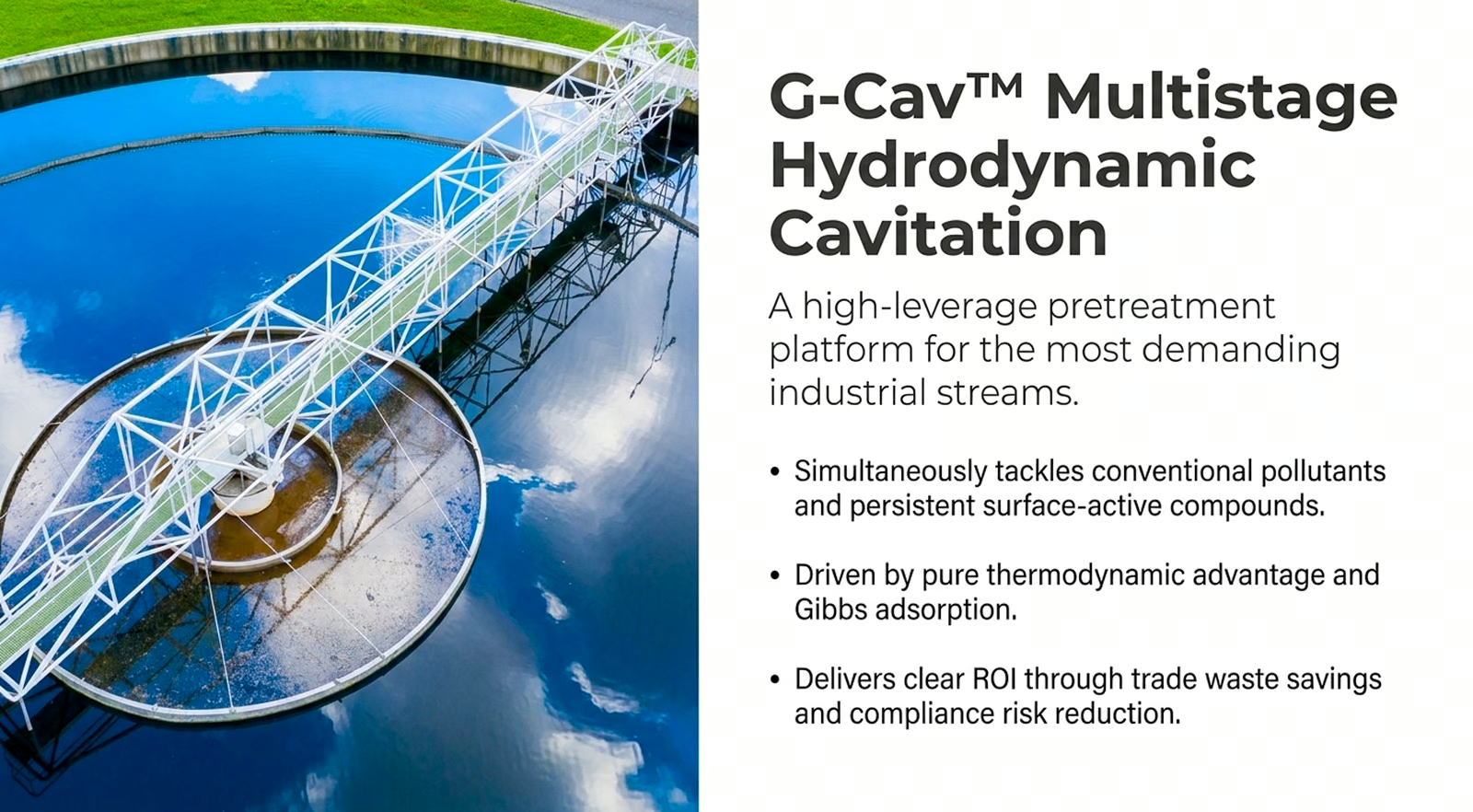
Process effluents from food production, dairy, rendering, textiles, metalworking, pharmaceuticals and petrochemical operations carry contaminant loads far exceeding municipal streams. Traditional parameters — fats, oils, greases, BOD and TSS — trigger direct financial penalties through trade waste agreements or environmental licences. At the same time, surface-active and persistent compounds including long-chain PFAS, hormones and active pharmaceutical ingredients are attracting heightened regulatory attention worldwide.
Recent updates to European water legislation (Directive 2026/805) explicitly add multiple PFAS compounds and pharmaceuticals to priority pollutant lists, with similar tightening underway in other jurisdictions. The global industrial wastewater treatment market already exceeds $20 billion annually and continues to expand. Within this, PFAS-related management alone carries estimated long-term costs in the tens to over one hundred billion dollars over coming decades. Pretreatment technologies that simultaneously tackle conventional loads and concentrate these emerging surface-active contaminants at source therefore sit at a critical commercial and compliance intersection.
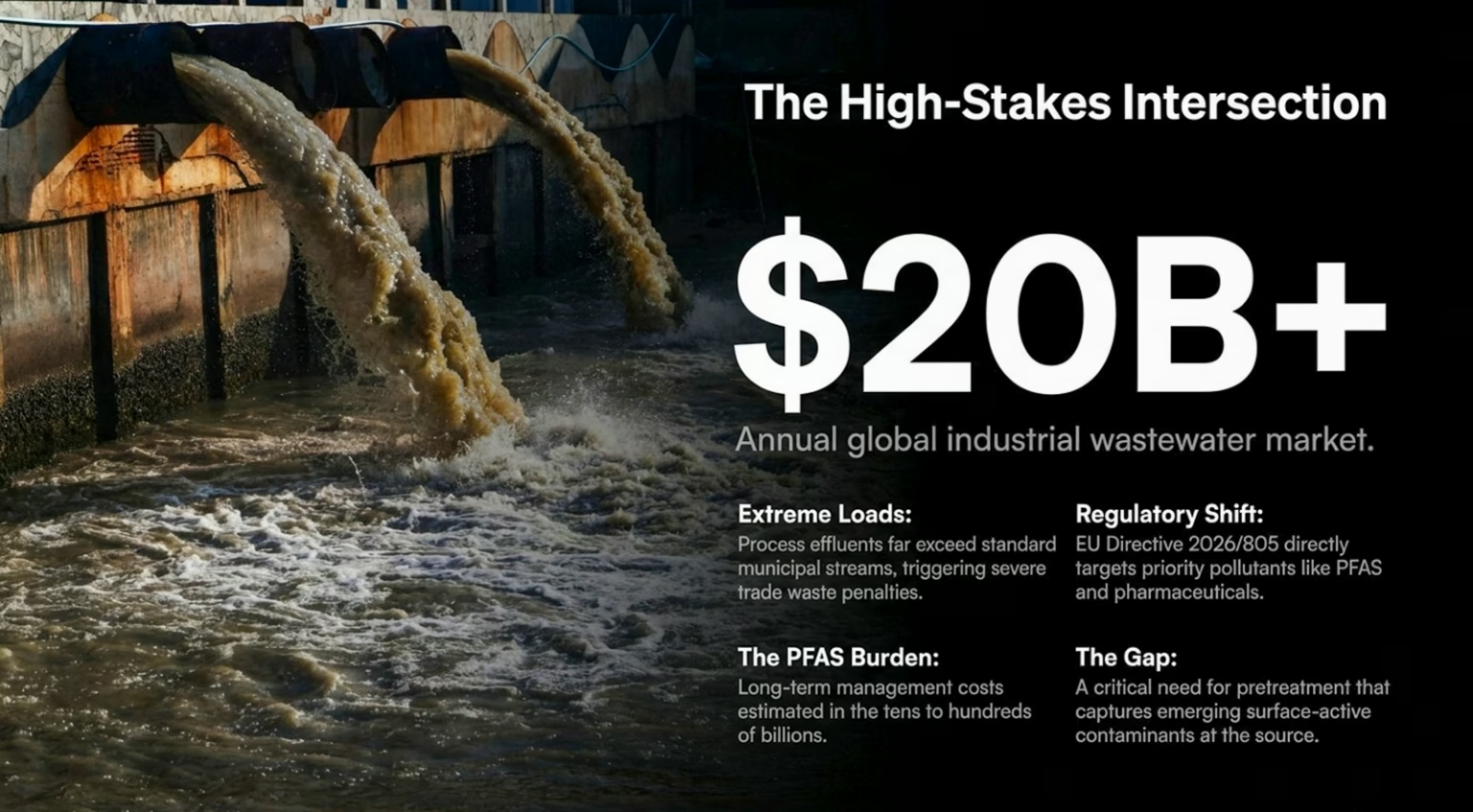
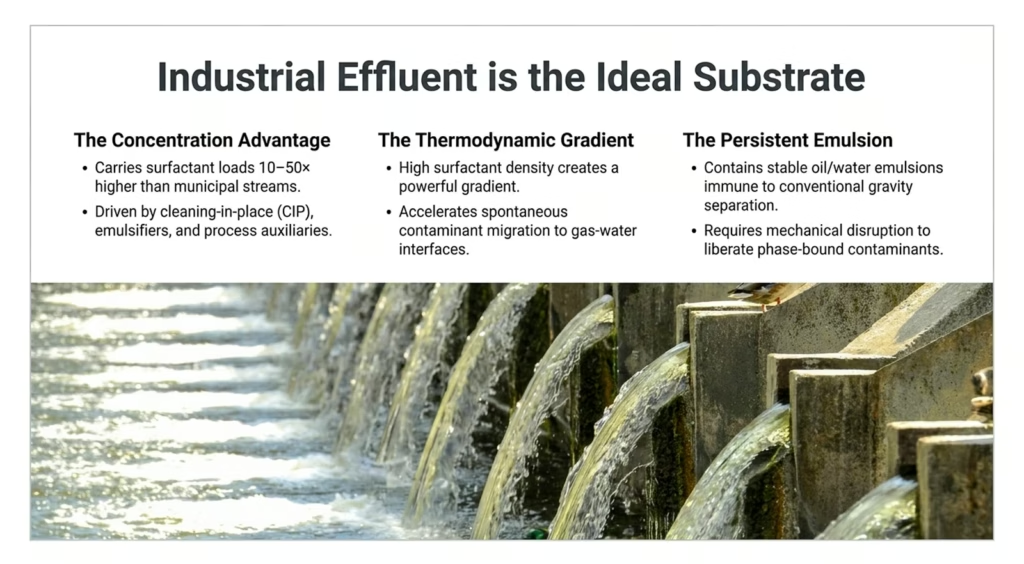
Industrial process waters typically contain surfactant concentrations ten to fifty times higher than municipal sewage, originating from cleaning-in-place regimes, process auxiliaries, emulsifiers and natural amphiphiles such as proteins and phospholipids. This abundance creates a powerful thermodynamic gradient that accelerates surfactant migration to gas-water interfaces under the Gibbs adsorption isotherm.
Many emerging contaminants of concern — long-chain PFAS with their fluorinated hydrophobic tails, numerous hormones and certain pharmaceutical residues — also exhibit strong surface activity and preferentially partition to these interfaces. Industrial streams further present stable emulsions that conventional gravity or plate separation cannot resolve. The combination of high surfactant loading, defined and consistent contaminant matrices from single processes, and prevalent emulsified phases makes industrial wastewater exceptionally responsive to a mechanism that simultaneously restores bulk surface tension and liberates droplet-phase contaminants for buoyant removal.
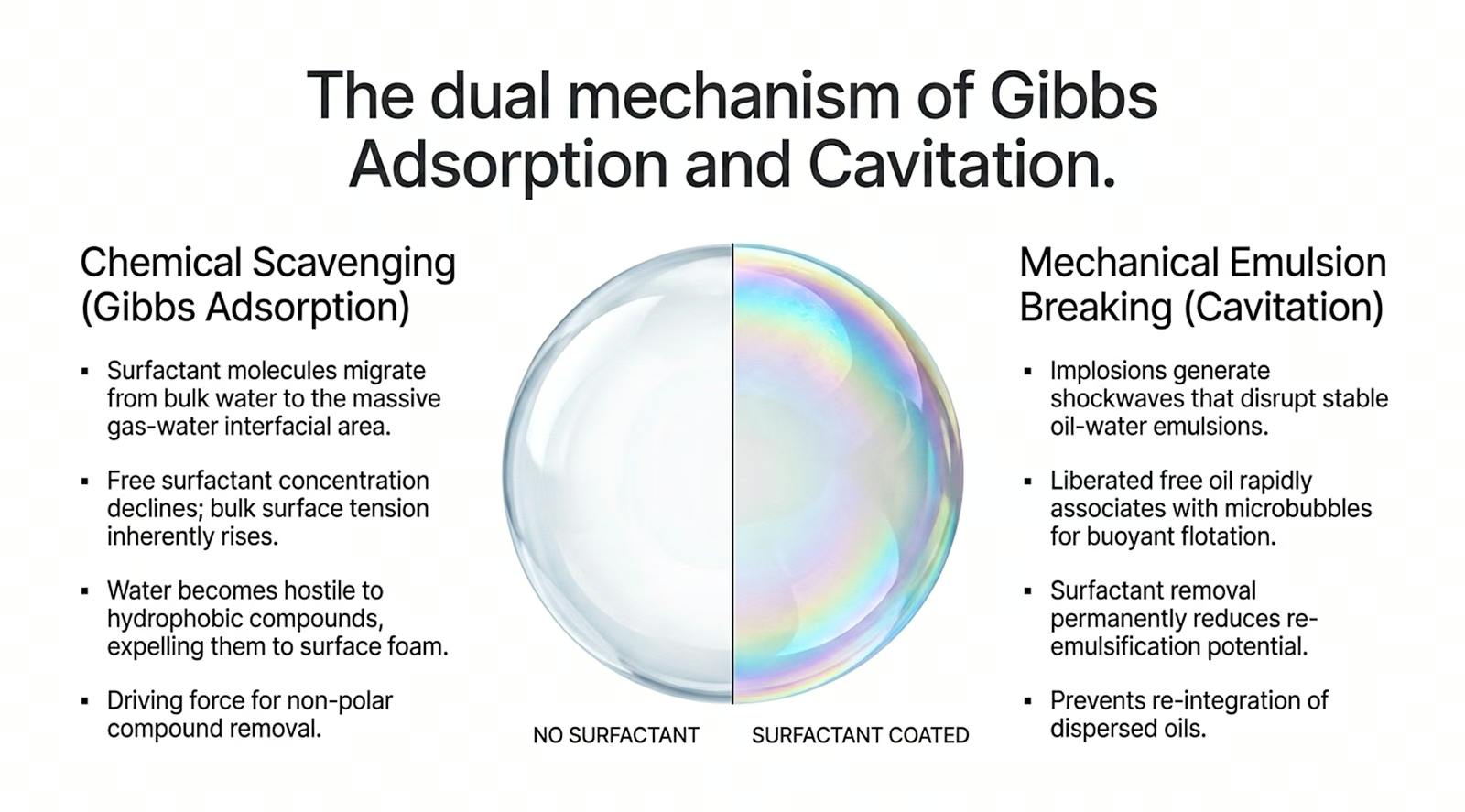
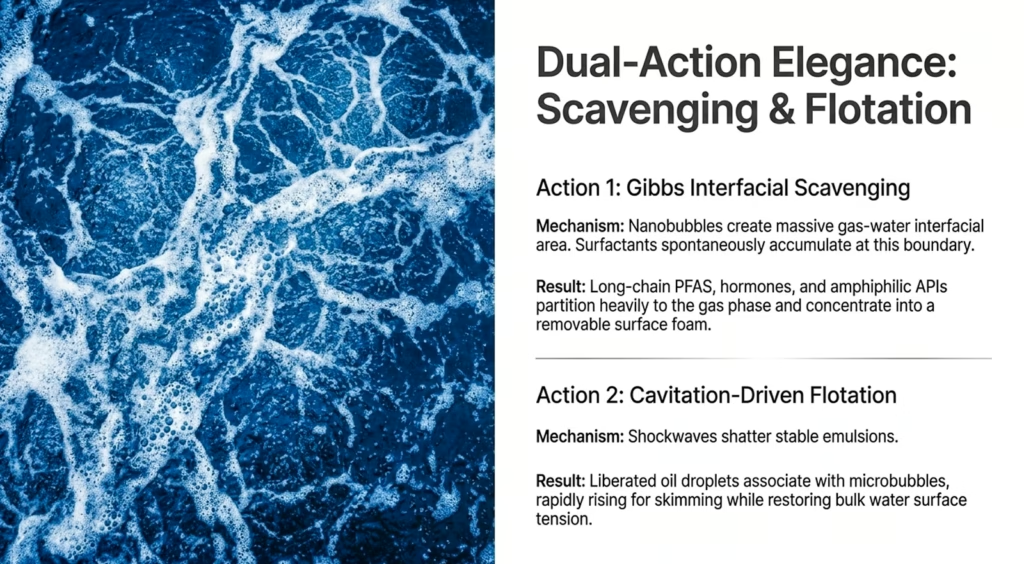
A dense nanobubble cloud distributed throughout the treatment volume creates an enormous gas-water interfacial area. Surfactant molecules, including those from industrial cleaning chemicals and process aids, spontaneously accumulate at this interface according to the Gibbs adsorption isotherm. As bulk surfactant concentration declines, surface tension rises, rendering the water column progressively less hospitable to hydrophobic species. Long-chain PFAS, with their highly fluorinated tails, exhibit particularly strong partitioning to the gas phase and concentrate efficiently in the resulting surface foam.
Concurrently, cavitation shockwaves mechanically disrupt stable emulsions, releasing oil droplets that rapidly associate with larger microbubbles and rise for skimming. Many hormones and pharmaceutical compounds present in manufacturing or formulation wastewaters also display amphiphilic character and are captured within the same interfacial concentration process. Removal of free surfactants further enhances subsequent gas transfer and oxidative efficiency should advanced oxidation be applied downstream or to the concentrated foam. The net outcome is simultaneous addressing of conventional FOG/BOD loads and targeted concentration of persistent surface-active emerging contaminants without chemical addition.
Single-pass field trials on produced water from the Permian Basin — a matrix containing stable hydrocarbon emulsions stabilised by naturally occurring surfactants — achieved 65% reduction in total oil and grease (from 570 ppm to 202 ppm) with no chemical addition and residence time limited to transit through the reactor. A coherent, high-concentration oil layer formed immediately on the surface, confirming that emulsion breaking and interfacial concentration operated in concert.
Because this validation occurred in a chemically more complex and heavily contaminated environment than most food, dairy or manufacturing effluents, it provides a conservative performance reference rather than an upper limit. In industrial pretreatment vessels with multi-hour residence times and recirculating configurations, the same mechanisms deliver progressive contaminant removal while restoring bulk water surface tension — a measurable indicator of improved downstream treatability.
Food and beverage processing, dairy operations and rendering generate high FOG and BOD with abundant food-grade and natural emulsifiers that serve as ideal Gibbs substrates; lighter lipids separate rapidly once emulsions are disrupted. Metalworking and automotive facilities produce stable cutting fluid emulsions engineered for persistence; these require the mechanical energy of cavitation to break and are directly addressed by the same process. Petrochemical and refinery streams share close chemical analogy with the produced water validation case.
Pharmaceutical manufacturing and formulation wastewaters present a particularly compelling fit: they contain active ingredients, intermediates and cleaning surfactants, many of which exhibit surface activity or associate with micelles. Hormones and certain APIs can be captured through the same interfacial mechanism that concentrates long-chain PFAS. In all cases, the consistent process chemistry of a single facility enables reliable pilot design and direct translation of removal performance into avoided trade waste surcharges or compliance risk reduction.
Textile dyeing and finishing effluents impose strict colour limits alongside conventional parameters. Direct ozone application is often inefficient because abundant surfactants and dispersants consume oxidant non-selectively while encapsulating hydrophobic disperse dyes within micelles that shield chromophores from attack. Air-based G-Cav™ fractionation first depletes free surfactants via Gibbs adsorption, dissociates micelles below the critical micelle concentration and physically removes a substantial fraction of hydrophobic colour in the concentrated foam.
The surfactant-depleted matrix then receives ozone nanobubbles from the same reactor (gas feed switched). Ozone now contacts exposed chromophores at substantially lower dose and higher destruction efficiency. The approach also opens potential for recovery of high-value specialty dyes from the foam concentrate. Surfactant removal not only improves ozone economics but enhances overall gas-liquid transfer, illustrating a broader principle: stripping surface-active compounds upstream improves the performance of any downstream oxidative or separation step targeting remaining or concentrated contaminants.
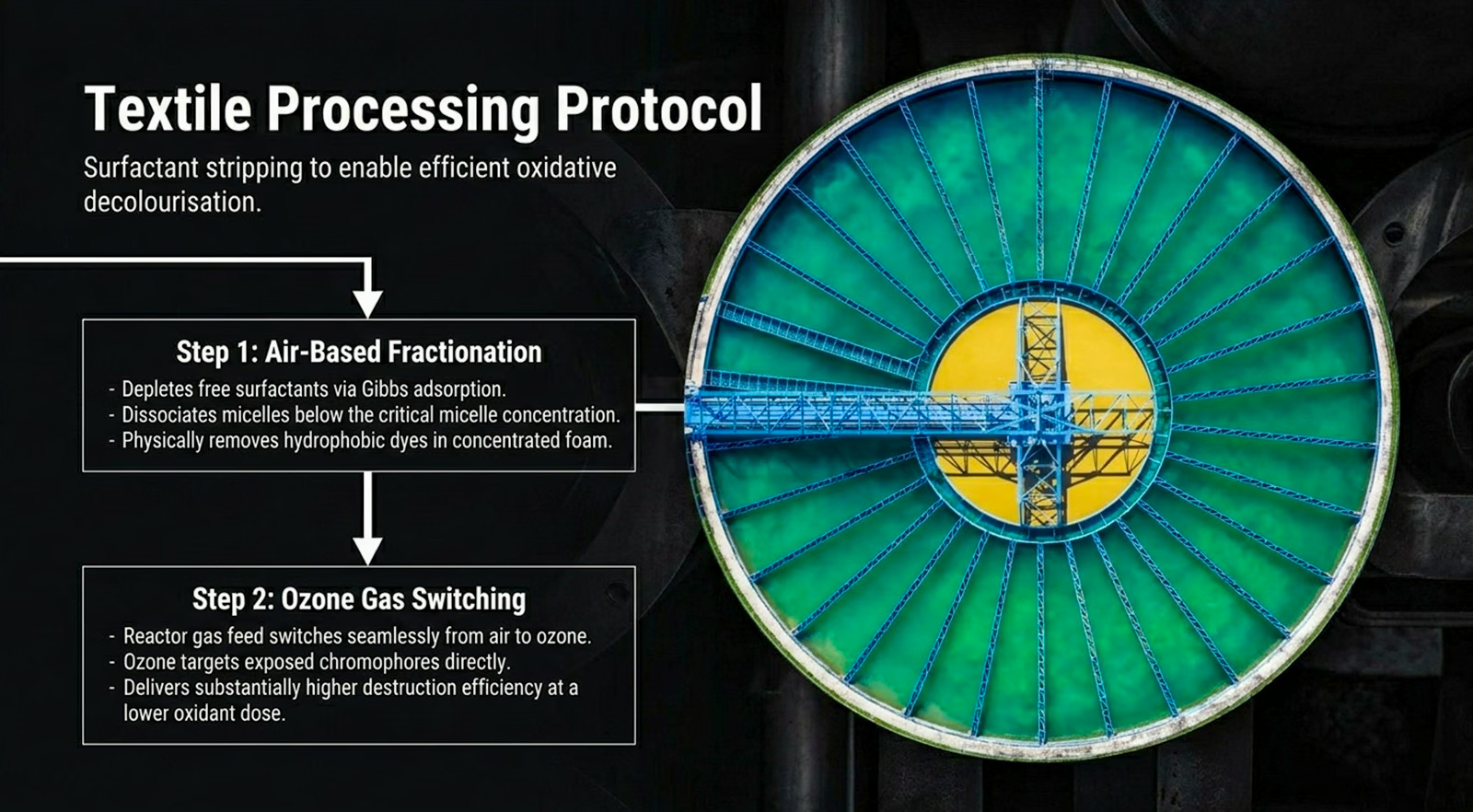
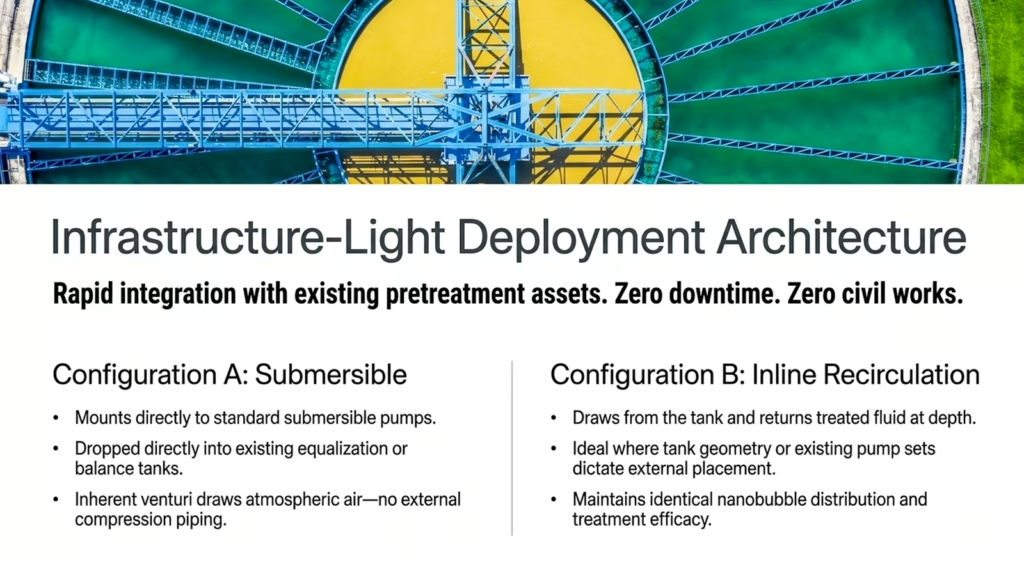
Two configurations support immediate deployment. The submersible arrangement mounts the G-Cav™ reactor directly onto a standard submersible pump lowered into existing equalisation, balance or pretreatment tanks. Atmospheric air enters via the inherent venturi; no tank modifications, additional piping or gas compression infrastructure are required. Installation is typically completed within hours. For the textile two-step protocol, only the gas connection is changed from air to ozone between stages.
Where geometry or existing pump sets dictate, an inline recirculation loop draws from the tank, passes fluid through the reactor and returns it at depth. Both deliver equivalent nanobubble distribution and treatment effect. Maintenance follows routine pump servicing schedules; the absence of membranes, diffusers or narrow orifices ensures robust performance even in high-solids or high-FOG streams. Parallel units scale capacity without civil works. The design philosophy prioritises minimal disruption to ongoing operations while delivering measurable improvement in effluent quality and downstream process stability.
The patented G-Cav™ multistage hydrodynamic cavitation platform is offered for licensing to industrial operators, technology integrators and water service companies. Its infrastructure-light profile, chemical-free operation and direct linkage between removal efficiency and avoided trade waste or compliance costs create a compelling economic case for high-volume dischargers. Flexible structures accommodate regional roll-out, integration into existing treatment offerings and performance-linked arrangements.
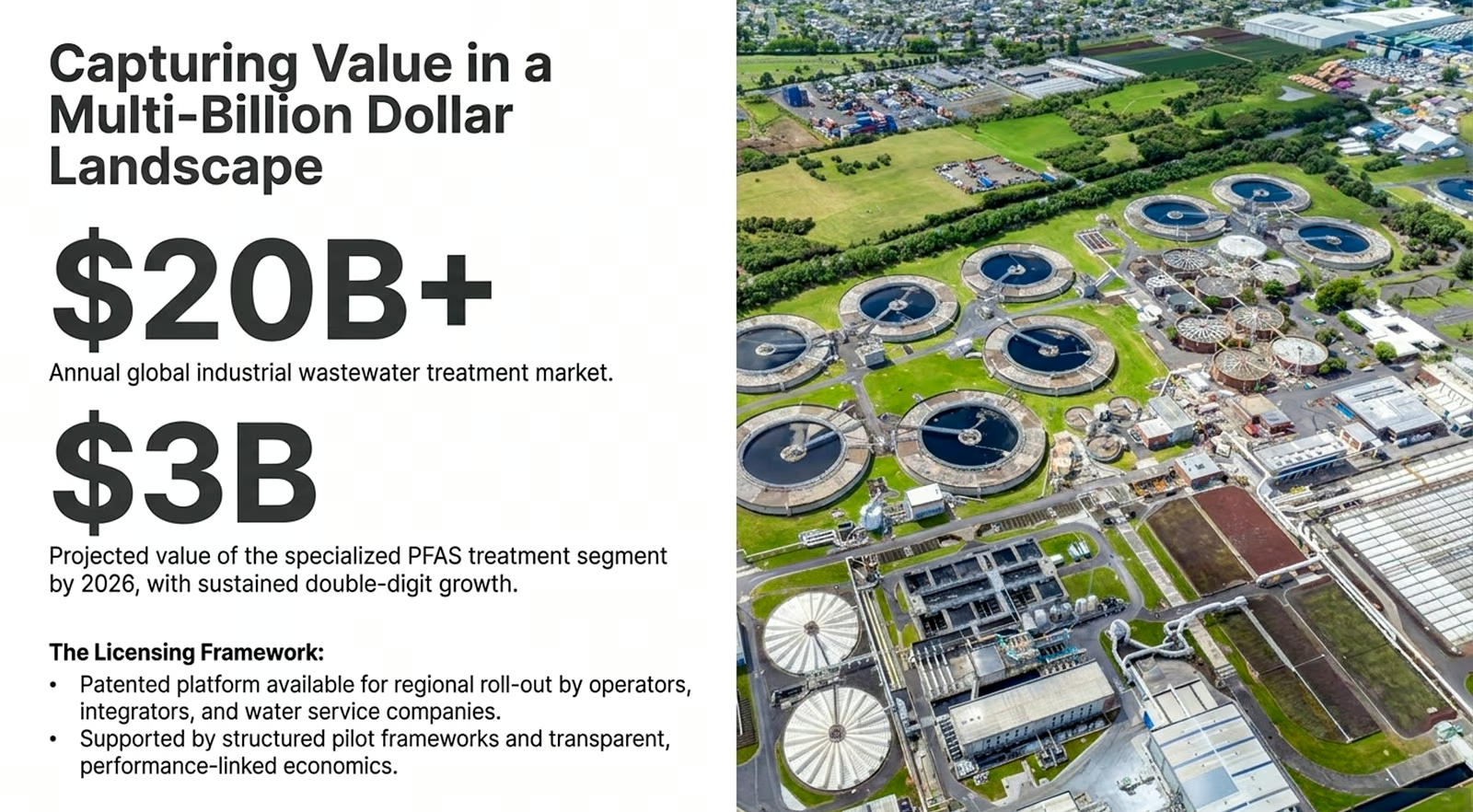
The broader industrial wastewater treatment market exceeds $20 billion annually, while the PFAS treatment segment alone is projected at approximately $3 billion in 2026 with sustained double-digit growth potential in coming years. Long-term global estimates for PFAS management across remediation, drinking water and wastewater reach well into the tens to over one hundred billion dollars. Technologies capable of concentrating persistent surface-active contaminants such as long-chain PFAS, hormones and pharmaceutical residues at the pretreatment stage — while simultaneously delivering conventional pollutant reduction — occupy a high-value position within this expanding landscape. Licensees gain access to a mechanistically grounded, field-referenced platform supported by structured pilot frameworks and comprehensive technical documentation.
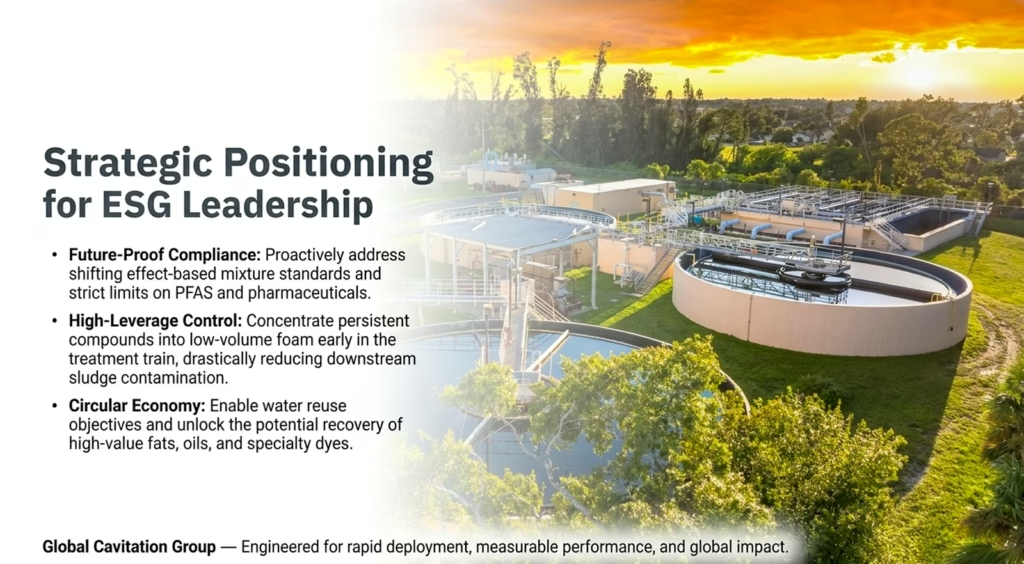
Collaboration with Global Cavitation Group provides industrial operators and technology providers with a pretreatment capability that addresses both legacy discharge parameters and the accelerating regulatory focus on persistent, surface-active emerging contaminants. Recent European legislation tightening limits on PFAS and pharmaceuticals exemplifies a worldwide trend toward stricter permits, enhanced monitoring and effect-based mixture standards. Companies discharging into sensitive catchments or operating under trade waste agreements face mounting financial exposure and reputational risk.
By concentrating these compounds in a low-volume foam stream early in the treatment train, G-Cav™ pretreatment creates a high-leverage control point: reduced downstream loading, improved oxidative or destructive process efficiency, lower sludge contamination risk and transparent avoided-cost economics. The same mechanism that restores surface tension and enhances gas transfer also supports water reuse objectives and circular economy goals through potential recovery of fats, oils or specialty dyes. Partners and investors gain exposure to a scalable platform with relevance across food processing, pharmaceuticals, textiles, metalworking and petrochemical sectors — a platform engineered for rapid deployment, measurable performance and alignment with the multi-billion-dollar trajectory of global industrial water management and emerging contaminant mitigation.
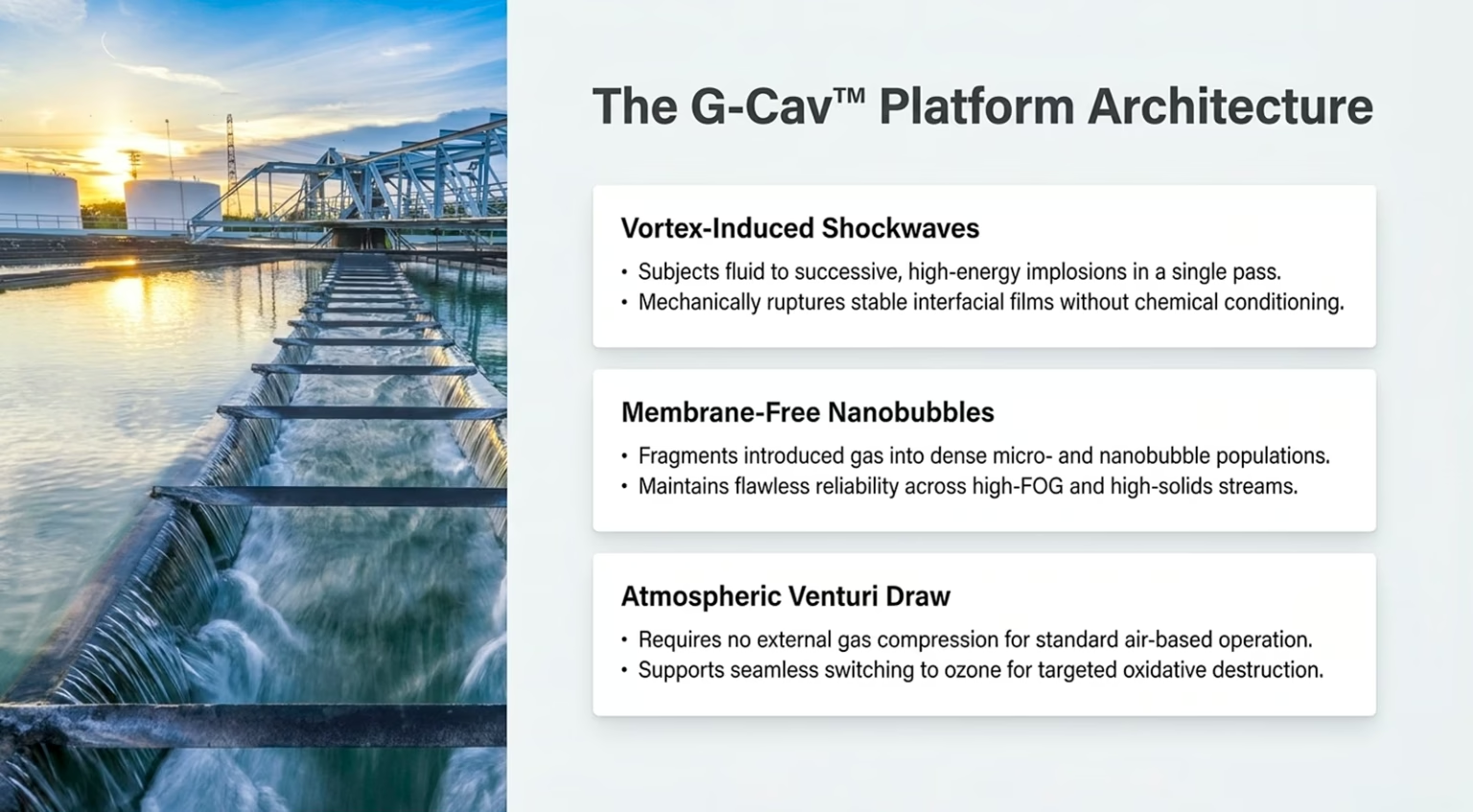
G-Cav™ uses a multistage hydrodynamic cavitation reactor that subjects fluid to successive high-energy implosions. These events mechanically disrupt stable emulsions and generate dense clouds of micro- and nanobubbles. The resulting gas-water interfacial area drives surfactant and hydrophobic contaminant concentration at the surface via Gibbs adsorption, producing a skimmable foam while restoring bulk surface tension. The process operates without chemical addition for standard pretreatment and supports gas switching to ozone where oxidation is required.
Industrial effluents commonly contain much higher surfactant concentrations from cleaning and process chemicals, creating a stronger thermodynamic driver for interfacial concentration. They also tend to present more consistent contaminant profiles and stable emulsions that benefit from mechanical emulsion breaking. Performance in specific streams is best confirmed through site-specific pilots, as direct controlled trials on many industrial applications are still being established.
G-Cav™ applies controlled implosive energy to break emulsions and generate nanobubbles for interfacial scavenging, rather than relying primarily on chemical conditioning and flotation. The membrane-free, diffuser-free design with no narrow orifices supports reliable performance in high-FOG and high-solids streams. Atmospheric air is drawn via the inherent venturi effect; the same compact unit allows simple gas switching to ozone for applications such as textile decolourisation.
Potential commercial benefits depend on the wastewater stream and treatment train. A site-specific pilot should quantify relevant costs and outcomes—such as trade-waste charges, chemical use, disposal burden, downstream treatment load, maintenance and compliance risk—before an ROI claim is made.
Because industrial wastewater composition varies, evaluation should start with a representative-sample test or site pilot. Define the target contaminants and baseline, document the G-Cav™ configuration and gas pathway, and measure agreed outcomes such as emulsion stability, flotation response, oxygen transfer or oxidation support under stated test conditions.