
Deliver oxygen, hydrogen, ozone, air, and other gases into flowing liquids through a multistage cavitation platform built for industrial environments.
G-Cav™ is positioned as a high-efficiency industrial gas infusion platform rather than a conventional aeration or gas delivery system.
Why Surface Area Governs Every Gas-Transfer System — and How G-Cav™ Removes the Kinetic Limit
The rate at which a gas dissolves into liquid is governed by one physical variable: the area of the gas–liquid interface. Conventional systems generate millimetre-scale bubbles whose low surface-area-to-volume ratio causes 40–80 % of supplied gas to escape before dissolution completes. G-Cav™ vortex-induced multistage hydrodynamic cavitation resolves this at the point of generation by producing nanobubble populations (10–250 nm, bulk 70 nm) that deliver interfacial areas ~10⁶ times greater per unit gas volume. The result is >99 % oxygen transfer efficiency, temperature-independent mass-flow predictability, and complete delivery of supplied gas to solution. Once resident, bubble behaviour is dictated exclusively by fluid physics and chemistry; generation technology does not override these dynamics.
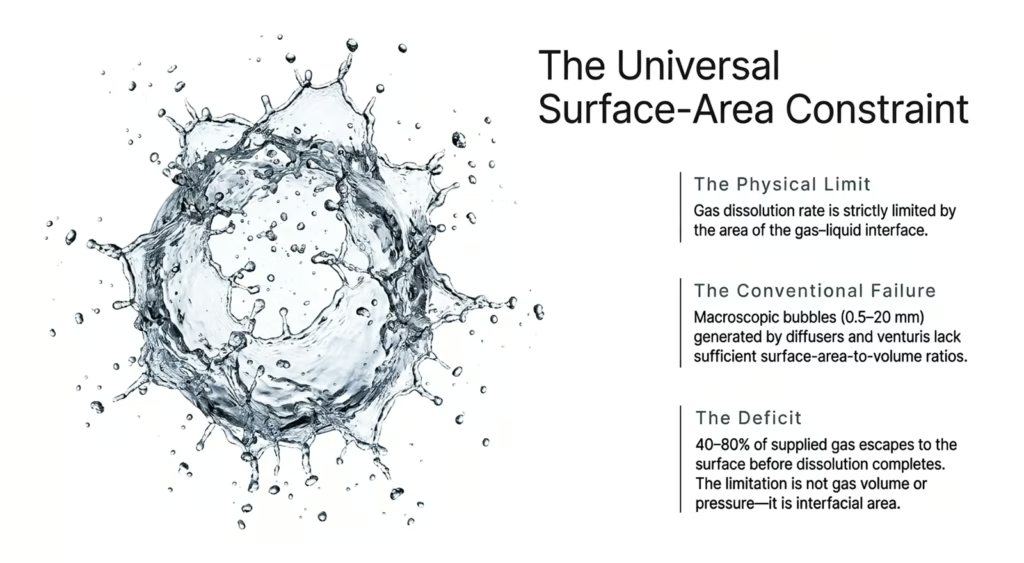
Across every industrial, agricultural and environmental process that requires a gas to enter aqueous solution, dissolution rate is limited by interfacial area. Gas molecules cross the phase boundary at a rate proportional to boundary area. Conventional technologies — paddlewheel aerators, venturi injectors, membrane or fine-bubble diffusers — operate at macroscopic bubble diameters (0.5–20 mm). The resulting surface-area-to-volume ratios are insufficient for dissolution to compete with bubble buoyancy and surface escape, routinely losing 40–80 % of injected gas to off-gassing. The dominant variable determining gas-delivery efficiency is therefore not volume supplied, pressure or contact time; it is total gas–liquid interfacial area created per unit gas volume.
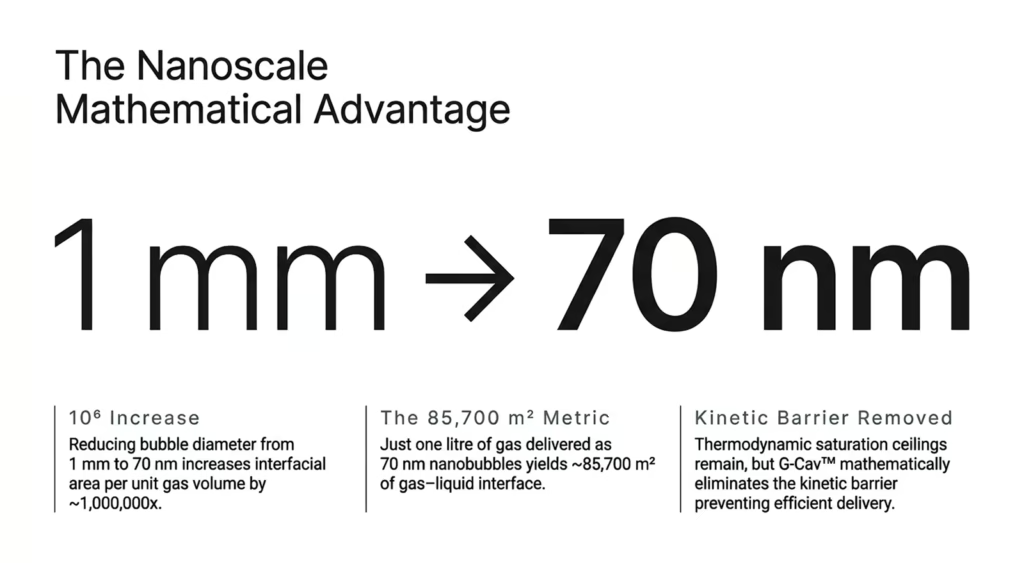
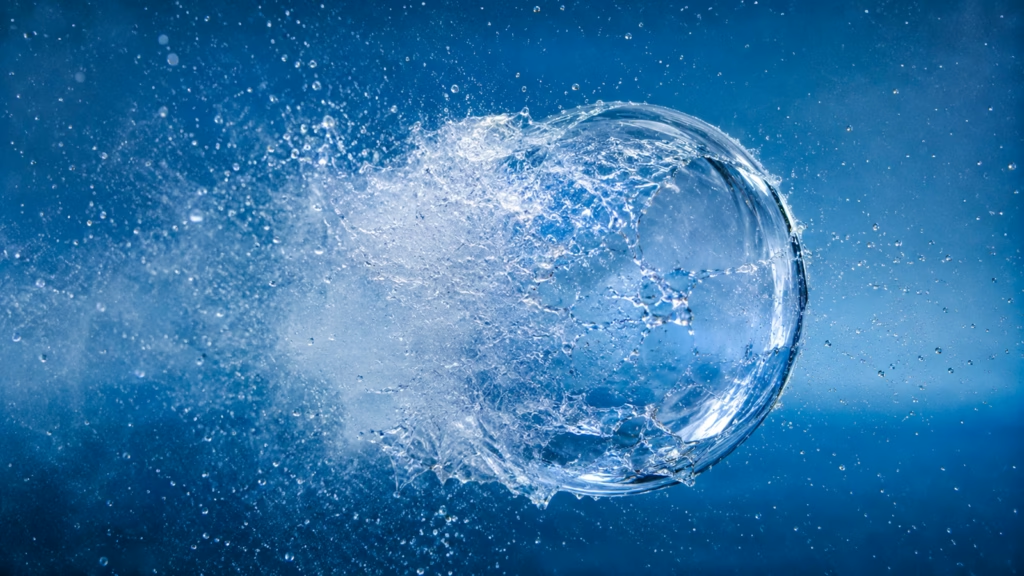
Bubble geometry dictates the scale of the advantage. Surface area scales with radius squared, volume with radius cubed; surface-area-to-volume ratio therefore scales inversely with radius. Reducing diameter from 1 mm to 70 nm increases interfacial area per unit gas volume by ~10⁶. One litre of gas as 70 nm nanobubbles generates ~85 700 m² of interface. At these radii Young–Laplace predicts internal pressure elevated by one to two orders of magnitude, driving rapid outward diffusion. Epstein–Plesset theory quantifies the outcome in clean water: a ~100 nm radius bubble dissolves in <20 ms. Dissolution therefore completes before significant migration. Thermodynamic saturation ceilings remain; G-Cav™ removes only the kinetic barrier that prevents conventional systems reaching them efficiently.
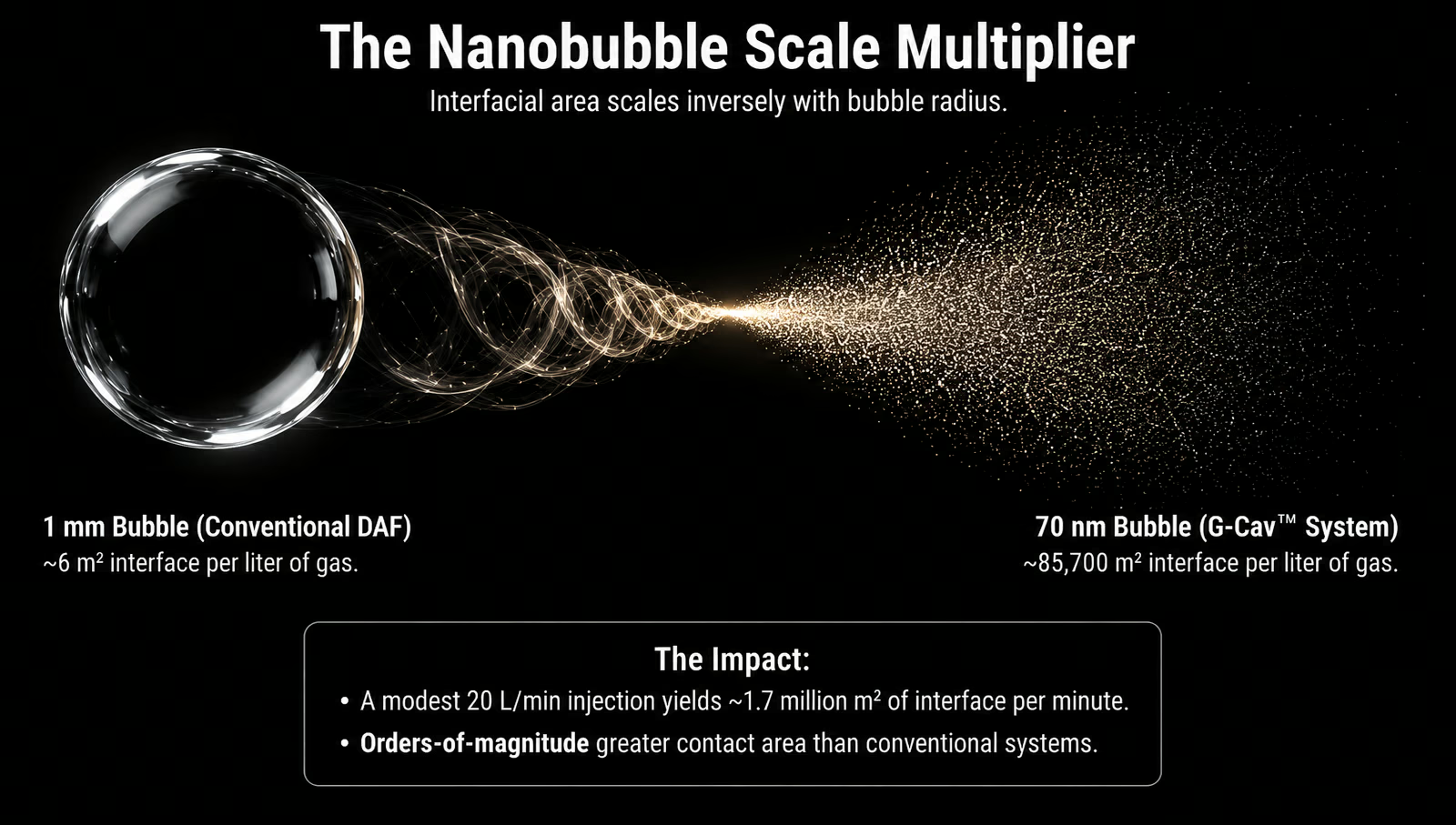
The significance of G-Cav™ lies in the enormous interfacial area generated by its nanobubble population. Interfacial area scales inversely with bubble radius. For a fixed volume of injected gas, smaller bubbles provide disproportionately more total interface.
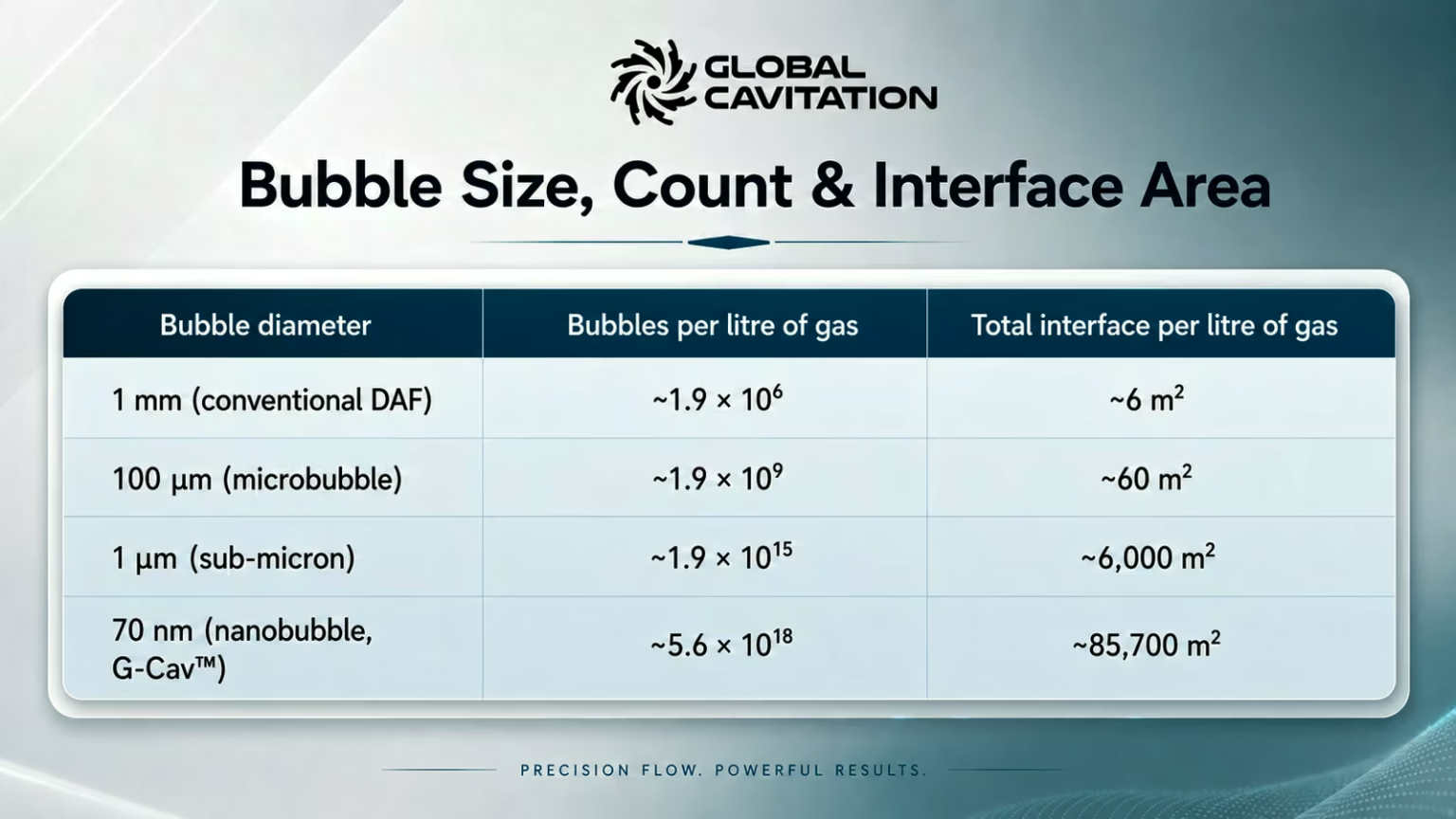
As mentioned, at 70 nm, 1 litre of gas yields ~85,700 m² of interface; however, modest injection rates in commercial and industrial applications would deliver closer to 20 L/min, resulting in 1.7 million m² per minute of gas transfer potential injected into the treatment volume – every single minute. This creates orders-of-magnitude far greater than any conventional system that we know of.
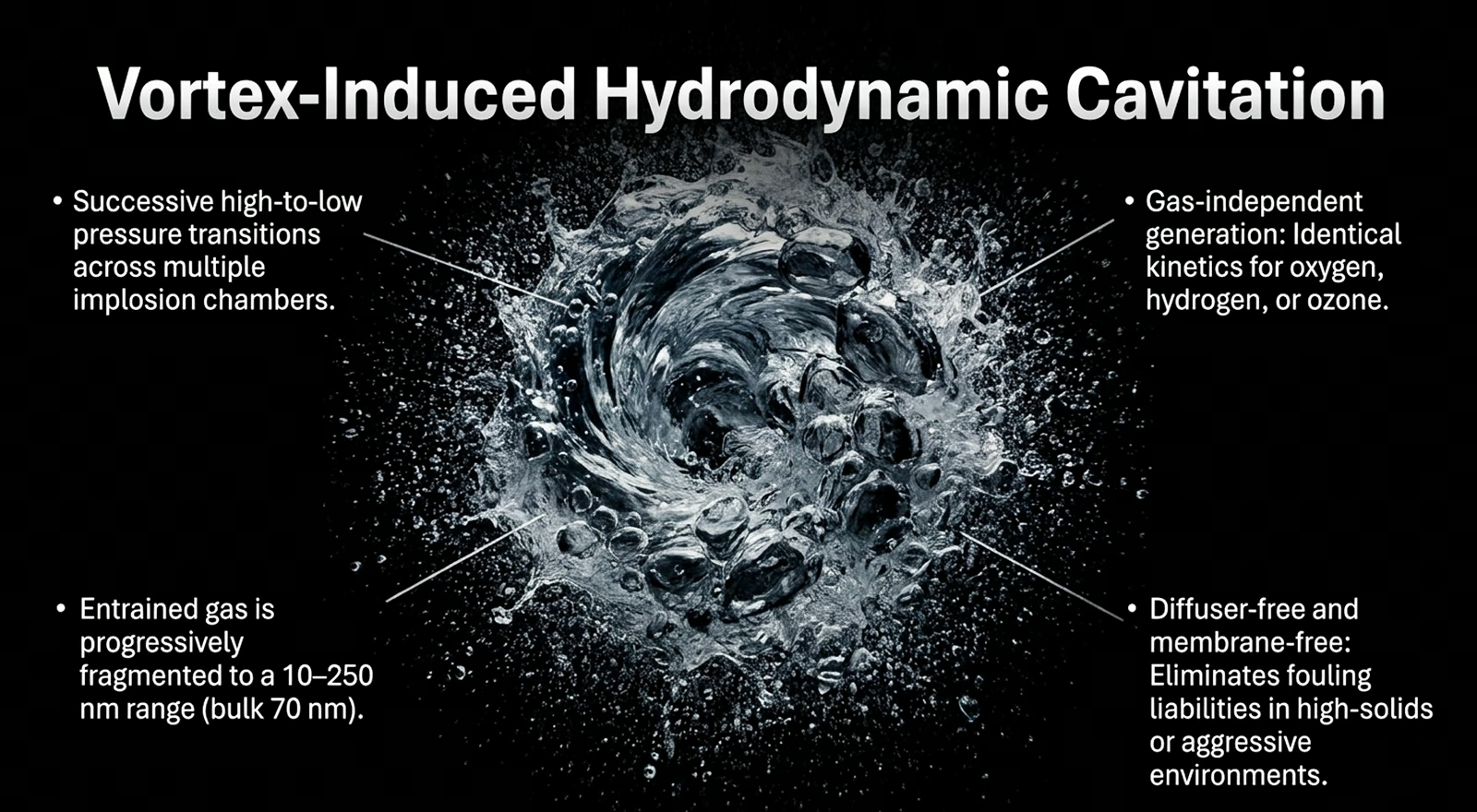
G-Cav™ achieves the nanobubble population through vortex-induced multistage hydrodynamic cavitation. Process fluid and injected gas experience successive high-to-low pressure transitions across multiple implosion chambers in a single reactor pass. Each collapse fragments entrained gas, progressively reducing diameters to the 10–250 nm range (bulk at 70 nm). The mechanism is gas-independent: oxygen, hydrogen, ozone or any feed gas yields identical nanobubble size distribution and kinetics. Operation is membrane-free and diffuser-free, eliminating fouling and scaling liabilities that limit conventional porous-media systems in high-solids, saline or aggressive environments. The reactor therefore maintains performance precisely where conventional hardware degrades most rapidly.
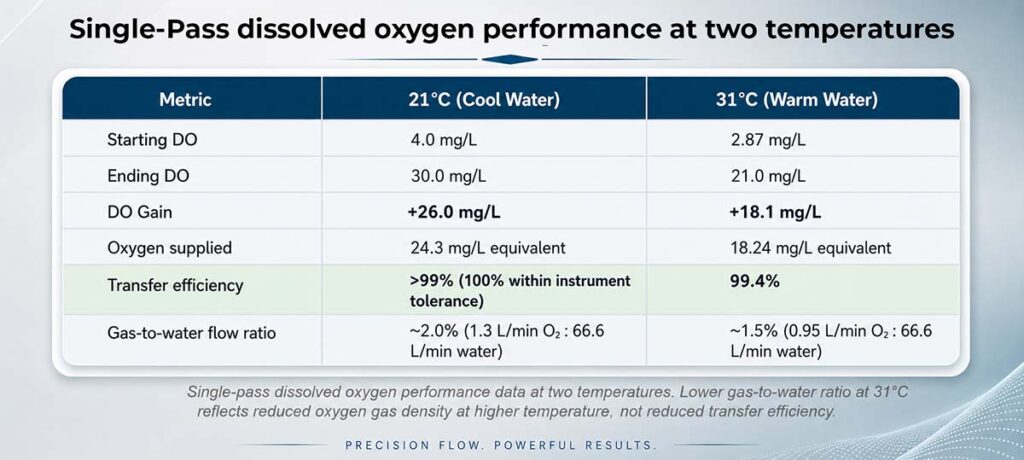
Controlled testing in a 1,000 L closed-loop at 66.6 L min⁻¹ flow confirms >99 % oxygen transfer efficiency at both 21 °C and 31 °C. At 21 °C, DO rose from 4.0 to 30.0 mg L⁻¹ with 24.3 mg L⁻¹ supplied (mass balance within tolerance). At 31 °C the gain was +18.1 mg L⁻¹ from 2.87 mg L⁻¹ starting, at 99.4 % efficiency. The lower gas-to-water ratio at 31 °C reflects gas density, not transfer performance. Dissolution completes before migration; negligible gas reaches the free surface. The same reactor delivers equivalent efficiency for hydrogen or ozone by gas-source change only.
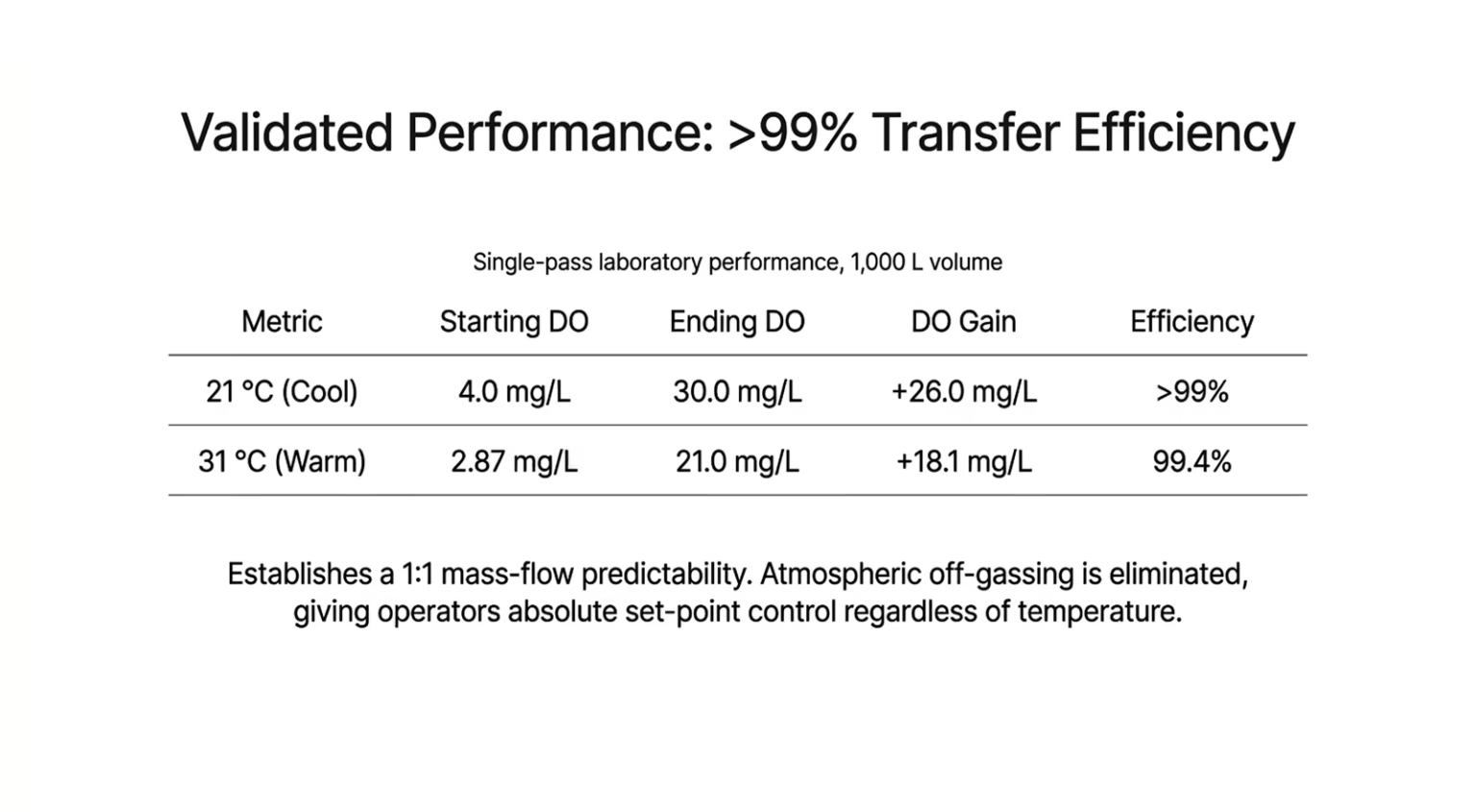
Laboratory data establish a temperature-independent mass-flow relationship: one gram of oxygen injected produces a 1 mg L⁻¹ DO increase per 1,000 L treated. This 1:1 coupling enables precise set-point control — the operator calculates required gas mass from volume and flow; the system delivers it.
Conventional aeration cannot offer this because atmospheric losses, temperature-dependent solubility and variable contact time decouple supply from delivery. G-Cav™ removes the decoupling. Dosing can be calibrated to approach — but not exceed — the thermodynamic saturation limit for local conditions, eliminating waste and supersaturation risks.
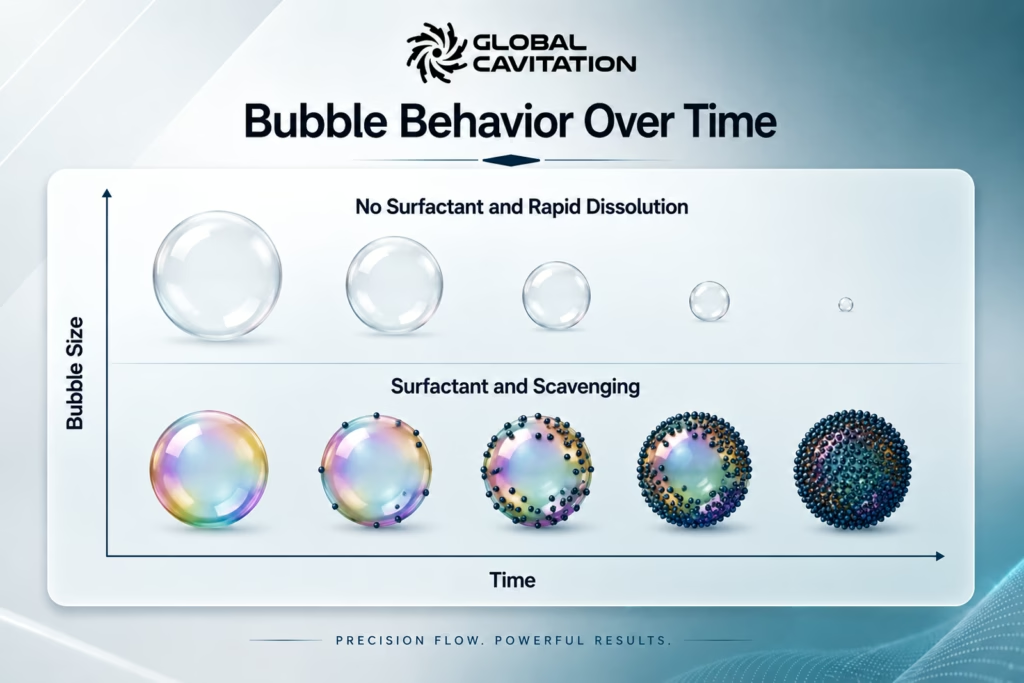
In clean water, nanobubbles follow Epstein–Plesset kinetics and dissolve in milliseconds. Surface-active molecules migrate to the interface by Gibbs adsorption, forming a monolayer that lowers effective surface tension and slows dissolution as the bubble contracts.
This extends reactive lifetime where persistence is valuable and simultaneously scavenges surfactants that would suppress bulk gas-transfer efficiency. Claims of intrinsically “stable” nanobubbles persisting days or weeks frequently arise from misidentification of solid nanoparticles or oil nanodroplets by DLS/NTA, or from unintended contamination armoring bubbles.
Ultrasonic detection often finds no long-lived gas nanobubbles in such samples. G-Cav™ does not assert intrinsic long-term stability; it delivers continuously regenerated interfacial flux and deploys surfactant interaction deliberately when persistence or scavenging adds value. Non-dissolution indicates specific liquid-environment factors — saturation, coating or inhibition — not stochastic hardware failure.
The reactor that introduces gas into liquid — geometry, flow regime, power density, materials — must be reliable and efficacious under industrial conditions. Once nanobubbles reside in the receiving fluid, however, every subsequent process (dissolution rate, persistence, chemistry, flotation) is governed exclusively by that fluid’s physics and chemistry: local saturation, temperature, pressure, ionic strength and surface-active species.
The generation method does not dictate or override these dynamics. If dissolution fails to proceed at the clean-water rate, the cause lies in the liquid environment, not the hardware. When conditions permit, the six-order surface-area advantage ensures transfer completes far faster than bubble residence. This separation is fundamental: G-Cav™ solves the interfacial-area problem at generation; the receiving fluid determines what happens next.
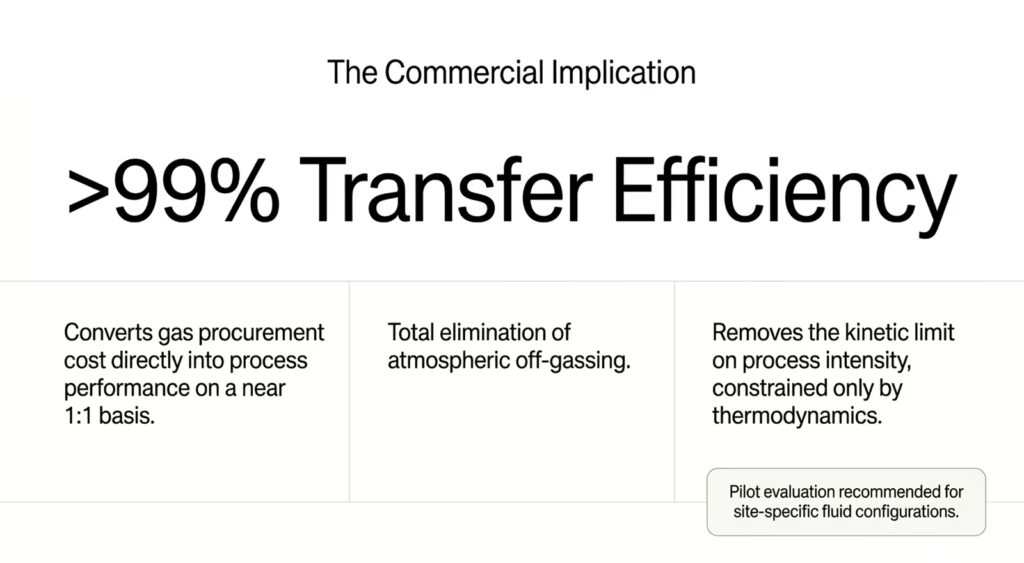
>99 % oxygen transfer efficiency converts gas procurement cost into process performance on a near 1:1 basis. Atmospheric off-gassing — the dominant loss in every gas-delivery operation — is eliminated. Operators gain set-point control, temperature-independent efficiency, and multi-gas flexibility from one reactor. In high-volume applications the efficiency differential versus conventional 20–60 % transfer represents substantial avoided annual expenditure. More critically, every sector dependent on dissolved gas can now operate at the concentrations its biochemistry or chemistry requires, rather than the lower concentrations imposed by kinetic limitation. G-Cav™ removes the artificial ceiling conventional gas-transfer technology has placed on process intensity and resource efficiency.
The limiting variable is not gas availability. It is the rate at which gas can be presented at an interface small enough for dissolution to complete before escape. G-Cav™ removes that limit.
Mechanism and performance validated under controlled laboratory conditions. Sector-specific outcomes depend on site water chemistry and configuration. Pilot evaluation is recommended prior to full-scale deployment.
Whether the objective is oxygen transfer, biological support, oxidation, sanitation, remediation, flotation, or process optimisation, G-CAV gives operators and partners a more commercially useful way to think about gas-liquid interaction.