

Introduction
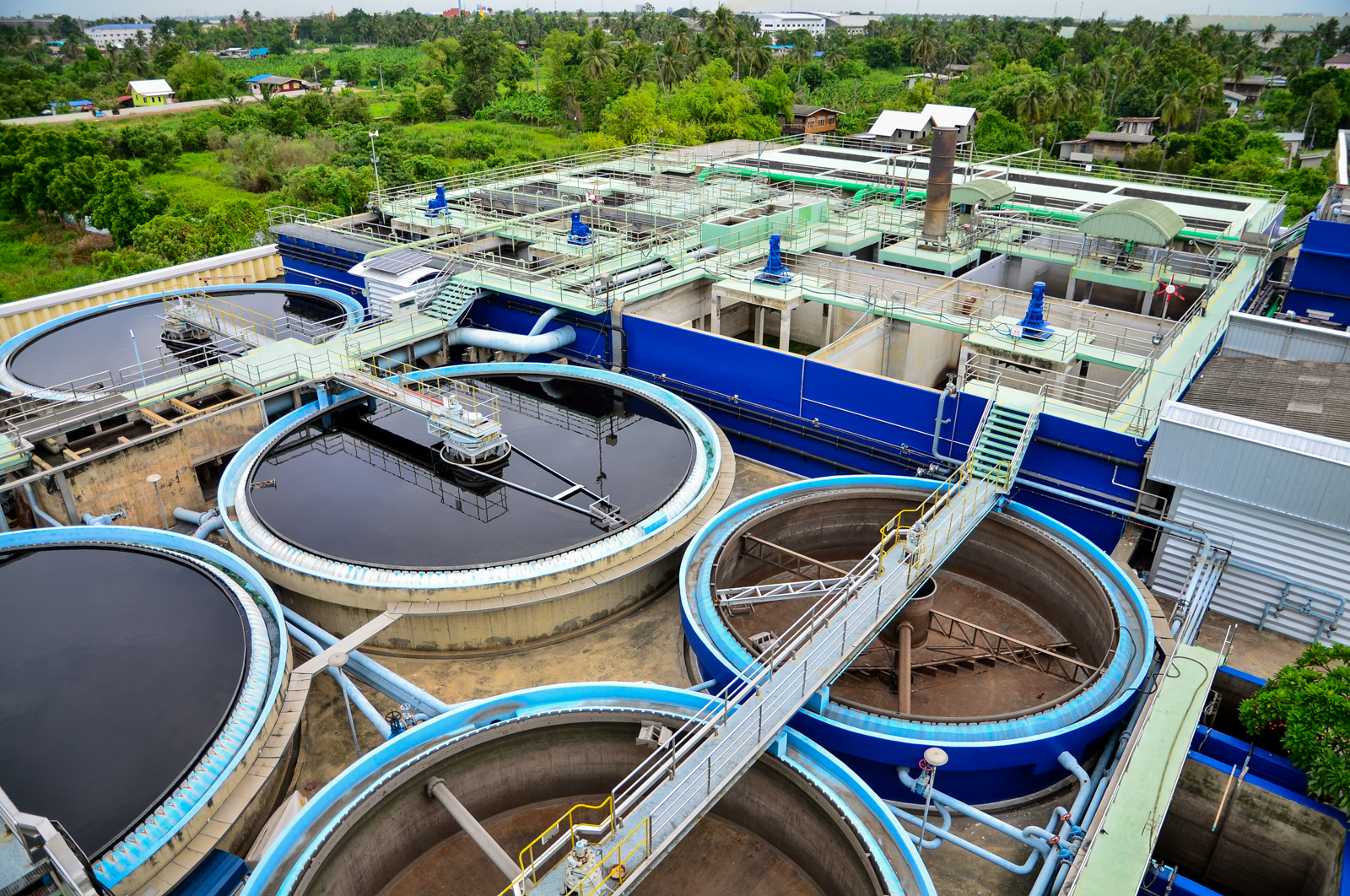
Municipal wastewater treatment plants are designed around a sequence of stages, each of which inherits the quality of what the previous stage delivers. This creates a cascade logic: improvements at the primary clarification stage not only improve the primary effluent received — but it also reduces the load on secondary biological treatment, which in turn lowers aeration energy demand, protect the activated sludge biomass from inhibition, and reduce the burden on tertiary polishing. A single upstream intervention with compounding downstream effects can be a capital-efficient step change improvement that improves outcomes, at less cost, enabling increased profit potential, in less time, and higher throughput from existing infrastructure.
Multistage hydrodynamic cavitation technology with gas infusion, deployed in the primary clarifier, transforms a passive gravity-settling tank into an active separation cell through a mechanism of sub-micro flotation. By generating a dense cloud of nanobubbles using air — requiring virtually no gas compression, no chemical addition, and no modification to existing infrastructure — the system continuously drives surfactants, fats, oils, greases, pharmaceuticals, and surface-active contaminants including PFAS to the water surface for skimming, while simultaneously raising the bulk water surface tension and improving the quality of water delivered to every downstream stage.
This capability statement presents a physical mechanism, the analogous field performance data from high-contamination produced water treatment, the cascade hypothesis for municipal application, and a pilot program design that would confirm the full benefit profile on site.
| ~65% TOG removed in single pass, produced water (field validated) | Air Feed gas — minimal or no compression, virtually no cost, no extra infrastructure | Zero Chemical addition required | Zero Civil works or infrastructure modification required |
|---|
The Cascade Logic: Why Primary Clarification Is the Highest-Leverage Intervention
A conventional municipal treatment plant operates in three broadly sequential stages. Primary clarification uses gravity to settle heavy solids and skim floating material. Secondary biological treatment — typically activated sludge — uses microbial metabolism to break down dissolved organics. Tertiary polishing removes residual contaminants to meet discharge standards. Each stage is sized and operated based on the assumption that it will receive a certain quality of influent from the stage before it.
When primary clarification underperforms — as it routinely does with emulsified oils, dissolved organics, pharmaceuticals, and surface-active compounds that gravity settling cannot address — the secondary biological stage receives a more contaminated and more variable influent than it was designed for. The consequences cascade:
Biological inhibition: Fats, oils, and greases coat the microbial floc in activated sludge, reducing oxygen transfer efficiency and inhibiting the metabolic activity of the biomass. Certain pharmaceuticals and industrial chemicals are directly toxic to specific microbial populations.
Elevated aeration demand: Higher organic load in secondary influent requires more dissolved oxygen to achieve the same BOD removal. Aeration is typically the largest single energy cost in a treatment plant — 50–60% of total electrical consumption. Any reduction in secondary organic load directly reduces aeration energy.
Secondary clarifier stress: Higher sludge production from a more loaded biological stage increases the volume and frequency of sludge handling, with associated costs in dewatering, transport, and disposal.
Tertiary polishing burden: Contaminants not addressed in primary or secondary treatment accumulate at the tertiary stage, increasing chemical consumption and membrane fouling rates.
| Improving primary clarification does not optimise one stage — it recalibrates the thermodynamics of the whole plant. Cavitation induced sub-micro flotation targets precisely those contaminant classes that gravity settling cannot address, and removes them before they reach the biological stage. |
|---|
Sub-Micro Flotation and the Gibbs Adsorption Effect
The G-Cav™ multistage hydrodynamic cavitation-promoting primary clarification mechanism operates through two simultaneous physical processes driven by a single event: the generation of a broad spectrum of bubble sizes, and the hydrodynamic cavitation event itself. Understanding these two processes separately clarifies why the system removes multiple contaminant classes through a single air injection step.
To enable clarity and understanding throughout the rest of this document, it is important that we introduce to you the tool and technology that enables the results we share herewith.
Introducing the G-Cav™
Multistaged Hydrodynamic Cavitation
Putting Implosive Force To Work
Hydrodynamic cavitation is well known for its destructive capabilities and is rapidly emerging as one of the most powerful technologies for improving water treatment and industrial gas infusion. While single stage hydrodynamic cavitation is being recognised and gaining favour around the world, the next generation of this technology has already arrived, and the advancement is dramatic.
A Vortex-Induced Multistage Hydrodynamic Cavitation Reactor is designed to enhance both the intensity of implosion that cavitation can create, as well as multiplying this effect by engaging successive chambers of implosion in the same single pass. These moments of implosion break apart and blend whatever is there, be it organic matter, bubbles of gas, synthetic compounds, or the ultra blending of difficult liquids and compounds.
These implosions occur at the centre of a vortexing liquid stream, insulating the device itself from this destruction zone, while the vortex is also driving successive chambers throughout its length. The vortexing liquid stream wants to throw outwards and away from the centre, creating a decompression zone through the centre, but the liquid is then turned back inwards upon itself creating high shear and compression around the vortex. Immediately following the high compression of the vortex, a rapid decompression and expansion chamber exists where suddenly, what was a high positive pressure becomes a significant negative pressure as the liquid is thrown outwards, which in turn affects boiling point and vapourisation potentials. Further expansion is promoted for an instant due to the vapourisation, followed by an aggressive collapse and the implosive force created, causing considerable destruction to whatever is there.
The cumulative result achieved through successive cavitation chambers and implosions, results in the breakdown down of large particles and entrained gas bubbles, into potential nanoparticles and nanobubbles, dramatically increasing reactive surface area and improving gas dissolution, reaction potential and nutrient bioavailability. Less dense particles will of course break up more easily than more dense material, and more passes may be required depending on the desired objective. Ultimately, exponentially increased results can be promoted as each successive cavitation chamber further breaks up whatever was achieved in the preceding chamber.
Some consistent considerations include;
Gas is very light and will break apart very easily
The liquid environment and the resulting consequence is determined by what is in it
Hydrophilic and hydrophobic substances will of course still act accordingly
Surfactant concentrations will determine dissolution rate, encapsulation capacity, surface tension and buoyancy potential
The smaller the particle, the greater the available surface area, be it for gas transfer, encapsulation concentration or nucleation and direct contact potential
Gas transfer potential, processing rate, result over time, enabling the difficult, reduction of infrastructure footprint, less energy for the same result, improved productivity and profit potential.
Unlike conventional aeration or diffuser systems, the G-Cav™ technology breakthrough achieves its outcomes by creating and harnessing successive implosions throughout its length while continuously blending and mixing the fluid. This is all done without membranes, diffusers, or clog-prone components, ensuring reliable performance even in contaminant-rich liquids or water sources.
In liquids that are heavy in contaminants, a multistage hydrodynamic cavitation reactor is a stand out technology choice and will allow productivity and the intended results, simply because this technology allows the mixing to happen where other technologies do not. It is not a membrane, it is not ultrasonics, it is not a porous stone, it is an action of hydrodynamic implosion.
When comparing a technology’s performance against another’s, please appreciate that results can be significantly different – because the technologies are completely different.
Comparing a membrane technology against another membrane technology will highlight some differences in just the same way as comparing a vortex induced multistage hydrodynamic cavitation technology against another vortex induced multistage hydrodynamic cavitation technology, and again, you are likely to see some minor differences. But when it comes to comparing a membrane technology against a vortex induced multistage hydrodynamic cavitation technology, for the creation of nanobubbles in particular as an example, the difference is massive and the results are very easy to see.
The Mechanism:
Sub-Micro Flotation and the Gibbs Adsorption Effect
Process One: Interfacial Scavenging via Gibbs Adsorption
Municipal wastewater contains abundant surfactant molecules — from detergents, personal care products, and microbial biosurfactants produced during sewage decomposition. Surfactant molecules are amphiphilic: they have a hydrophilic head that prefers to remain in water and a hydrophobic tail that seeks to escape it. At any gas-water interface, surfactant molecules spontaneously adsorb with their hydrophobic tails oriented toward the gas phase — this is the Gibbs adsorption isotherm, a fundamental thermodynamic relationship.
When G-Cav™ generates a dense cloud of nanobubbles throughout the clarifier volume, it creates an enormous total gas-water interfacial area throughout the bulk water. The Gibbs adsorption effect operates continuously across this entire interface: surfactant molecules migrate from the bulk water to the bubble surfaces, concentrating at the interface. As free surfactant concentration in the bulk water decreases, two important consequences follow simultaneously.
Bulk surface tension rises: Surface tension is inversely related to surfactant concentration by the Gibbs equation. As surfactants are progressively stripped from the bulk water to the bubble interfaces, the surface tension of the bulk water increases. Higher surface tension makes the bulk water increasingly thermodynamically hostile to hydrophobic compounds — fats, oils, pharmaceutical molecules, PFAS — which are then driven toward the only available low-energy interface: the foam forming at the water surface.
Hydrophobic compound concentration at surface: Contaminants that would otherwise remain dispersed or emulsified in the bulk water are thermodynamically expelled to the surface foam. This is not a mechanical floating process — it is a continuous thermodynamic partitioning that operates on any sufficiently hydrophobic compound regardless of its density or particle size.
Process Two: Emulsion Breaking and Buoyancy Flotation
The multistage hydrodynamic cavitation process that is creating nanobubbles, is of course the very same generator of the implosive forces that mechanically disrupt stable oil-water emulsions. These are emulsions that gravity settling cannot address because the droplets are too small and the interfacial films are stabilised by surfactants.
Cavitation implosion and the subsequent shockwaves it produces, break the interfacial films around emulsified oil droplets, liberating free oil that immediately associates with the larger microbubbles also produced by the cavitation process. These bubble-oil aggregates have dramatically increased buoyancy relative to either component alone, and rise rapidly to the surface to join the surface foam layer. This is the mechanism demonstrated in Permian Basin produced water field tests: a thick, coherent layer of oil forms instantaneously on the surface of the treated water, readily available for skimming.
The Unified Effect: Surface Tension Restoration
The two processes — Gibbs adsorption scavenging and emulsion breaking — are mutually reinforcing. As surfactants are removed from the bulk liquid via Gibbs adsorption, the emulsifying capacity of the remaining water decreases, making cavitation-liberated oil less likely to re-emulsify. As emulsified oil is broken and floated, the surfactant molecules previously stabilising those emulsions are released and they themselves concentrate at the bubble interface.
| The net result is a progressive restoration of bulk water surface tension toward that of clean water — a measurable, physical indicator that the water chemistry is being fundamentally improved, not merely filtered. A clarifier effluent with restored surface tension is a better substrate for biological treatment in every respect: improved oxygen transfer, reduced foam formation in aeration tanks, and a healthier microbial environment. |
|---|
Why Air Is the Correct Gas
The scavenging mechanism described above is driven entirely by interfacial area and thermodynamic partitioning — it is independent of gas composition. Any gas creates the gas-water interface across which Gibbs adsorption operates. Air is therefore not a compromise choice but the correct choice for primary clarification: it is free, requires no gas storage or little to no compression infrastructure, and is available at the intake of a G-Cav™ reactor through simple atmospheric connection.
Due to the vortex inducing aspect of the G-Cav™ design, a gas injection nozzle penetrates the inlet head of the device and accesses a negative pressure zone deep within the device, accessing the suction point that draws the air into the cavitation chamber. The gas injection advantage within the vortex of the G-Cav™ unit itself, therefore means that no external compression is required. This is a significant operational and cost advantage over any technology that requires pressurised gas supply to achieve gas injection.
Extreme Application Evidence: Produced Water, Permian Basin
Highly challenging field validation of the G-Cav™’s sub-micro flotation performance has also been conducted in the Permian Basin on produced water — the highly contaminated co-product of oil and gas extraction. While produced water and municipal wastewater have different contaminant matrices, produced water represents a significantly harder separation challenge: higher hydrocarbon concentrations, more stable emulsions, and a more chemically complex bulk water matrix. Performance demonstrated in produced water therefore provides a conservative lower bound for what the same mechanism can achieve in municipal primary clarification.
Single-Pass Field Test Results
The test configuration utilised an inexpensive submersible pump feeding a G-Cav™ unit with nitrogen injection — a directly relatable analogue of the air-injection configuration proposed for primary clarification. Water was pumped through the multistage hydrodynamic cavitation reactor in a single pass, with no recirculation and no chemical addition. Laboratory analysis of influent and effluent samples confirmed the following:
| Sample Point | Sample ID | Total Oil & Grease | Result |
|---|---|---|---|
| Raw Influent | WC250926-002 | 570.0 ppm | Baseline |
| First Stage Effluent | WC250926-001 | 202.0 ppm | 368 ppm removed — 65% reduction |
Visual observation confirmed the mechanism: a thick, coherent layer of oil formed instantaneously on the surface of the receiving vessel, demonstrating rapid and complete phase separation. The material available for skimming was not dispersed foam but a consolidated, high-concentration layer — confirming that both the Gibbs adsorption concentration effect and the emulsion-breaking buoyancy mechanism were operating simultaneously.
| This result was achieved in a single pass — water in, water out, no recirculation time. In a primary clarifier operating as a continuous flow-through vessel with residence time measured in hours, the contact time between the nanobubble cloud and the influent water is orders of magnitude greater than in the single-pass test. The single-pass result is therefore the floor of expected performance, not the ceiling. |
|---|
Relevance to Municipal Primary Clarification
The contaminant classes present in municipal wastewater primary influent — fats, oils and greases from domestic and commercial sources, surfactants, pharmaceuticals, PFAS — are in several respects more amenable to sub-micro flotation than the hydrocarbon emulsions in produced water:
Municipal FOG is predominantly composed of lighter, less viscous lipids than petroleum hydrocarbons, with higher natural buoyancy once emulsions are broken
Municipal surfactant loading (primarily from detergents) is high and consistent, providing the Gibbs adsorption substrate that drives surface tension restoration
Pharmaceuticals and PFAS are highly surface-active at low concentrations, making them efficient targets for interfacial concentration even when their absolute levels are low
Municipal primary influent pH is typically near-neutral and conductivity is lower than produced water, conditions that are generally more favourable for foam stability and surface skimming
| Global water industry leader, actively trialing now The application of G-Cav™ sub-micro flotation to municipal primary clarification is mechanistically well-supported and the analogous performance in produced water is field-validated. Direct quantification of removal rates for FOG, BOD, pharmaceuticals, and PFAS in a municipal primary clarifier context is underway and there is considerable excitement around the project with a global audience anxiously awaiting results. |
|---|
PFAS: The Emerging Regulatory Imperative
Per- and polyfluoroalkyl substances (PFAS) represent one of the most significant and rapidly evolving compliance challenges facing municipal wastewater utilities globally. Regulatory limits are being introduced or substantially tightened across Australia, the United States, European Union, and most OECD jurisdictions, with health-based guideline values in drinking water now measured in parts per trillion for some compounds.
Conventional primary and secondary wastewater treatment does not remove PFAS. The compounds are chemically stable, resistant to biological degradation, and at the concentrations present in municipal wastewater, pass through activated sludge systems essentially unchanged. They accumulate in biosolids — creating a disposal and land-application compliance problem — and pass through to final effluent, potentially affecting receiving water bodies and downstream drinking water sources.
Why PFAS is Amenable to Sub-Micro Flotation
Long-chain PFAS compounds — PFOS, PFOA, and related structures — are surface-active by their fundamental molecular architecture. The perfluorinated carbon chain is simultaneously hydrophobic and oleophobic, and PFAS molecules partition strongly and preferentially to gas-water interfaces. This is not a coincidental property — it is the same interfacial chemistry that makes PFAS persistent in the environment and difficult to remove by conventional means.
At a gas-water interface, PFAS molecules behave similarly to conventional surfactants: they adsorb with their fluorinated tails oriented toward the gas phase. The Gibbs adsorption mechanism that concentrates conventional surfactants at the bubble surface operates on PFAS through the same thermodynamic driving force. The difference is that PFAS, once concentrated at the surface foam, does not re-disperse as readily as conventional surfactants — its oleophobic character means it does not re-wet into the bulk water, making surface concentration and skimming removal potentially more complete.
| PFAS removal by foam fractionation — a process that is mechanistically identical to what G-Cav™ sub-micro flotation achieves — is an active area of research with published laboratory evidence of significant concentration factors. The multistage hydrodynamic cavitation technology applied to primary clarification represents a practical, infrastructure-compatible implementation of this principle at treatment plant scale unlike anything else in the market today. |
|---|
| HYPOTHESIS / PILOT OPPORTUNITY PFAS removal efficiency in municipal primary clarification via G-Cav™ sub-micro flotation has not yet been directly quantified. Given the strong thermodynamic basis and the published literature on foam fractionation of PFAS, this is a high-priority measurement in any pilot program design. The potential to address a currently intractable regulatory compliance problem through a low-cost, chemical-free primary treatment step is of significant interest to utilities facing PFAS discharge obligations. |
|---|
Deployment Configuration: No Infrastructure Change Required
The single most operationally significant feature of the G-Cav™ primary clarification deployment model, is that it requires virtually no modification to existing infrastructure. This distinguishes it from virtually every other enhancement technology available to primary clarifier operators, which typically require civil works, new pipe runs, chemical dosing systems, or tank modifications.
A Submersible Configuration Option
The G-Cav™ multistage hydrodynamic cavitation unit can be mounted directly on a submersible pump. The entire assembly can be lowered into the existing primary clarifier tank. Air is drawn into the cavitation chamber via the suction created by the vortexing venturi effect within the device itself — potentially no external gas compression, no pressurised gas supply, no gas storage. The pump provides the hydraulic energy required to drive the cavitation process from the water pressure differential alone.
Gas injection can be configured at two points depending on the specific installation: at the water intake of the submersible pump, where air is entrained with the incoming water flow; or within the vortex chamber of the G-Cav™ unit itself, where the pressure differential is highest and bubble generation is most efficient. Both configurations produce the same nanobubble output; the optimal configuration is determined by the pump specification and tank geometry.
The treated water, loaded with nanobubbles, is discharged back into the clarifier at depth. The nanobubble cloud disperses through the water column, the scavenging mechanism operates throughout the tank volume, and the concentrated surface foam accumulates for collection by the existing skimming mechanism — or by a simple addition of a floating skimmer if the existing clarifier does not have one.
Operational Characteristics
| Parameter | G-Cav™ Submersible Configuration |
|---|---|
| Feed gas | Atmospheric air — potentially no compression, and no storage required |
| Infrastructure change | None — can fit within an existing clarifier tank |
| Chemical addition | None |
| Installation time | Hours, not weeks |
| Power requirement | Submersible pump motor only |
| Maintenance | No moving parts in cavitation chamber; standard pump servicing |
| Scalability | Multiple units deployable in parallel for larger tank volumes |
| Gas flexibility | Air, oxygen, ozone, or nitrogen — switchable by gas source only |
Alternative: Recirculation Loop
For facilities where a submersible configuration is not preferred, G-Cav™ can alternatively be deployed in an inline recirculation loop: water is drawn from the clarifier by an external pump, passed through the G-Cav™ unit with air injection, and returned to the clarifier at depth. This configuration achieves the same nanobubble distribution and scavenging effect and is well-suited to facilities with existing pump infrastructure that can be repurposed, or where the clarifier geometry makes submersible access impractical.
Expected Cascade Benefits to Downstream Treatment Stages
The following downstream benefit profile is derived from the established relationship between primary effluent quality and secondary treatment performance. The specific magnitudes are indicative and will vary with plant design, influent characteristics, and the degree of primary clarification improvement achieved. They are presented to frame the ROI calculation that a pilot program would allow operators to quantify for their specific facility.
| Downstream Stage | Mechanism of Improvement | Expected Benefit |
|---|---|---|
| Secondary biological(activated sludge) | Reduced FOG loading decreases floc coating and inhibition; lower BOD reduces oxygen demand | Reduced aeration energy; improved sludge settleability; lower sludge yield |
| Aeration energy | Lower influent BOD directly reduces the oxygen mass transfer required per unit volume | Potentially 10–20% aeration energy reduction at sustained lower organic load |
| Secondary clarifier | Healthier, less-loaded biomass produces better-settling sludge with lower SVI | Reduced sludge blanket depth; lower overflow rates; improved effluent TSS |
| Biosolids handling | Lower sludge yield from biological stage; reduced PFAS accumulation in biosolids | Lower dewatering costs; reduced disposal volume; improved biosolids classification |
| Tertiary polishing | Lower residual contaminant load reduces chemical demand and membrane fouling | Extended membrane life; lower coagulant/flocculant consumption |
| Effluent quality | Removal of pharmaceuticals and PFAS at primary stage reduces final effluent concentrations | Improved compliance margin on emerging contaminant discharge limits |
Potential Pilot Program Design
Given that the specific application of G-Cav™ sub-micro flotation to municipal primary clarification has not been extensively measured, a structured pilot program may be a preferred or necessary next step as determined by management. The pilot design below is proposed to generate the data required for a full-scale business case and investment decision.
Objectives
Measure primary effluent quality improvement for FOG, BOD, TSS, surfactant concentration, and surface tension under continuous G-Cav™ operation
Measure PFAS removal rates across key compound classes (PFOS, PFOA, short-chain variants) under operating conditions
Quantify the change in aeration demand in the secondary stage as a function of reduced primary BOD loading
Assess skimming effectiveness and foam management under continuous operation
Measure bulk water surface tension recovery as a function of contact time and nanobubble density
Proposed Measurement Protocol
| Parameter | Measurement Point | Frequency |
|---|---|---|
| Total Oil & Grease (TOG) | Primary influent and effluent | Daily composite |
| BOD₅ | Primary and secondary influent and effluent | Daily composite |
| Total Suspended Solids (TSS) | Primary influent and effluent | Daily composite |
| Surface tension | Primary influent, effluent, and mid-tank | 3x daily grab |
| PFAS (targeted panel) | Primary influent and effluent | Weekly composite |
| Aeration energy (kWh/m³) | Secondary stage blowers | Continuous metered |
| Sludge production (kg DS/day) | Secondary clarifier | Daily |
| Effluent turbidity and TSS | Final effluent | Continuous online |
Duration and Scale
A minimum pilot duration of 90 days is recommended to capture seasonal variation in influent characteristics and to allow the biological stage to reach a new steady state reflecting the improved primary effluent quality. The initial 30 days should be treated as a stabilisation and baseline establishment period, with the 60-day performance period providing the primary dataset for analysis. The pilot can be conducted on a single primary clarifier in a multi-clarifier plant, with the parallel clarifier serving as a simultaneous control — the most rigorous experimental design available in an operating treatment plant environment.
About Global Cavitation Group Holdings
Global Cavitation Group Holdings Pty Ltd is an Australian technology company headquartered in Cairns, Queensland. The G-Cav™ multistage hydrodynamic cavitation platform is a patented implosion technology and system with field-validated performance across produced water treatment for major oil and gas operators in the Permian Basin (65% TOG removal, single pass, no chemical addition), biogas enhancement (190% methane production increase in European anaerobic digestion), and industrial wastewater treatment applications.
The company works with utilities, engineering consultants, and regulators to design and execute structured technology evaluation programs. Global Cavitation welcomes dialogue with municipal wastewater operators, catchment authorities, and environmental regulators interested in evaluating G-Cav™ primary clarification enhancement.
Talk to Global Cavitation about your application
The performance of any gas-transfer, flotation or water-treatment system depends on site-specific chemistry, flow conditions and process objectives. Global Cavitation can help evaluate whether G-Cav™ technology is suitable for your application and identify the most practical integration pathway.
For technical information, pilot testing discussions, licensing opportunities or project-specific assessments, contact the Global Cavitation team.
Phone: +61 7 4028 3830
Email: info@globalcavitation.com
Address: 26 Donaldson St, Manunda, Cairns, QLD 4870, Australia
Contact: Speak with Global Cavitation
Technical Note on Evidence Status
The sub-micro flotation mechanism described in this document is grounded in established surface chemistry (Gibbs adsorption isotherm) and validated by field data from produced water treatment. Its application to municipal primary clarification is mechanistically well-supported but has not yet been directly measured in a municipal wastewater context. Sections presenting expected municipal performance are clearly identified as hypotheses or pilot opportunities. Global Cavitation Group Holdings presents this document to stimulate rigorous evaluation, not to substitute for it. All performance claims reference the specific field conditions under which they were obtained.