

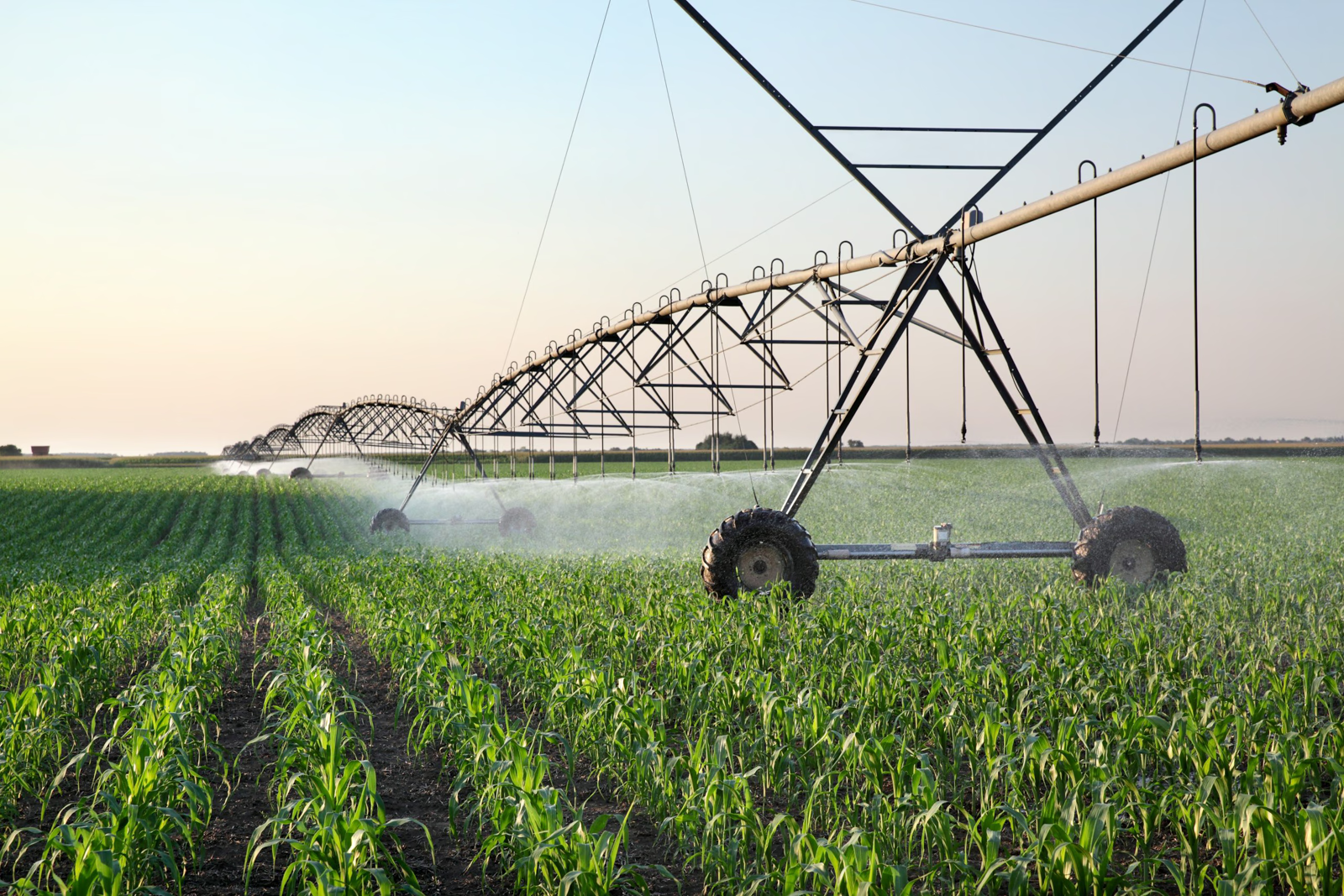
Agriculture is under pressure from multiple directions: water scarcity, soil degradation, rising fertiliser costs, climate stress, disease pressure and increasing demand for cleaner production. Conventional inputs such as fertilisers, pesticides and fungicides still matter, but they are delivering diminishing returns in many systems.
G-Cav™ offers a different lever: improving plant performance through the irrigation water growers already apply. Using vortex-induced multistage hydrodynamic cavitation, a single inline G-Cav™ unit can deliver oxygen, molecular hydrogen or ozone as nanoscale bubble populations. Each gas supports a different agricultural mechanism.
- Oxygen targets root-zone hypoxia in oxygen-limited soils.
- Molecular hydrogen supports plant stress resilience, nutrient uptake efficiency and quality outcomes.
- Ozone supports pathogen control, irrigation-line hygiene and post-harvest sanitation.
This is not one gas pretending to solve every problem. It is a three-gas framework: three mechanisms, one irrigation platform.
The Three-Gas Framework
G-Cav™ generates nanoscale bubble populations from whichever gas is supplied to the reactor. The cavitation process fragments injected gas through successive implosion chambers, producing very high gas-water surface area and rapid dissolution. The same unit can be connected to oxygen, hydrogen or ozone without changing the core hardware.
| Gas | Primary mechanism | Agricultural application |
|---|---|---|
| Oxygen (O₂) | Restores dissolved oxygen in irrigation water and corrects root-zone hypoxia | Clay soils, silt loams, compacted greenhouse soils, saline systems and high-frequency drip irrigation |
| Molecular hydrogen (H₂) | Supports mitohormetic stress response, antioxidant defence and nutrient uptake efficiency | Stress resilience, yield improvement, quality enhancement and post-harvest performance |
| Ozone (O₃) | Oxidative pathogen and biofilm control | Emitter maintenance, irrigation water disinfection, root-zone pathogen reduction and produce washing |
Why Root-Zone Oxygen Matters
Root-zone oxygen deficiency is one of the most underdiagnosed constraints in irrigated agriculture. Roots require oxygen to produce ATP through aerobic respiration. That energy drives water uptake, mineral uptake, root elongation, membrane maintenance and recovery from stress.
When soil oxygen drops too low, roots shift toward anaerobic metabolism. This reduces energy production and can create toxic fermentation by-products. Above ground, the crop may show wilting, poor vigour or apparent nutrient deficiency. The dangerous part is that these symptoms are often misread.
A crop wilting in wet soil is often not asking for more water. It may be signalling root-zone hypoxia.
Adding more water in that situation can make the problem worse because irrigation fills pore spaces and displaces air. Oxygen can then only re-enter through water-filled pores, where diffusion is dramatically slower than through air-filled pores.
How Irrigation Can Create the Problem
Every irrigation event changes soil oxygen dynamics. In sandy soils, large pores drain quickly and refill with air. In clay and silt-heavy soils, pore spaces stay water-filled for longer. If irrigation is frequent, especially under subsurface drip, the wetting front may remain oxygen-depleted for hours or days.
The main risk factors are:
- Fine-textured soils: clay, silty clay, clay loam and silt loam.
- High-frequency irrigation: daily or near-daily subsurface drip.
- Compaction: poor infiltration, surface puddling, hardpan layers and shallow rooting.
- Warm soils: higher temperatures increase biological oxygen demand.
- Organic-rich irrigation water: treated wastewater can increase microbial oxygen consumption in the root zone.
- Salinity management: high leaching fractions can maintain prolonged wet soil conditions.
The Soil Oxygen Limitation Hypothesis
The evidence base for oxygenated irrigation is not random. The pattern is clear: oxygenated irrigation improves yield where the root zone is oxygen-limited under normal irrigation practice. Where soils or substrates are already well aerated, oxygen injection may deliver no measurable yield advantage.
This matters commercially. Oxygenated irrigation should not be sold as a universal growth stimulant. That is weak thinking and bad deployment strategy. It should be targeted at systems where oxygen limitation is a credible yield bottleneck.
| Growing condition | Expected oxygen response | Reason |
|---|---|---|
| Heavy clay / Vertosol soils | High probability of response | Slow drainage and extended oxygen limitation after irrigation |
| Saline or compacted soils | High probability of response | Root stress and poor soil aeration can compound hypoxia |
| High-frequency drip irrigation | Moderate to high probability of response | Frequent wetting can prevent re-aeration |
| Sandy loam or loamy sand | Lower probability of response | Fast drainage and better oxygen replenishment |
| Rockwool, perlite or other porous soilless media | Low probability of oxygen yield response | Oxygen is usually not the limiting variable |
Evidence for Oxygenated Irrigation
Peer-reviewed oxygation research across multiple crops and soil types supports the targeting logic. Positive yield responses are most consistently associated with fine-textured, poorly drained, saline or high-frequency-irrigated systems.
| Soil or medium | Crop | Reported response |
|---|---|---|
| Vertosol heavy clay, seven seasons | Cotton | +6% to +27% lint yield and up to +26% water-use efficiency |
| Salinised Vertisol | Soybean and cotton | Positive biomass and lint response |
| Clay loam greenhouse system | Cucumber | Positive dose-response |
| Rockwool slabs | Tomato | No effect where oxygen was not limiting |
| Sand-based putting green | Creeping bentgrass | No effect where oxygen was not limiting |
The practical lesson is blunt: the value is in targeting. A G-Cav™ oxygen deployment in the wrong growing system may produce little return. In the right soil type, it can correct a real physiological constraint.
How G-Cav™ Improves Oxygen Delivery
Conventional oxygenation approaches such as venturis and air-pump systems generate larger bubbles that can off-gas before the oxygen dissolves or reaches the root zone. In contrast, G-Cav™ generates nanoscale gas-water interface area, enabling very rapid dissolution.
In single-pass testing, G-Cav™ has added approximately 26 mg/L dissolved oxygen at 21°C and 18 mg/L at 31°C, at greater than 99% oxygen transfer efficiency. In clay soils, that dissolved oxygen is carried with the irrigation wetting front to root depth instead of escaping at the surface.
This delivery distinction is critical. The objective is not to bubble air into water for visual effect. The objective is to put dissolved oxygen into the irrigation stream and carry it to the root zone where plant roots actually need it.
Molecular Hydrogen: Stress Resilience and Nutrient Efficiency
Molecular hydrogen works through a different biological pathway. It is a small, uncharged, membrane-permeable gas that can interact with plant stress-response physiology. The current scientific explanation centres on mitohormesis: a mild redox signal that activates larger adaptive responses inside the plant.
In plant studies, hydrogen-rich water and hydrogen nanobubble irrigation have been associated with improved tolerance to salinity, drought, UV stress, heavy metals and other abiotic stressors. The response is linked to activation of antioxidant enzyme systems such as superoxide dismutase, catalase and peroxidase.
For growers, the commercial point is not the molecular elegance. It is whether the crop handles stress better, uses nutrients more efficiently and produces higher-value output.
Hydrogen Nanobubbles and Horticultural Yield
The cherry tomato hydrogen nanobubble study is commercially important because it tested hydrogen alongside fertiliser, not only in the absence of fertiliser. That distinction matters because growers are already running fertiliser programs. A treatment that only works when fertiliser is absent is not very useful in a commercial setting.
| Treatment condition | Yield outcome versus standard water + fertiliser |
|---|---|
| Standard water, no fertiliser | −26.5% |
| Hydrogen nanobubble water, no fertiliser | +9.1% |
| Standard water, with fertiliser | Control |
| Hydrogen nanobubble water, with fertiliser | +39.7% |
The same research reported more than 70–80% improvement in nitrogen and phosphorus absorption, and more than 50% improvement in potassium absorption. That makes hydrogen nanobubble irrigation a nutrient-efficiency discussion, not just a yield discussion.
For high-value horticulture, improved nutrient uptake can affect fertiliser spend, crop uniformity, fruit quality, flavour metrics, shelf life and market grade. Those value streams compound across crop cycles.
CSIRO Hydrogen Field Validation
Australian hydrogen agriculture trials conducted between 2003 and 2007 demonstrated yield improvements of up to 31% in broadacre crops through subterranean hydrogen delivery. The limitation was not the agronomic concept; it was the delivery method. Compressed hydrogen through underground pipe networks is not a practical commercial pathway for most growers.
G-Cav™ changes the delivery equation by putting hydrogen nanobubbles into irrigation water. The system uses the irrigation infrastructure the farm already operates, making the agronomic concept far more deployable.
Hydrogen, Soil Microbiology and Carbon Potential
Hydrogen may also influence the rhizosphere by supporting hydrogen-oxidising bacteria, including beneficial species associated with plant growth, stress tolerance and nutrient cycling. Research has also indicated that hydrogen-treated soils can shift toward increased CO₂ uptake under certain conditions.
This is an emerging commercial narrative and should be handled carefully. The stronger near-term claims are yield, stress resilience and nutrient efficiency. Carbon-credit potential may become significant, but it depends on scheme design, measurement protocols and field validation.
Ozone: Pathogen Control and Irrigation Hygiene
Ozone nanobubble irrigation is the third protocol. Ozone is a strong oxidant that can reduce microbial load, suppress biofilm and support sanitation without leaving persistent chemical residue because it decomposes back to oxygen.
Agricultural applications include:
- Drip emitter maintenance: reducing biofilm formation and helping maintain irrigation uniformity.
- Soil-borne pathogen pressure: targeting organisms such as Phytophthora, Pythium, Fusarium and Rhizoctonia in irrigation-associated pathways.
- Treated wastewater irrigation: reducing pathogen load, biological oxygen demand and residual organic contaminants before field application.
- Post-harvest washing: supporting chemical-free sanitation and shelf-life management.
Ozone should be managed as a treatment protocol, not treated casually as “stronger oxygen”. Dose, exposure time, crop sensitivity and system design matter.
Gas Selection by Crop Stage
The three-gas framework allows agronomists to select the gas based on the crop stage and treatment objective.
| Crop stage or operation | Recommended gas | Primary objective |
|---|---|---|
| Pre-planting / soil preparation | Oxygen + hydrogen | Root-zone preparation, microbiome activation and early stress resilience |
| Germination and establishment | Oxygen | Root energy supply and aerobic root development |
| Vegetative growth | Hydrogen | Growth rate, nutrient uptake efficiency and stress priming |
| Flowering and fruit set | Hydrogen + oxygen | Yield potential, heat tolerance and drought resilience |
| Pre-harvest | Hydrogen | Quality enhancement, secondary metabolites and sensory attributes |
| Irrigation system maintenance | Ozone | Emitter cleaning, biofilm control and pathogen reduction |
| Post-harvest produce washing | Ozone | Sanitation, shelf-life extension and chemical-free washing |
Application Areas
Broadacre Grain and Cotton
Broadacre systems on heavy clay and Vertosol soils are a strong fit for oxygenated irrigation where irrigation infrastructure allows inline treatment. The seven-season cotton Vertosol evidence is especially relevant to Queensland and other regions with comparable soil conditions. Hydrogen nanobubbles add a second pathway focused on stress resilience and nutrient efficiency.
Intensive Horticulture
Vegetable, berry and high-value horticultural systems are attractive because they already use pressurised irrigation and fertigation. Their economics justify precision input management, and their markets reward improvements in yield, quality, flavour, shelf life and chemical-free production credentials.
Controlled Environment Agriculture
Controlled environment agriculture requires a more precise argument. Oxygen is not necessarily the value driver in rockwool, perlite or highly aerated soilless substrates because oxygen may not be limiting. Hydrogen and ozone are usually stronger protocols in these systems: hydrogen for stress and quality, ozone for nutrient-solution hygiene and pathogen control.
Orchards and Perennial Crops
Perennial crops such as avocado, citrus, stone fruit, almonds and macadamia can be highly sensitive to root-zone conditions. In clay-heavy soils under drip irrigation, oxygen nanobubbles can support aerobic root conditions, while ozone can help manage irrigation water quality and pathogen pressure.
Return on Investment: Five Value Streams
The agriculture ROI case should not rely on one broad claim. It should be built from separate value streams and matched to the specific operation.
| Value stream | Primary gas | Commercial basis |
|---|---|---|
| Yield volume increase from root-zone correction | Oxygen | Most relevant in oxygen-limited clay, saline, compacted or high-frequency-irrigated soils |
| Yield volume increase from stress resilience | Hydrogen | Relevant across crop stress conditions, especially heat, drought and salinity |
| Fertiliser input efficiency | Hydrogen | Improved nutrient absorption may reduce required application rates |
| Produce quality premium | Hydrogen | Potential improvements in Brix, aroma, shelf life, sensory quality and grading |
| System hygiene and disease pressure reduction | Ozone | Emitter maintenance, biofilm control, pathogen reduction and post-harvest sanitation |
Where G-Cav™ Should Be Positioned
The strongest agriculture positioning is not “more bubbles equals more growth”. That is too simplistic and too easy to attack. The stronger position is:
G-Cav™ enables targeted gas protocols through irrigation water, using oxygen, hydrogen or ozone depending on the crop stage, soil condition and agronomic objective.
This makes the technology credible to growers and agronomists because it acknowledges where each mechanism works, where it does not, and how a deployment should be assessed.
Conclusion
G-Cav™ agriculture applications are strongest when framed as a precision irrigation enhancement platform, not as a generic yield booster. Oxygen addresses root-zone hypoxia where soil and irrigation conditions make oxygen a limiting factor. Molecular hydrogen supports plant stress resilience, nutrient uptake and quality pathways. Ozone supports pathogen control, emitter maintenance and post-harvest sanitation.
The commercial opportunity lies in matching the gas protocol to the actual production constraint. Heavy clay cotton, saline horticulture, high-frequency drip systems, high-value greenhouse crops and perennial crops under pathogen pressure do not need the same treatment. They need the right gas, delivered efficiently through the irrigation system they already use.
To assess whether G-Cav™ oxygen, hydrogen or ozone nanobubble irrigation is suitable for your crop, soil and irrigation system, contact Global Cavitation to discuss pilot testing and site-specific system design.