
Improve produced-water treatment, oil-water separation, oxidation performance, microbial control, and reinjection readiness through a robust membrane-free cavitation platform designed for demanding process environments.
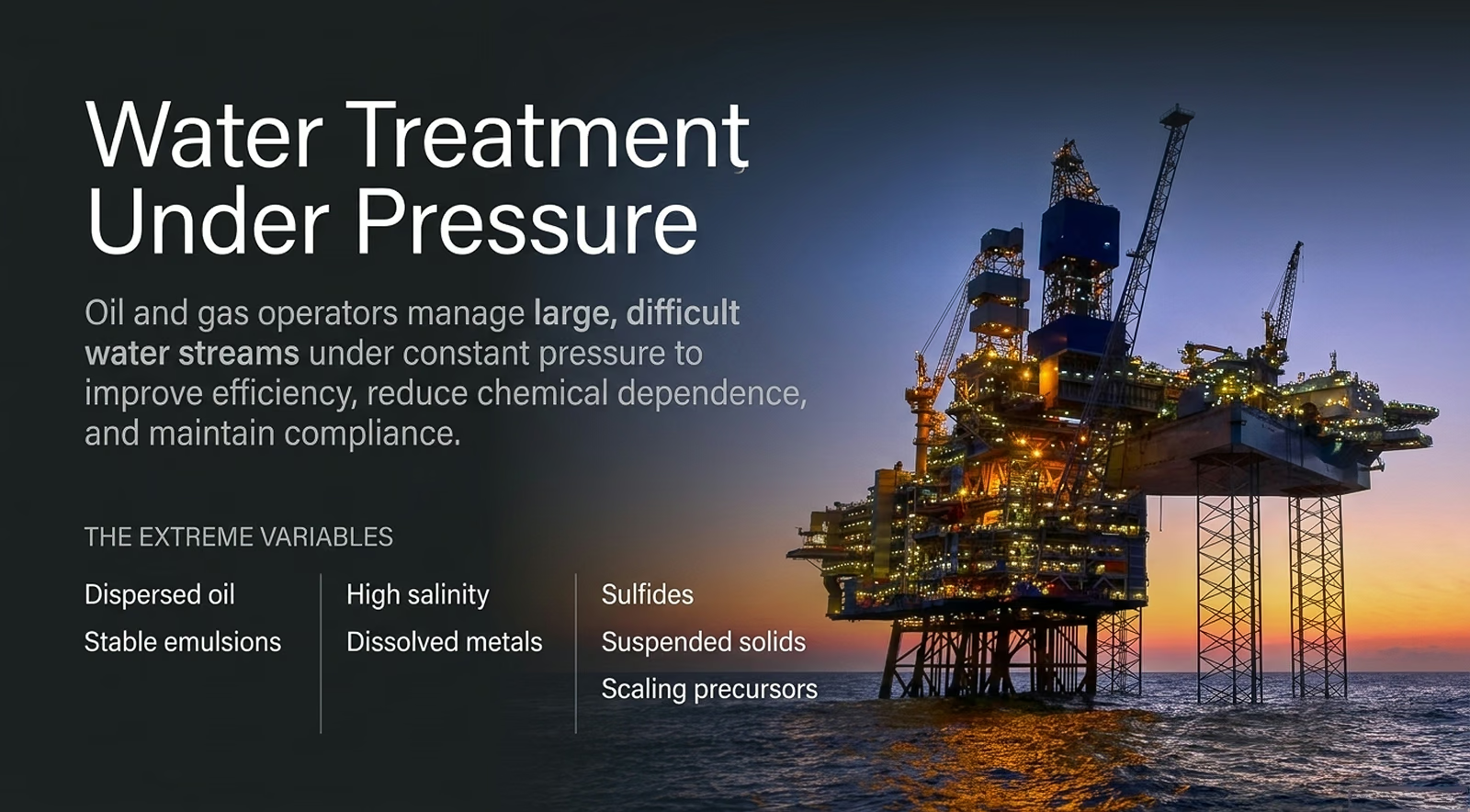
Oil and gas water management is one of the hardest treatment environments in any industry. Produced water and related process streams can carry dispersed oil, stable emulsions, high salinity, dissolved metals, sulfides, surfactants, bacteria, suspended solids, and scaling precursors all at once. G-Cav™ is designed for exactly that kind of complexity.
G-Cav™ delivers a membrane-free, multistage hydrodynamic cavitation platform with integrated gas infusion, purpose-engineered for the complex water challenges of the oil and gas sector. It combines powerful emulsion breaking and nanobubble generation with the thermodynamic advantages of the Gibbs adsorption isotherm to address multiple contaminants simultaneously.
Key interests for readers:
Improve produced-water treatment, oil-water separation, oxidation performance, microbial control, and reinjection readiness through a robust membrane-free cavitation platform engineered for the most demanding process environments in the energy sector. Oil and gas water management ranks among the toughest treatment challenges across any industry. Produced water and associated streams routinely carry dispersed oil, stable emulsions, high salinity, dissolved metals, sulfides, surfactants, bacteria, suspended solids and scaling precursors simultaneously. G-Cav™ is purpose-built for precisely this complexity.
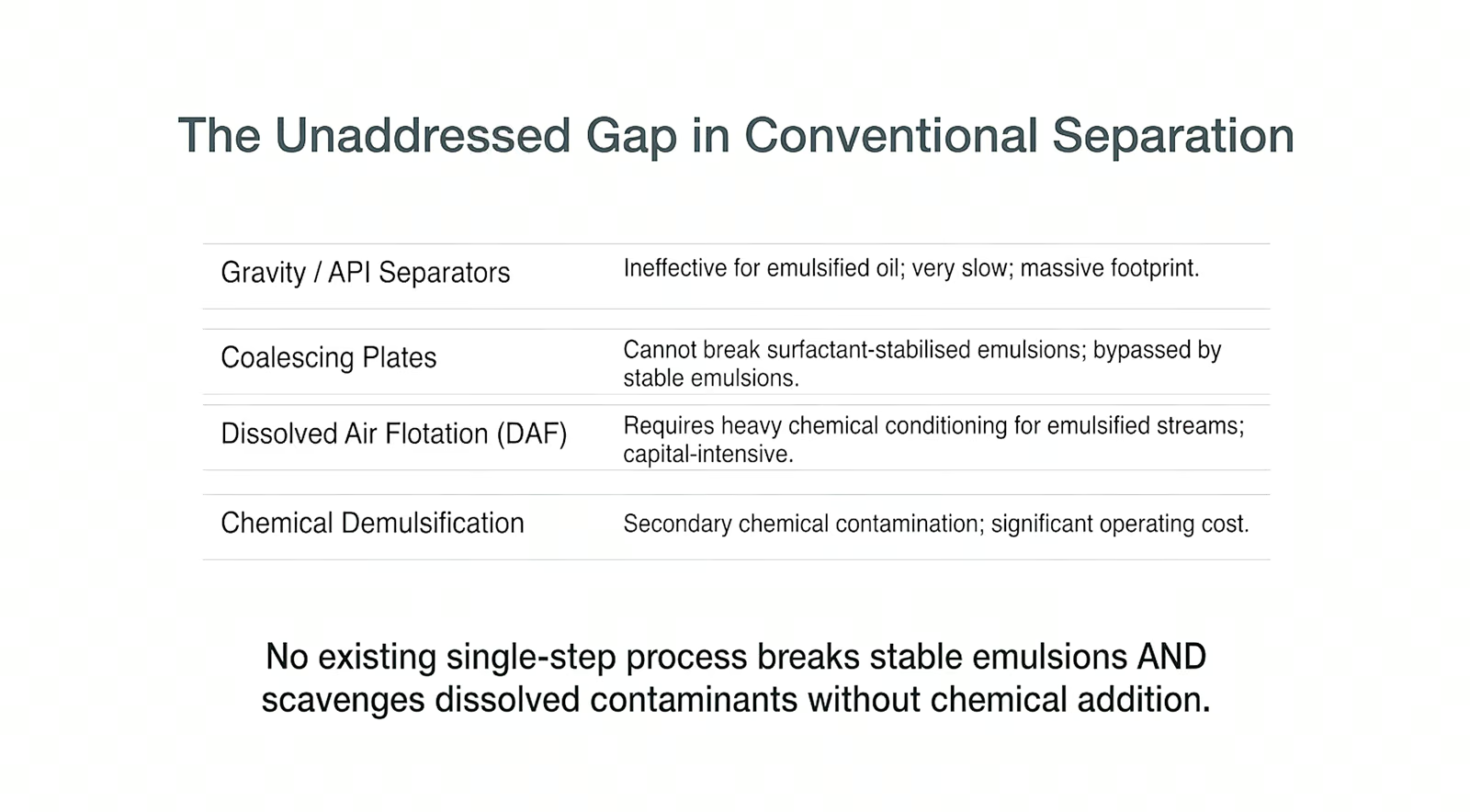
Oil and gas operators manage vast and complex water volumes under relentless pressure to raise treatment efficiency, cut chemical dependence, protect uptime and sustain compliance in aggressive field conditions. Produced water, ballast water, process water and recycled streams are highly variable and fouling-prone. Conventional approaches — chemical demulsifiers, coalescers, dissolved air flotation, filtration or membranes — frequently prove expensive to operate, difficult to optimise and vulnerable to fouling or performance drift.
The commercial reality extends beyond treatment equipment itself. Globally, the total economic activity and operator expenditure associated with produced water handling, transportation, treatment, disposal, reinjection, reuse and compliance runs into the many hundreds of billions of dollars annually when all direct and indirect costs are considered. This scale, combined with tightening regulations on disposal, growing reuse mandates in water-stressed basins, and ESG expectations for lower chemical intensity, creates a compelling need for high-impact, field-robust pretreatment solutions that deliver measurable improvement across multiple parameters simultaneously.
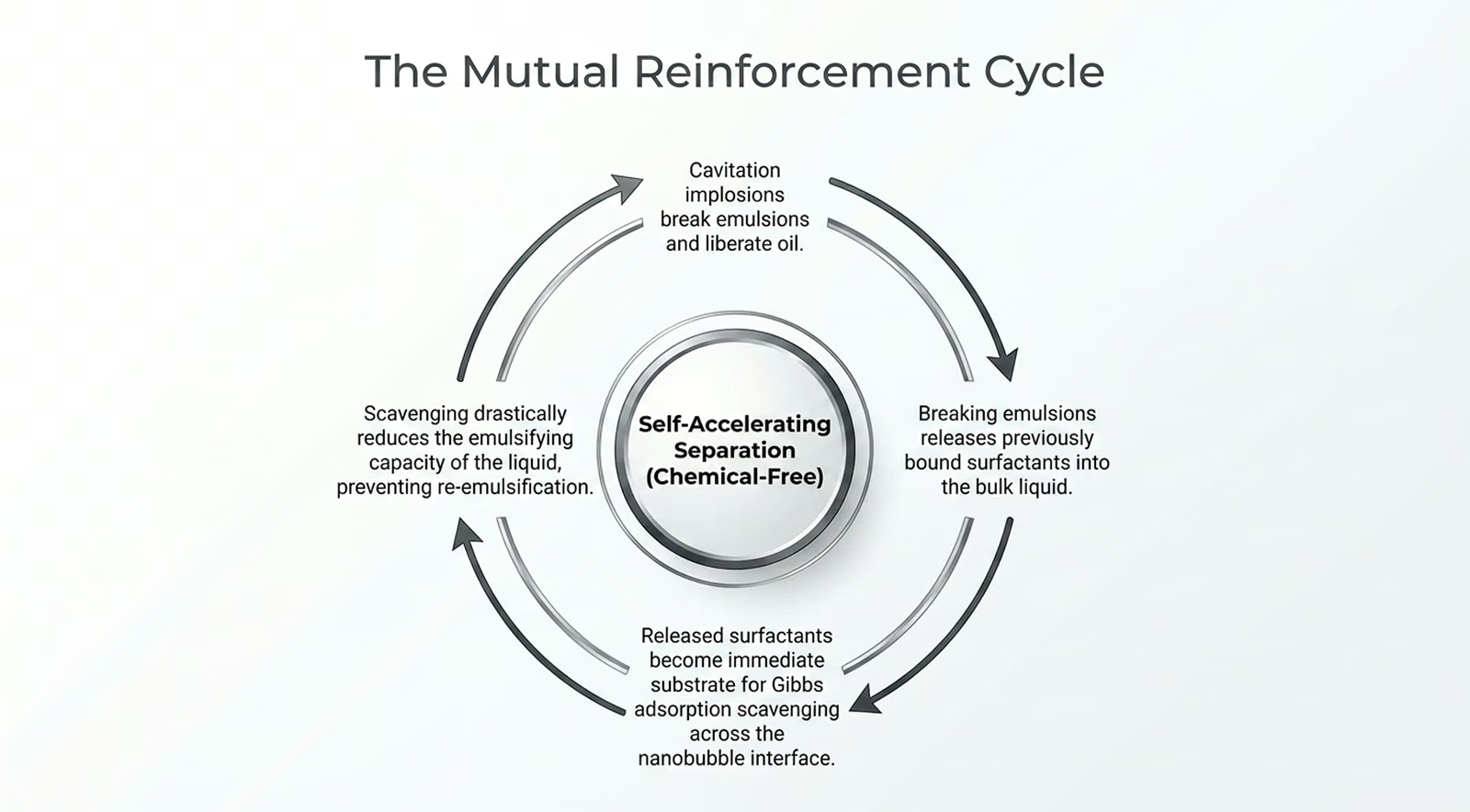
G-Cav™ integrates multistage hydrodynamic cavitation with high-efficiency gas infusion. In practice, this simultaneously alters gas-liquid interaction and the physical behaviour of contaminants within the stream. Cavitation-generated implosive events help disrupt stabilising films around oil droplets and emulsified contaminants. At the same time, fine gas structures and nanobubble populations enhance flotation, oxidation and interfacial contact throughout the water volume.
The platform’s surfactant removal capability, driven by the Gibbs adsorption isotherm across the nanobubble cloud, progressively strips surface-active compounds from the bulk water, restoring surface tension toward clean-water levels. This creates a cleaner bulk matrix that significantly improves the efficiency and effectiveness of any downstream advanced oxidation process while also enhancing gas transfer rates and oxygenation performance. The dual mechanical and thermodynamic action is decisive in oil and gas because many of the most persistent problems cannot be resolved by settling or chemical addition alone.
Produced water constitutes the largest waste stream by volume in the oil and gas industry and one of the most operationally expensive when treatment performance falls short. G-Cav™ addresses multiple pain points through a single platform: support for oil-water separation, reduction of total oil and grease, oxidation of dissolved metals and reactive species, bacterial control, and pre-polish conditioning ahead of disposal, reinjection or beneficial reuse.
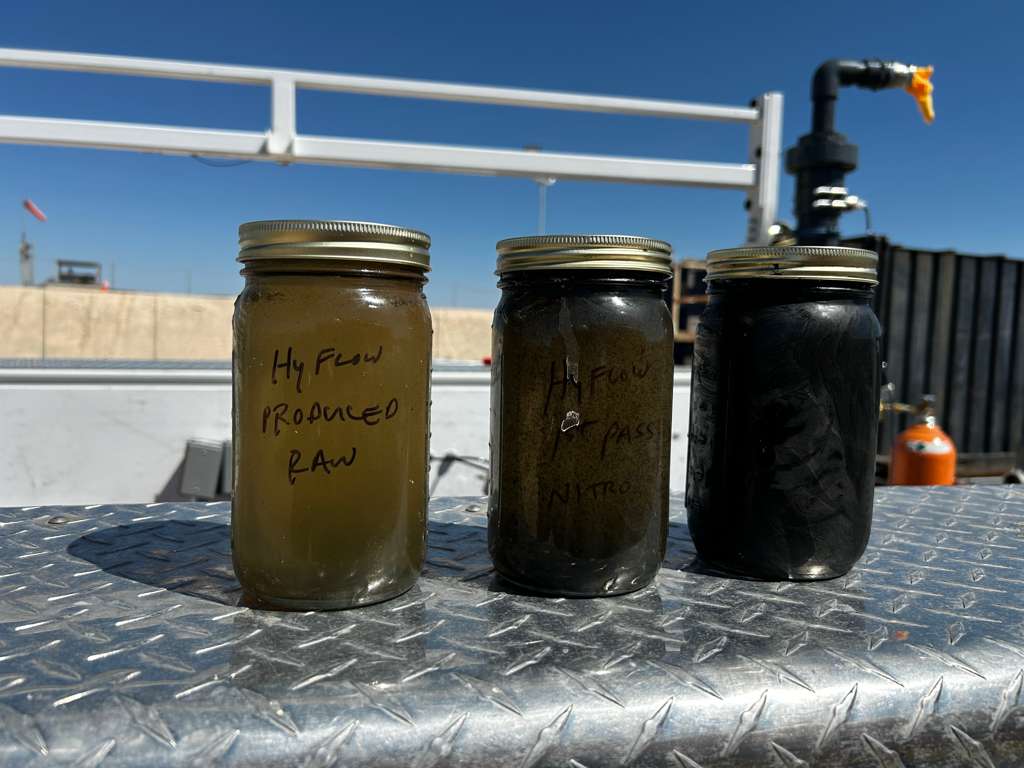
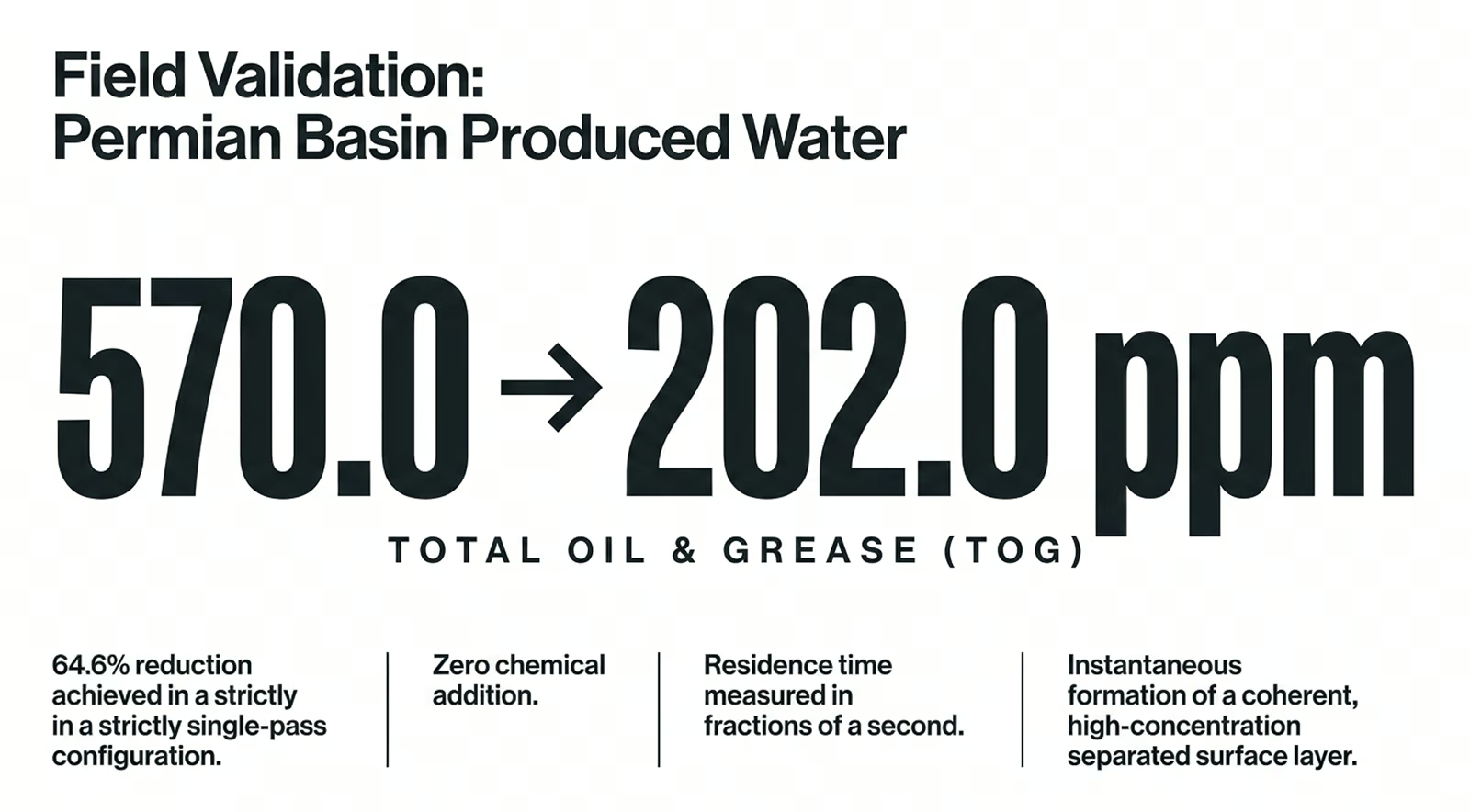
Field validation on Permian Basin produced water demonstrated robust single-pass performance: 65% reduction in total oil and grease (570 ppm to 202 ppm) with no chemical addition and residence time limited to transit through the reactor. A thick, coherent oil layer formed instantaneously on the surface, confirming simultaneous emulsion breaking and interfacial concentration under real, aggressive field chemistry. This result in one of the most demanding matrices provides a conservative yet powerful benchmark for produced water applications worldwide.
Oil-water separation represents one of the clearest and most immediate use cases. Stable emulsified oil droplets resist simple gravity separation. G-Cav™ supports the process by helping rupture the interfacial films that stabilise emulsions while simultaneously improving flotation and surface concentration of hydrophobic contaminants. This creates conditions for faster, more practical phase separation without reliance on membranes or heavy chemical dosing.
The operational payoff is direct: improved clarification, lower oil carry-over to downstream stages, reduced treatment burden and a higher-quality produced-water stream available for further processing or reuse. In high-throughput environments, even incremental gains in separation efficiency translate into meaningful reductions in operating friction and cost.
Oil and gas water management routinely demands more than oil removal. Dissolved iron, aluminium, sulfides, phosphorus, bacteria and corrosion-driving chemistry create operational risk for reinjection systems, pipelines, ballast tanks and broader site infrastructure. G-Cav™ can be configured within oxidation-based treatment pathways to assist conversion of dissolved contaminants into manageable forms, support metals precipitation, mitigate sulfide-related issues and improve overall water-quality stability.
By first removing surfactants and restoring bulk surface tension through the Gibbs-driven nanobubble cloud, the platform delivers a cleaner bulk water matrix that markedly improves the efficiency and outcome of subsequent advanced oxidation. Enhanced gas transfer and oxygenation further support oxidative performance and microbial control. This integrated approach is particularly relevant where operators must reduce iron and scale-forming precursors, control H₂S and souring chemistry, or protect downstream assets from fouling and corrosion.
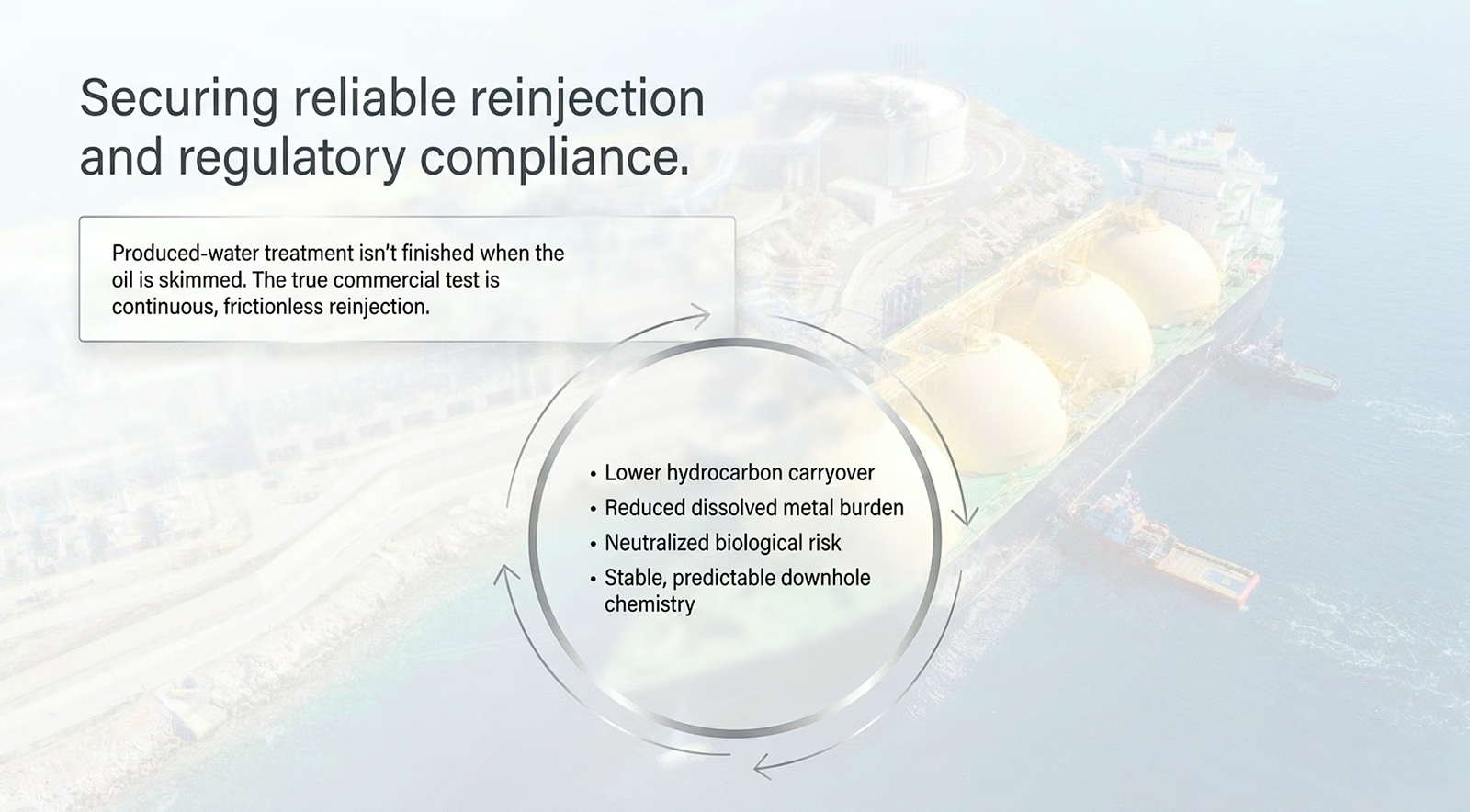
Produced-water treatment is not complete once oil is skimmed. The decisive commercial test is whether the stream can reliably enter the next required pathway: reinjection, hydraulic fracturing reuse, site recycling, ballast management or compliant discharge. G-Cav™ adds value by supporting treatment outcomes that make these next steps more practical and less costly.
A stream with lower oil load, reduced dissolved metal burden, lower bacterial risk and improved overall stability is materially easier to manage and more commercially useful. The platform therefore functions as a full water-management tool whose value compounds across the entire pathway rather than at a single separation point.
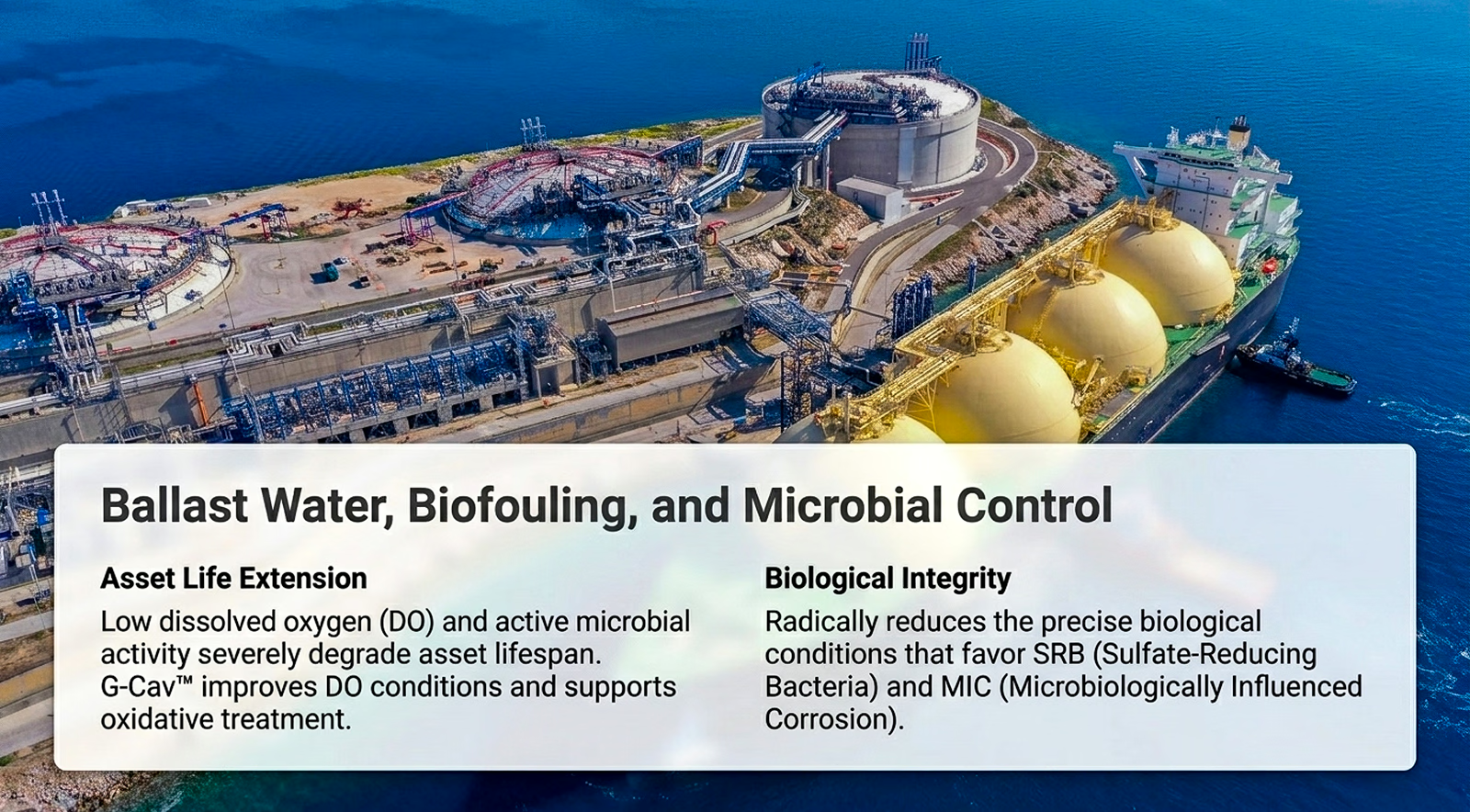
Beyond produced water, oil and gas infrastructure faces persistent water-quality challenges in ballast systems, tanks and marine or offshore operations. Low dissolved oxygen, microbial activity, sulphide generation and corrosion risk can become chronic operating issues. The platform can support ballast-water life extension and biofouling control by improving oxygen conditions, enabling oxidative treatment where required and reducing the biological environment that favours sulphate-reducing bacteria and microbiologically influenced corrosion.
This extends relevance beyond upstream produced-water treatment into the wider integrity and maintenance challenges that drive operating cost across offshore and transport-linked assets.
Residual surfactants, collectors and dissolved organics can destabilise plant chemistry and degrade treatment efficiency across multiple oil and gas water systems. G-Cav™ is relevant because cavitation-driven flotation and oxidation pathways can reduce surfactant burden, improve water quality for recycle and deliver a cleaner stream into the next treatment stage.
Recycling poor-quality water simply propagates instability. Better upstream conditioning reduces operating friction, improves treatment consistency and lowers freshwater intake requirements — outcomes that align directly with both cost control and sustainability objectives.
The strongest positioning in oil and gas is practical. Operators require better oil-water separation, lower treatment friction, more robust oxidation performance, reduced fouling, lower chemical reliance in selected pathways, retrofit compatibility and reliable field performance. G-Cav™ delivers because it is membrane-free, modular and engineered for integration with existing infrastructure.
In a sector that treats hundreds of millions of barrels of produced water daily, even modest improvements in efficiency, chemical intensity or pathway reliability scale rapidly. By enabling cleaner bulk water through surfactant removal and surface tension restoration, the platform also improves downstream advanced oxidation and oxygenation outcomes while supporting responsible environmental performance — reducing reliance on high-risk or poor-quality disposal methods and lowering global non-compliance exposure.
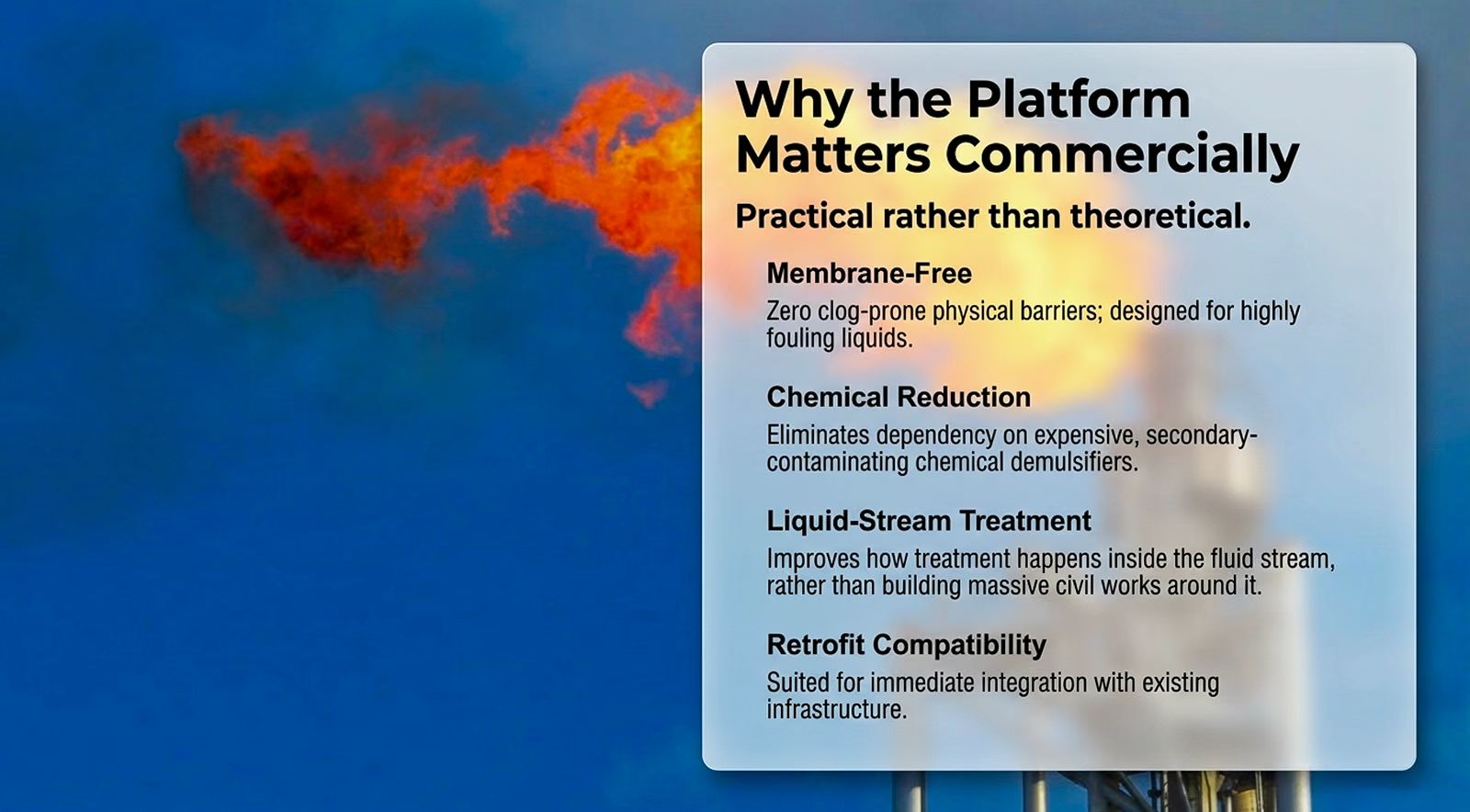
The platform deploys as a modular treatment unit, inline reactor or staged treatment element according to site requirements. This flexibility makes it relevant across upstream, midstream and selected downstream contexts where water management is tightly linked to cost, uptime and compliance. In practice, operators can begin with a single high-value application such as produced-water oil separation, validate performance under operating conditions, and then extend into advanced oxidation, microbial control, process-water recycle or adjacent functions.
This stepwise logic is commercially important: it allows proof of value at one point before expanding across a larger treatment footprint, minimising risk while building operational confidence.
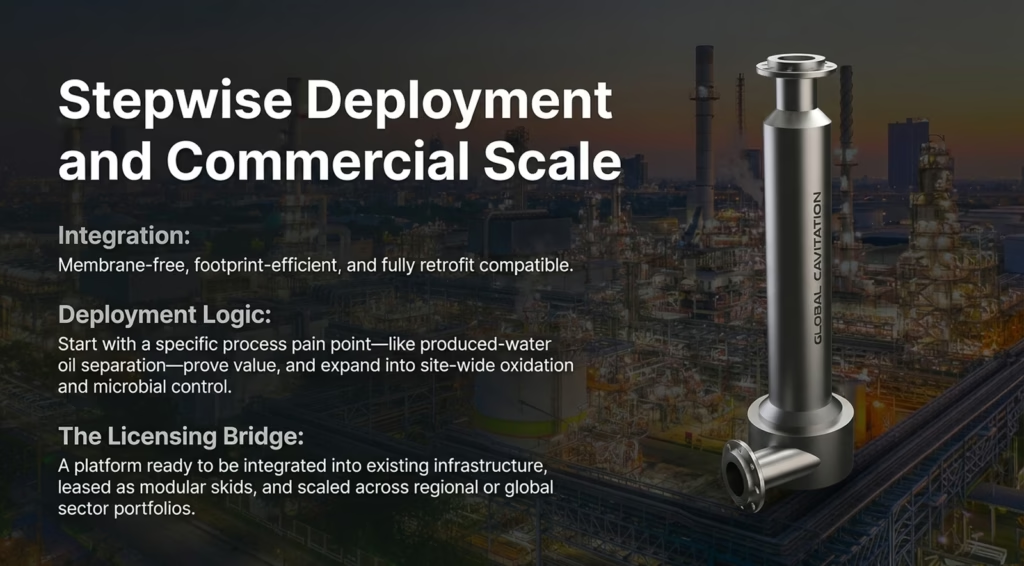
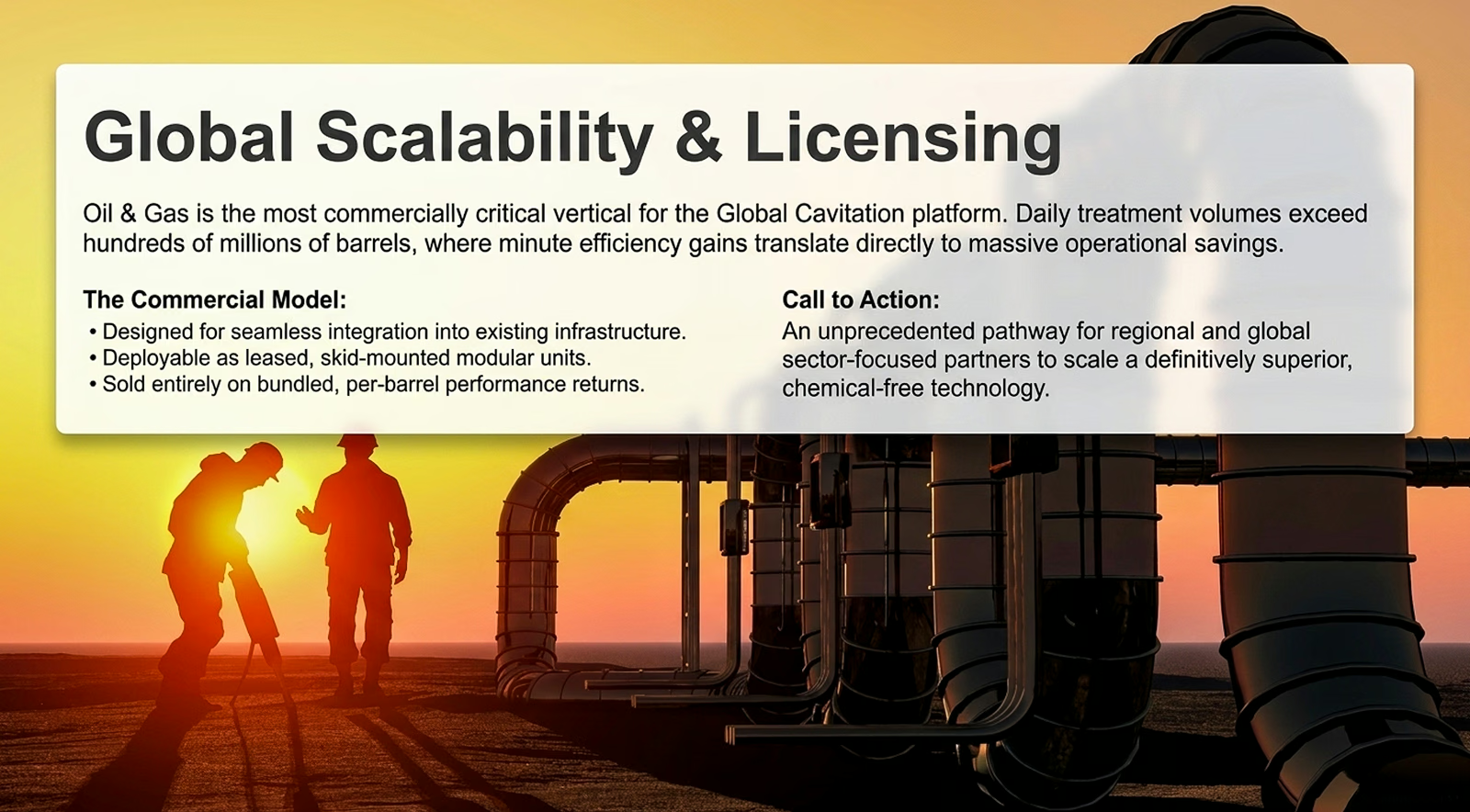
Oil & Gas represents one of the most commercially significant verticals within the Global Cavitation platform. Water-management challenges in this sector are large, persistent and directly tied to operating cost, reliability, reinjection performance, environmental compliance and the sheer daily volume of hundreds of millions of barrels treated worldwide. While the dedicated produced water treatment technology segment is measured in the low tens of billions, the total global operator expenditure on produced water handling, disposal, compliance, reuse and associated infrastructure runs to many hundreds of billions annually. This creates a substantial addressable opportunity for high-impact pretreatment solutions.
For the right regional or global sector-focused partner, this vertical offers a clear pathway into one of the most important and financially rewarding industrial water markets. The platform can be integrated into existing infrastructure, leased on skid or offered through bundled per-barrel performance models. By delivering measurable improvements in separation, oxidation efficiency, microbial control and environmental risk reduction, G-Cav™ positions licensees at the centre of a multi-hundred-billion-dollar global water management economy that will continue to expand through the next decade under regulatory, reuse and sustainability drivers.
For the right regional or global sector-focused partner, this vertical offers a pathway into one of the most important and financially rewarding markets in the world, through a platform that can be integrated into existing infrastructure, leased on a skid, and sold as bundled per barrel performance returns.
That is what makes Oil & Gas strategically important. It can begin with a single water-treatment problem and expand into a broader deployment footprint built around produced water, oxidation, microbial control, reinjection quality, and site-scale water management.
By combining emulsion-film disruption through cavitation shockwaves with enhanced nanobubble flotation and surface concentration of hydrophobic oil, the platform accelerates practical phase separation without membranes or heavy chemical reliance.
Yes. It reduces oil load, dissolved metals, bacterial risk and overall instability, delivering a cleaner, more stable stream that is materially easier and less costly to manage for reinjection, hydraulic fracturing reuse or site recycling.
It supports multiple objectives. Configurable gas infusion (air or oxygen/ozone) enables oxidation pathways that assist metals precipitation, sulfide mitigation and bacterial control alongside oil-water separation, with upstream surfactant removal further enhancing downstream oxidative efficiency.
Yes. Membrane-free and modular design allows deployment as submersible units in existing tanks, inline reactors on recirculation loops or staged elements with minimal or no modification to current assets.
Absolutely. Flexible licensing structures support regional partners, global sector specialists or integrated technology providers seeking to embed high-performance, field-proven water management into their offerings across upstream, midstream and selected downstream applications.