
Understand the physical mechanism behind multistage implosion, nanoscale fragmentation, and high-efficiency gas-liquid-solids interaction within the G-Cav™ platform.
Hydrodynamic cavitation is a process in which rapid pressure changes inside a moving liquid create transient voids or vapour cavities that expand and then collapse violently. Those implosive collapses generate intense localised energy inside the fluid itself.
In practical industrial terms, that energy can be used to intensify mixing, fragment gas and solids, destabilise emulsions, improve interfacial contact, and accelerate reactions that would otherwise be weaker, slower, or less economical.
Further importance lies in the fact that it uses the energy already present in the fluid stream. Instead of adding fragile consumable components to force gas into water or create reaction conditions externally, the process makes the liquid do more work on itself.
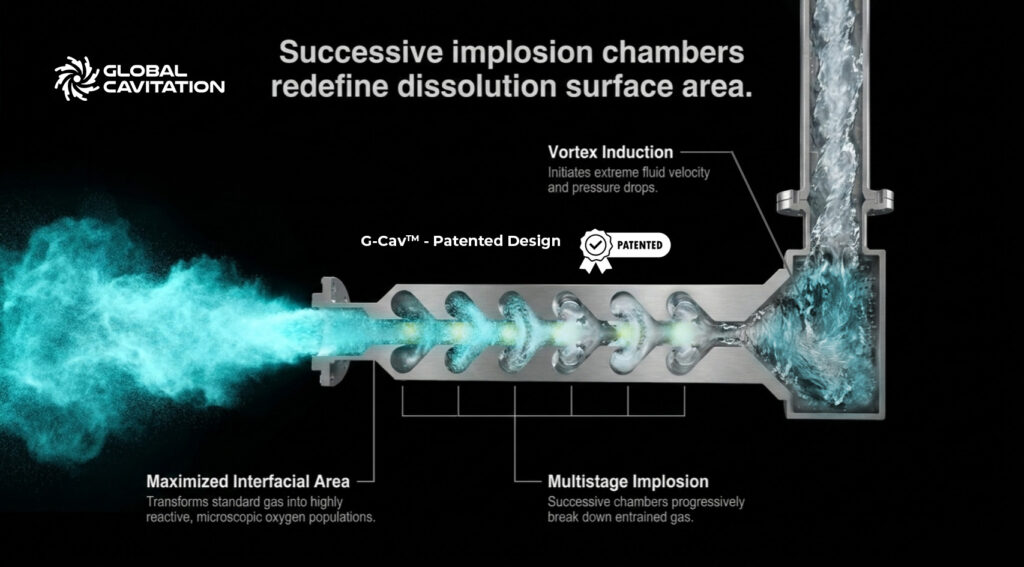
Not all cavitation systems are equal. G-Cav™ is not a simple one-stage venturi or a generic inline mixer that happens to create some cavitation side effect. It is a vortex-induced multistage hydrodynamic cavitation reactor deliberately designed to intensify and repeat implosive events through a sequence of successive chambers.
That distinction matters. In a weaker design, one cavitation event may create only limited fragmentation or process effect before the fluid leaves the active zone. In the G-Cav™ architecture, the fluid is repeatedly exposed to implosive conditions along the reactor path.
Each successive chamber builds on what the earlier chamber has already done, progressively refining gas, suspended matter, or mixed-phase material into finer and more reactive structures. This cumulative effect is central to why the platform is more than a basic gas injection device.
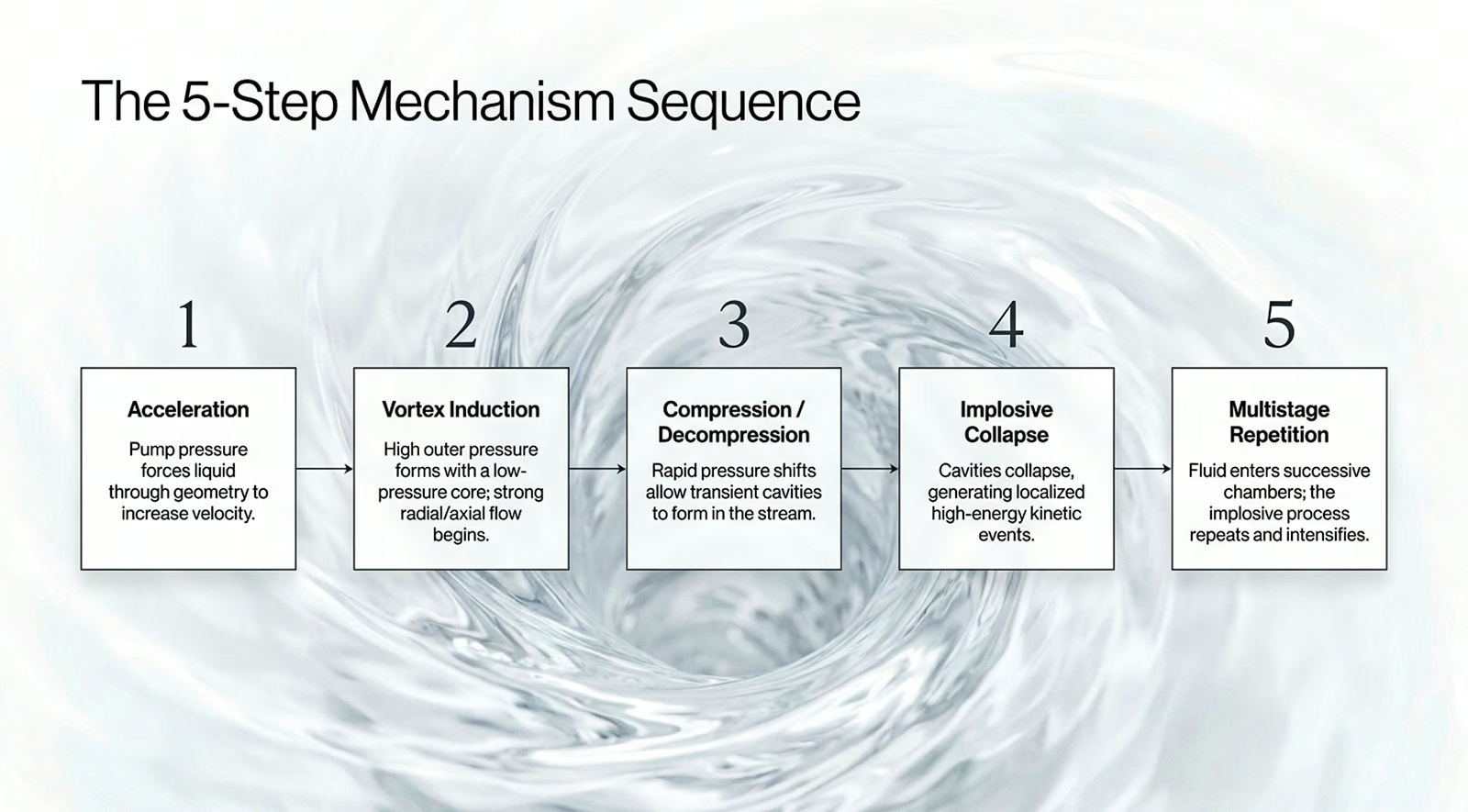
First, fluid acceleration: process liquid enters the reactor under pump pressure and is forced through geometry designed to ensure vortex creation and increased velocity.
Second, vortex induction: within the reactor, the vortex creates high outer pressure with a low-pressure region at its centre while generating strong radial and axial flow behaviour.
Third, compression and decompression: as the fluid moves through the chamber geometry, it experiences rapid shifts between higher and lower pressure conditions, allowing transient cavities to form in the liquid stream.
Fourth, implosive collapse: once conditions change again, the cavities collapse and generate localised high-energy events that apply force to surrounding fluid, gas, and entrained material.
Fifth, multistage repetition: in G-Cav™, the process does not stop after one collapse event. The liquid continues through successive cavitation chambers where the process repeats, intensifies, and refines the effect.
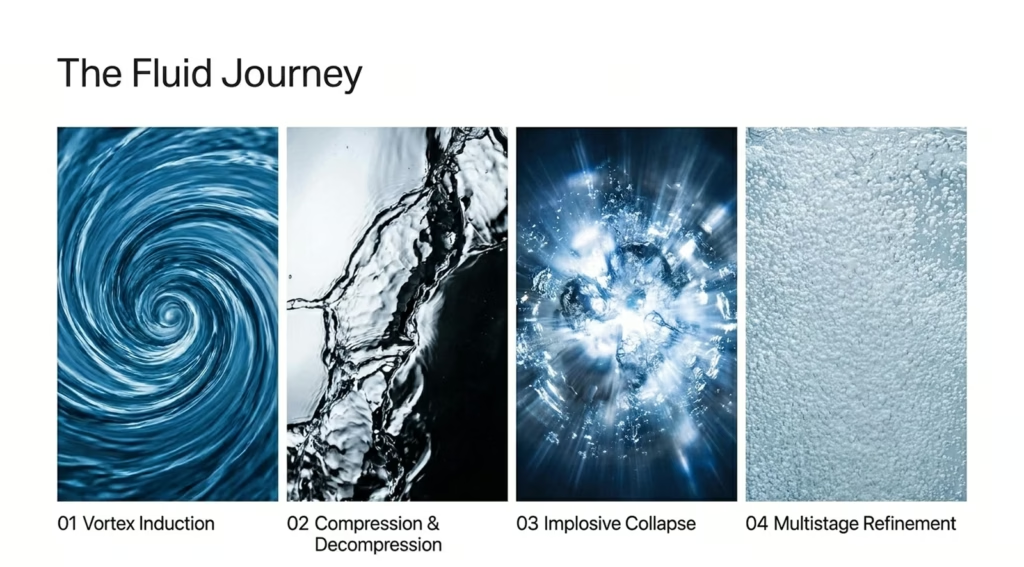
The platform value becomes especially clear when gas is introduced into the liquid stream. Conventional gas transfer technologies often rely on porous membranes, diffusers, or coarse bubble formation. Those methods can be limited by off-gassing, inconsistent contact, fouling, or poor performance in contaminant-rich environments.
G-Cav™ approaches the problem differently. Gas is introduced into an environment where repeated cavitation events progressively fragment and disperse it. As the gas phase is refined into smaller structures, the available interfacial area rises sharply.
This creates the conditions for stronger gas-liquid interaction and more meaningful process contact across oxygen transfer, oxidation, sanitation, remediation, flotation, and biological support applications.
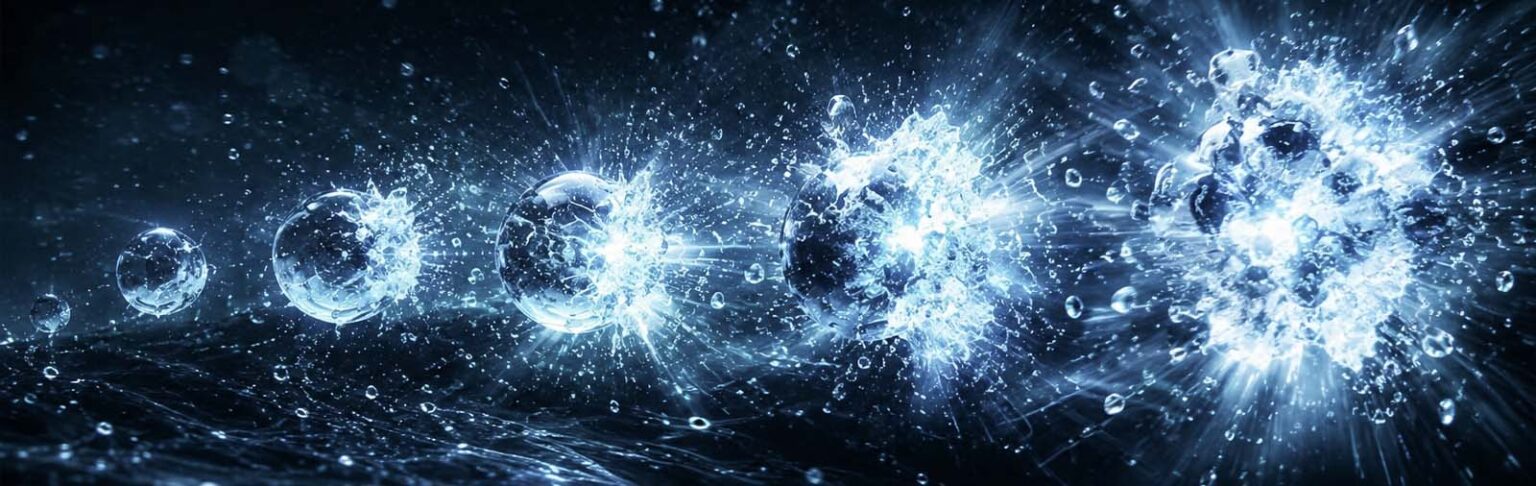
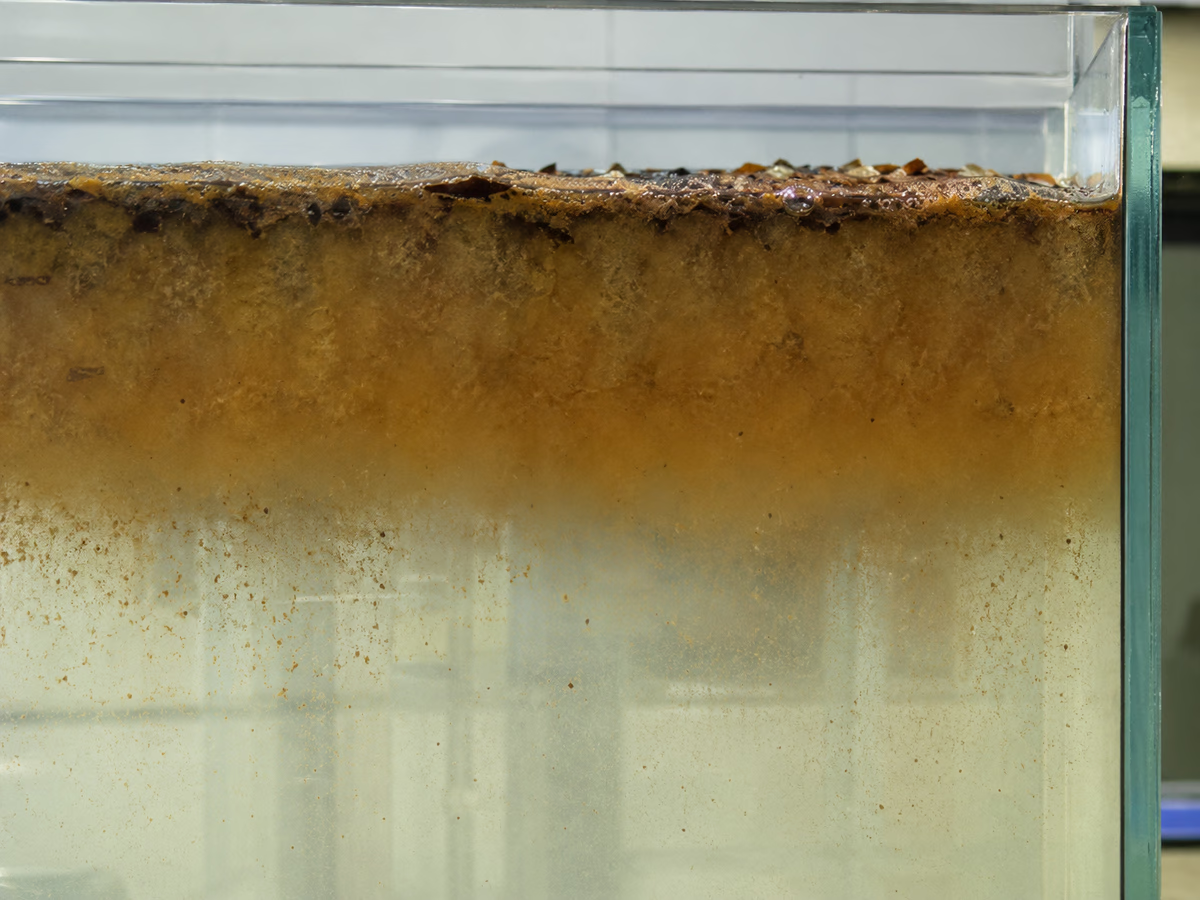
Hydrodynamic cavitation is not only useful for dissolving or dispersing gas. It also influences the physical condition of mixed-phase liquids. Cavitation-driven shear and implosion can destabilise emulsified systems, disturb surfactant-stabilised boundaries, and create conditions in which hydrophobic substances may concentrate at gas–liquid interfaces, which can support subsequent separation under suitable conditions.
When this is combined with ultra-fine gas structures, the result is a strong platform for flotation and separation enhancement.
In industrial wastewater, it supports pretreatment and contaminant concentration. In oil and gas, it supports produced-water treatment and oil-water separation. In mining, it contributes to flotation and process optimisation.
Conventional diffuser and membrane systems are often judged by whether they can push gas into a liquid. G-Cav™ should be judged by a broader standard: whether it creates a more commercially useful interaction between gas, liquid, solids, and process conditions.
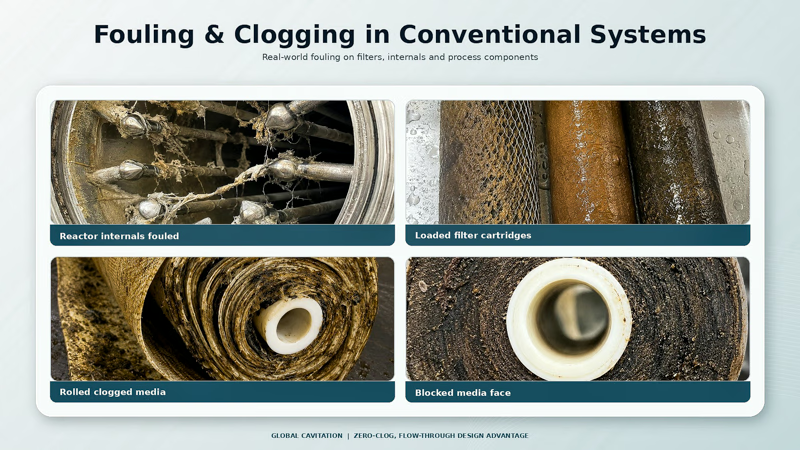
Membrane-based systems often introduce maintenance risk, clogging exposure, and performance decline in difficult liquids. Coarse aeration often wastes gas because the bubble is too large and too unstable to create efficient transfer.
G-Cav™ is positioned differently because it uses hydrodynamic energy, multistage cavitation, and membrane-free architecture to create an active process environment rather than a passive delivery event.
Technical explanation is important because it shows how the multistage cavitation mechanism may translate across applications. Performance still depends on the fluid, gas, operating conditions and deployment configuration, so sector-specific claims should be supported by appropriate testing.
A partner considering wastewater, aquaculture, mining, agriculture, remediation, or oil and gas deployment needs to see that the platform is built on a coherent physical mechanism.
That is what makes the technology licensable. The market opportunity is not a collection of disconnected applications. It is one mechanism translated into many high-value industrial outcomes.
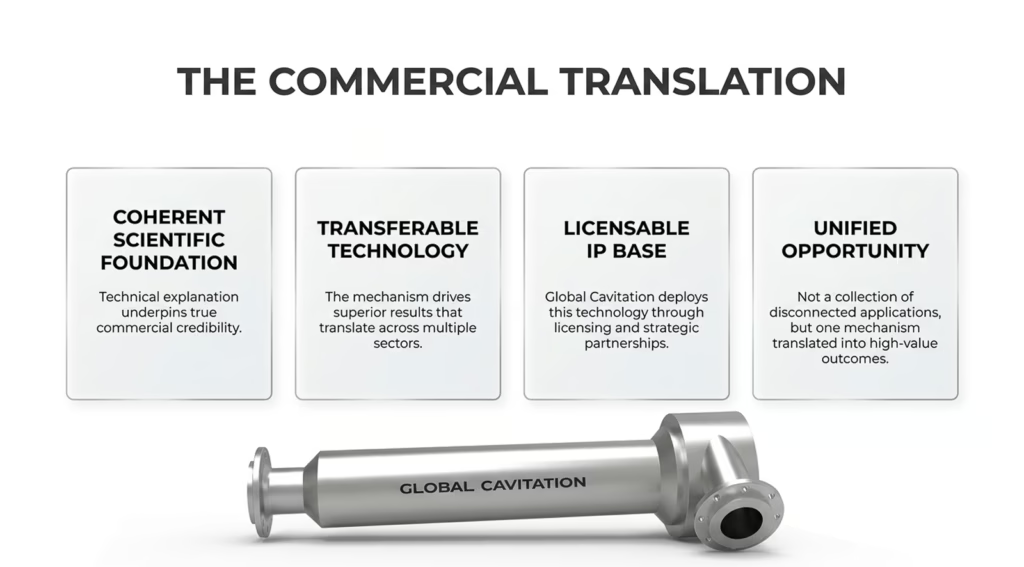
The mechanism behind G-Cav™ is what makes the wider platform possible. From gas infusion to flotation, from oxygenation to oxidation, the same multistage cavitation logic can be deployed across multiple sectors through one underlying technology base.