Why the delivery architecture matters as much as the nanobubbles themselves.
Not all nanobubble systems are built on the same engineering logic.
Some systems rely on membranes, porous diffusion surfaces, fine injectors, or delicate transfer media to introduce gas into liquid. These systems may perform well in clean, controlled conditions, but real industrial water is rarely clean, stable, or predictable.
G-Cav™ is built differently.
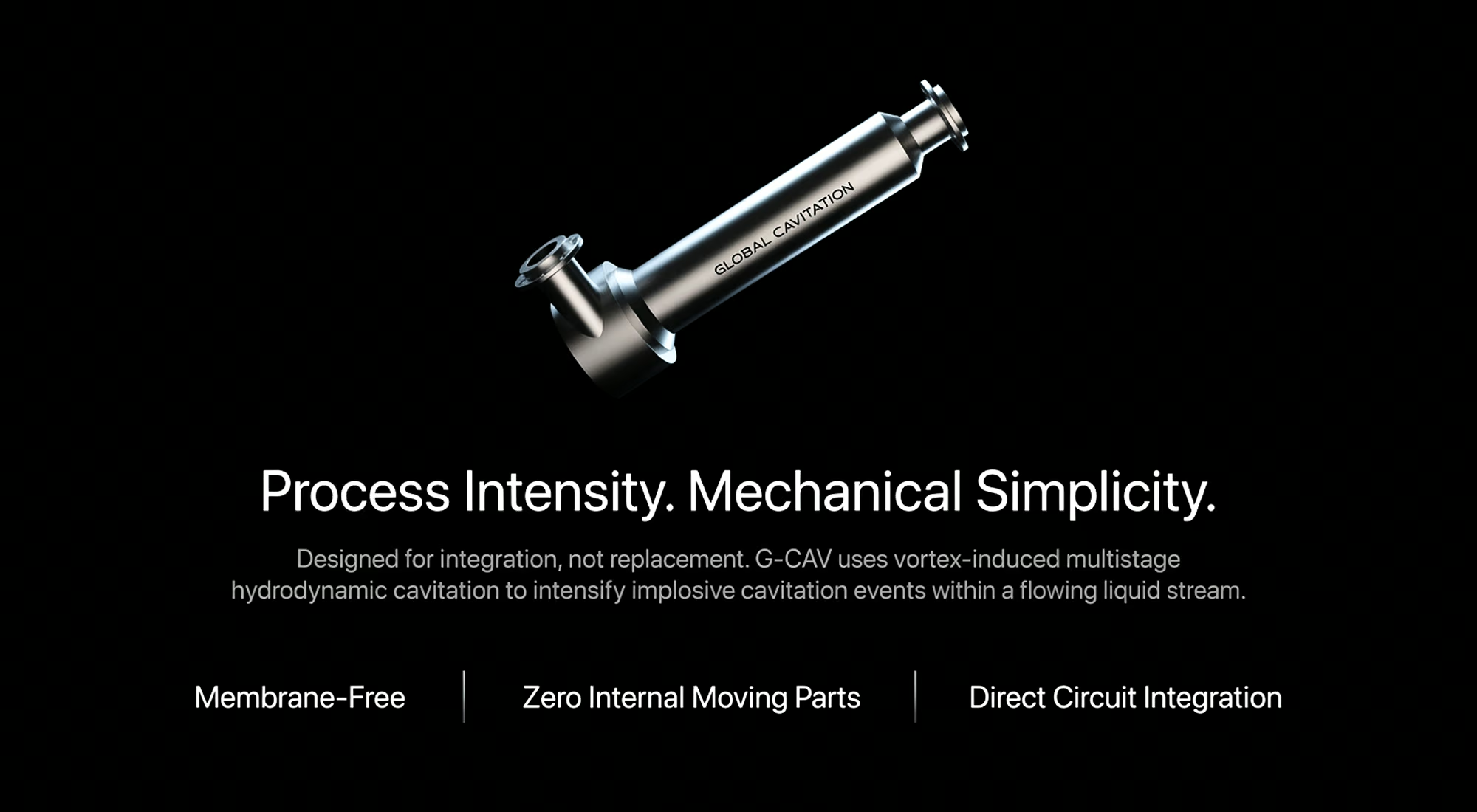
G-Cav™ uses a membrane-free, vortex-induced multistage hydrodynamic cavitation pathway to generate nanobubbles and intensify gas-liquid interaction without relying on clog-prone membrane architecture. The result is a robust industrial gas-infusion platform designed for difficult liquids, contaminated water streams, process fluids, and real-world operating environments where fouling, scaling, oils, solids, biofilm, and unstable chemistry are part of everyday use.
The nanobubble market often focuses on bubble size. That absolutely matters, but it is not the complete or the only engineering question that needs addressing.
The more important question is how those nanobubbles are generated, how the system behaves inside difficult fluids, what other tasks are still required, and whether the technology can maintain useful performance once operating conditions begin to push back.
A system can appear efficient in theory and still become expensive, maintenance-heavy, or unreliable once fouling, scaling, and clogging affect the active gas-transfer zone.
That is where hydrodynamic cavitation becomes commercially important, in that several benefits can be created at the same time, and where a membrane type technology represents a single factor solution, still with limited efficacy and inherent challenges built in.
The G-Cav™ technology completely negates membrane dependency at the architectural level. Instead of forcing gas through fine pores or fragile diffusion surfaces, G-Cav™ uses active cavitation inside a moving liquid stream to fragment gas, increase interfacial contact, and support high-efficiency gas-liquid interaction through a robust flow-through pathway.
Membrane-based nanobubble systems typically depend on fine pores, diffusion surfaces, or specialised gas-transfer media to introduce gas into liquid.
In clean water, controlled laboratory environments, or low-contamination applications, these systems may produce useful results. The challenge appears when the fluid becomes more demanding.
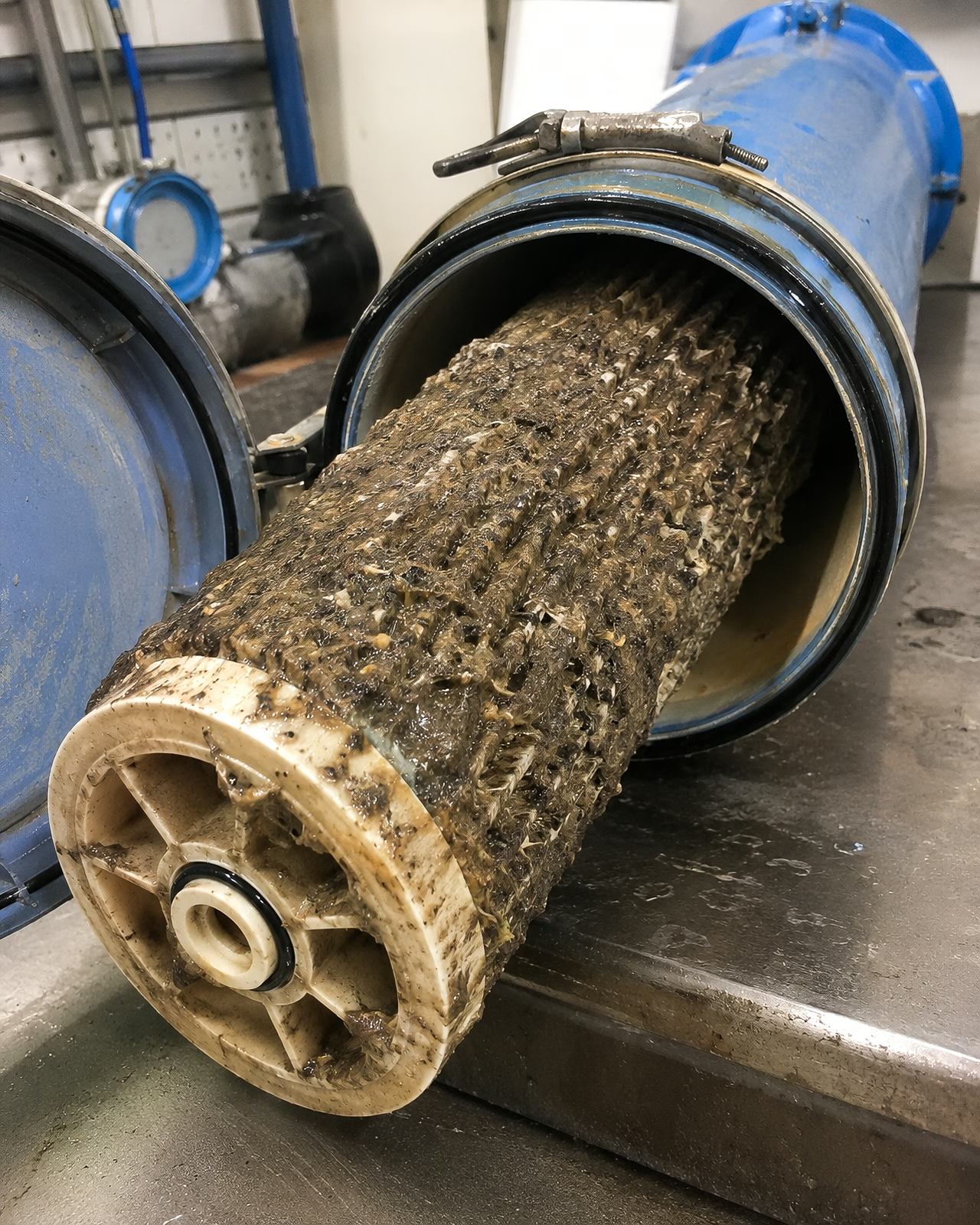
In industrial water and process environments, the membrane itself becomes the critical exposure point.
Biofilm can build. Mineral scale can accumulate. Fine transfer pathways can become restricted. Oils, surfactants, sludge, suspended solids, and organic loading can interfere with performance. As that happens, the system will require more frequent cleaning, higher maintenance intervention, consumable replacement, and closer operating control simply to protect gas-transfer efficiency.
This is not just a maintenance issue. It is a commercial issue. Downtime matters.
When the active transfer surface becomes vulnerable, the economics of the system can change quickly.
G-Cav™ does not use a membrane to create gas-liquid interaction.
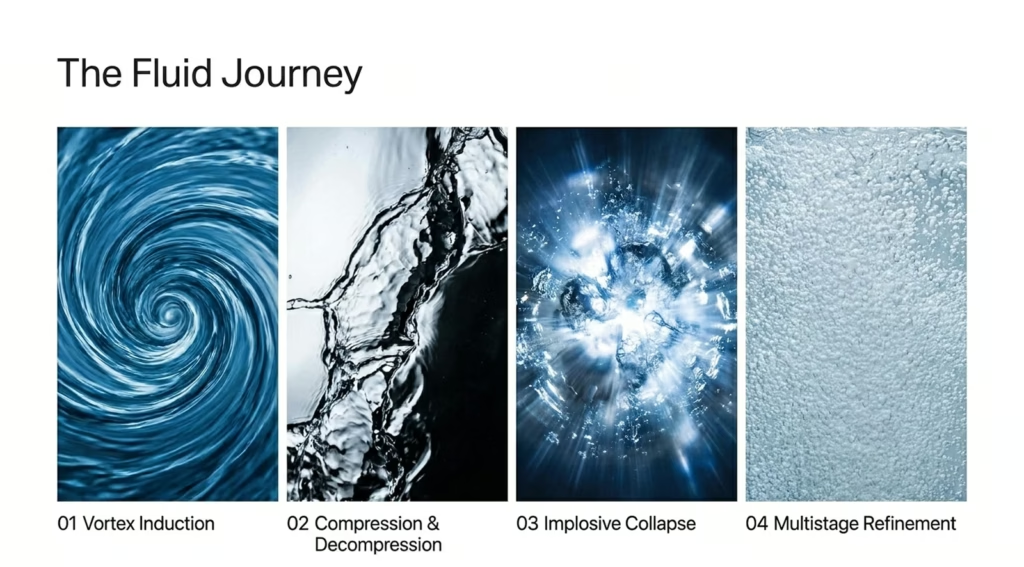
It uses vortex-induced multistage hydrodynamic cavitation to generate repeated cavitation events inside a moving liquid stream. As gas enters the cavitation environment, it is progressively fragmented and distributed through successive cavitation stages, increasing contact between the gas phase and the liquid.
This distinction matters.
G-Cav™ is not built around passive gas release through fragile media. It is built around active process intensification inside a robust industrial flow path. Everything in the liquid is exposed to these cavitation events, from solids, emulsions, oils, fats, particulates, as well as gasses.
That makes the platform far better suited to contaminated, solids-bearing, biologically active, chemically variable, or high-demand operating environments where conventional membrane systems may require frequent ongoing cleaning and intervention.
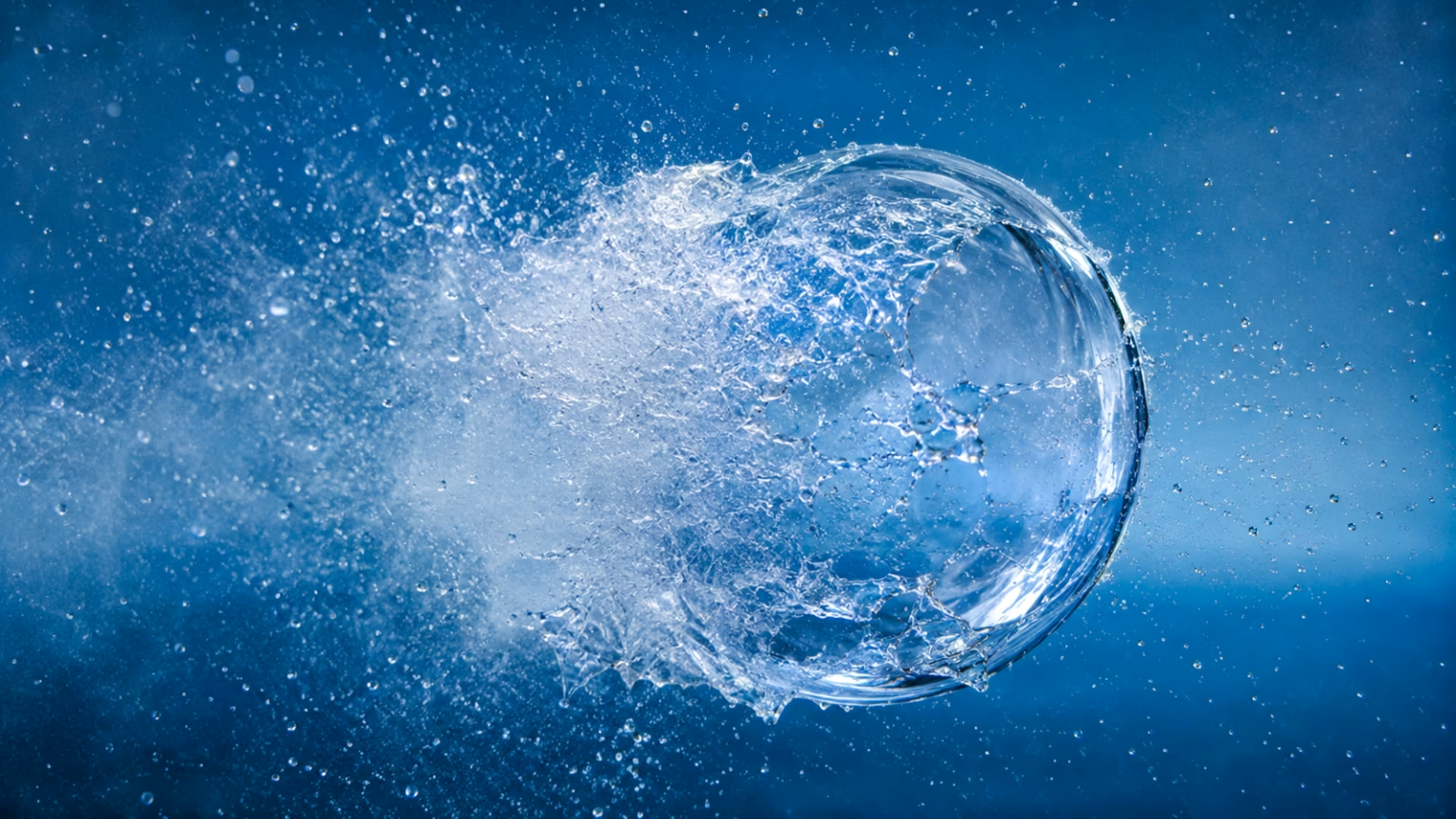
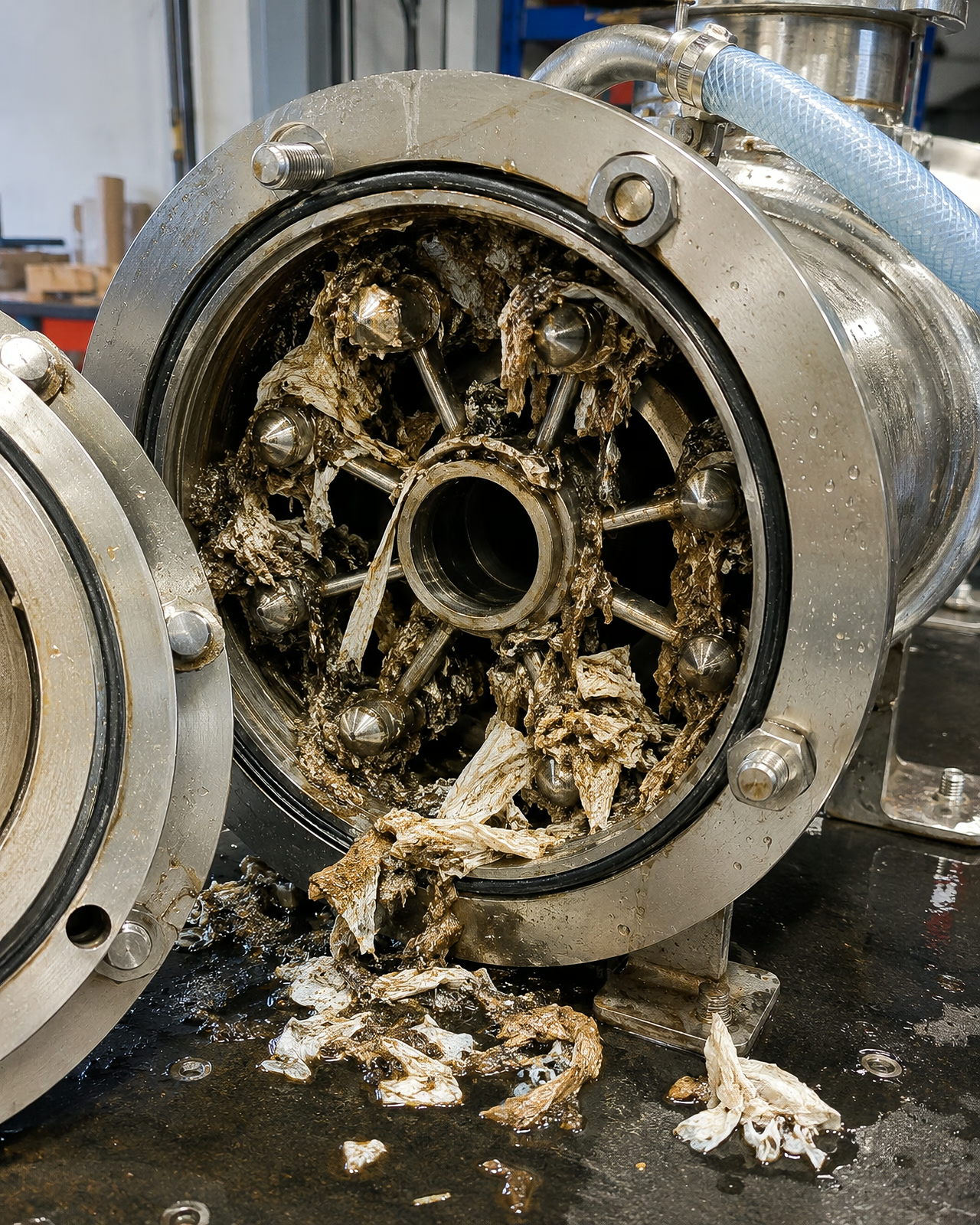
A membrane-free system removes one of the most common vulnerability points in gas-transfer architecture.
Where membrane systems depend on keeping a fine transfer surface clean, open, and stable, G-Cav™ avoids that dependency in the core cavitation zone, and throughout the entire process.
That matters in the markets where industrial gas infusion and nanobubble performance are most valuable: wastewater, aquaculture, agriculture, mining, oil and gas, remediation, food and beverage, biogas, and process-water treatment.
In all these sectors, contamination is not an exception – it is the operating reality. And in all these sectors, it is not just a matter of adding bubbles of gas alone – it is the cavitation contribution over and above that further pre-treats and processes the liquid itself.
The value of a robust nanobubble platform is not only whether it performs well on day one. The more important question is whether it remains practical, serviceable, and commercially useful while fouling pressure, suspended solids, organic loading, oils, scale-forming minerals, and variable water chemistry continually affect the system.
G-Cav™ is designed for that reality.
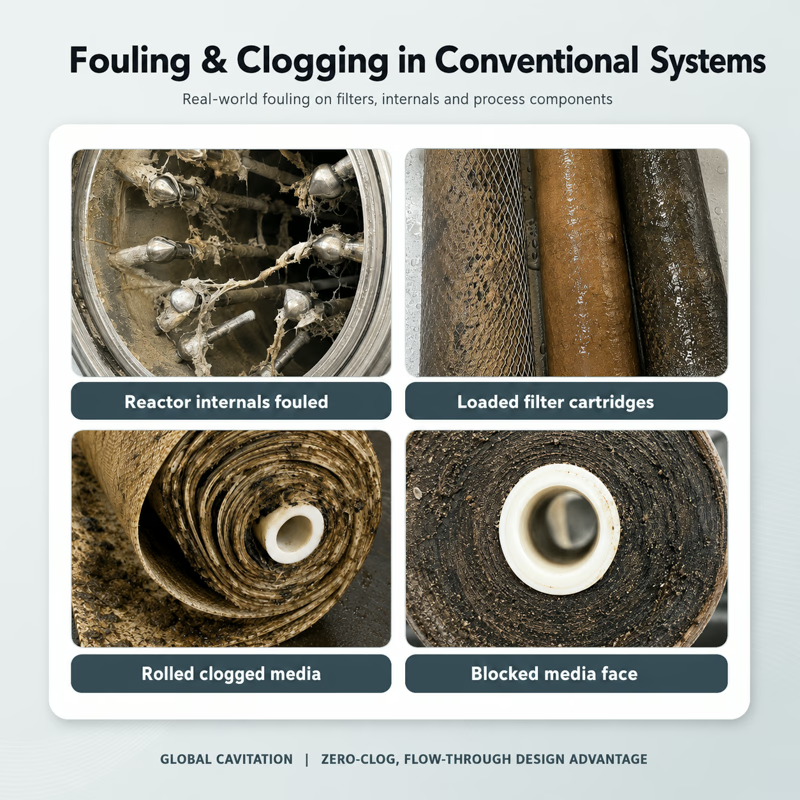
Fouling and clogging are often treated as service issues. In industrial deployment, they are commercial issues.
Once pores foul, membranes scale, fine passages restrict, or transfer surfaces become coated, the operating profile of a system changes.
Gas-transfer efficiency can decline. Cleaning cycles can increase. Labour demand can increase. Downtime becomes more likely. Consumables become a recurring cost. Reliability becomes harder to maintain.
This is why membrane-free architecture is not a minor product difference. It is a major structural advantage.
G-Cav™ removes the membrane entirely from the active treatment mechanism and replaces it with a flow-through hydrodynamic cavitation pathway engineered for demanding industrial liquids.
For operators, that means lower exposure to membrane-related clogging, stronger resistance to fouling-related performance decline, and a more practical route to continuous gas infusion in environments where delicate transfer media can become a liability.
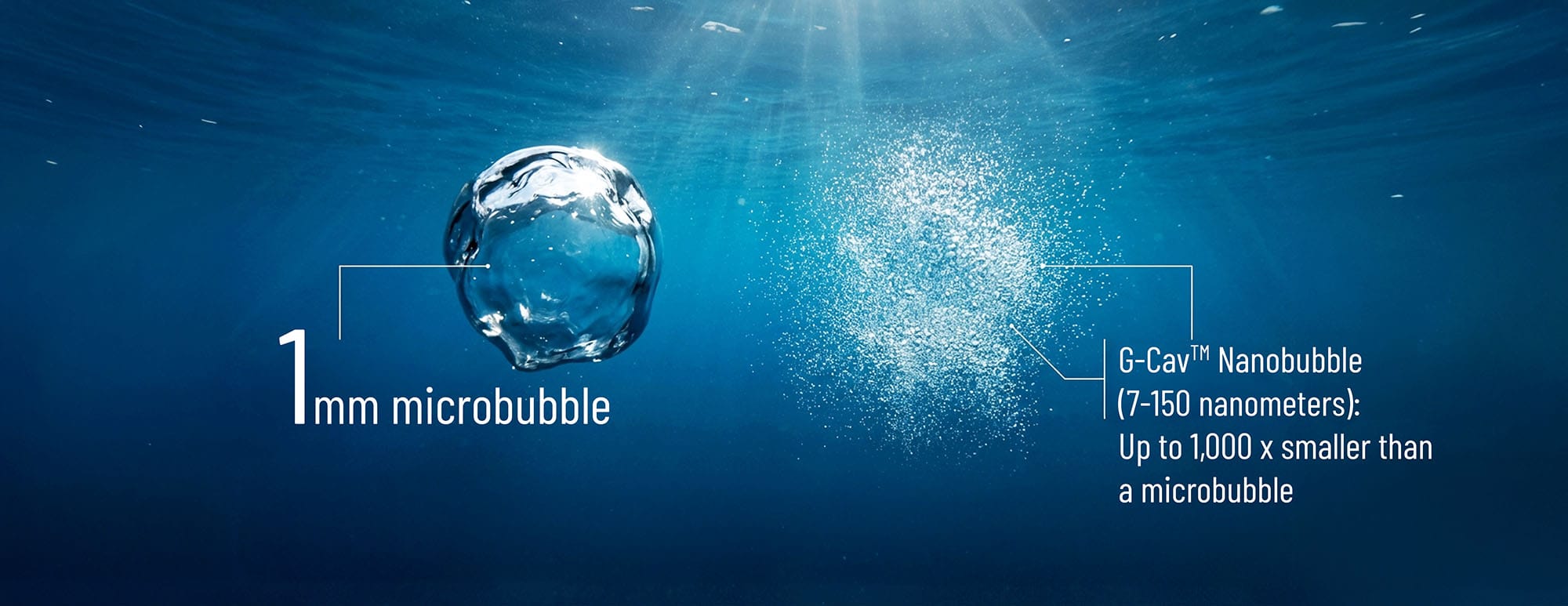
Nanobubbles matter because small gas structures create high surface area relative to gas volume. This increases gas-liquid contact potential and can support stronger oxygen transfer, more effective flotation, improved oxidation contact, and more meaningful biological or process interaction.
But nanobubbles alone are not the whole story.
The generation pathway determines how practical the technology becomes in the field.
G-Cav™ uses multistage hydrodynamic cavitation to refine and distribute the gas phase progressively. Rather than depending on a one-step membrane or passive diffusion event, G-Cav™ creates repeated cavitation interactions inside the liquid stream itself.
That is why G-Cav™ is positioned not only as a nanobubble system, but as a broader industrial gas-infusion and process-intensification platform.
It is designed to work with different gases, different liquids, different contaminants, and different deployment formats while retaining the same core membrane-free engineering advantage.
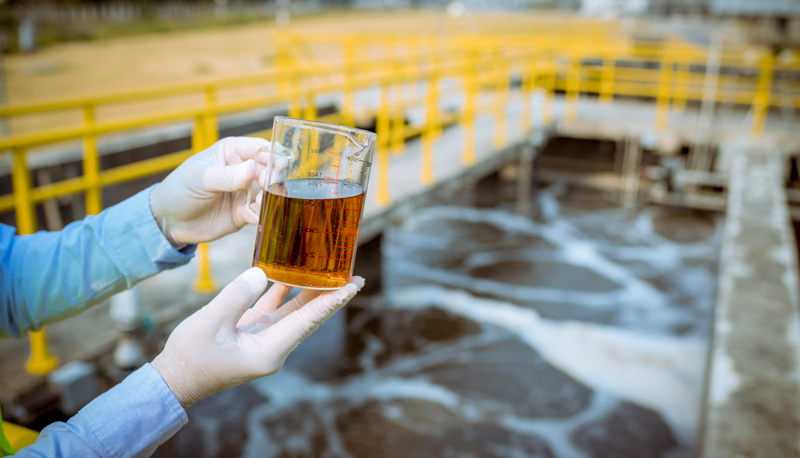
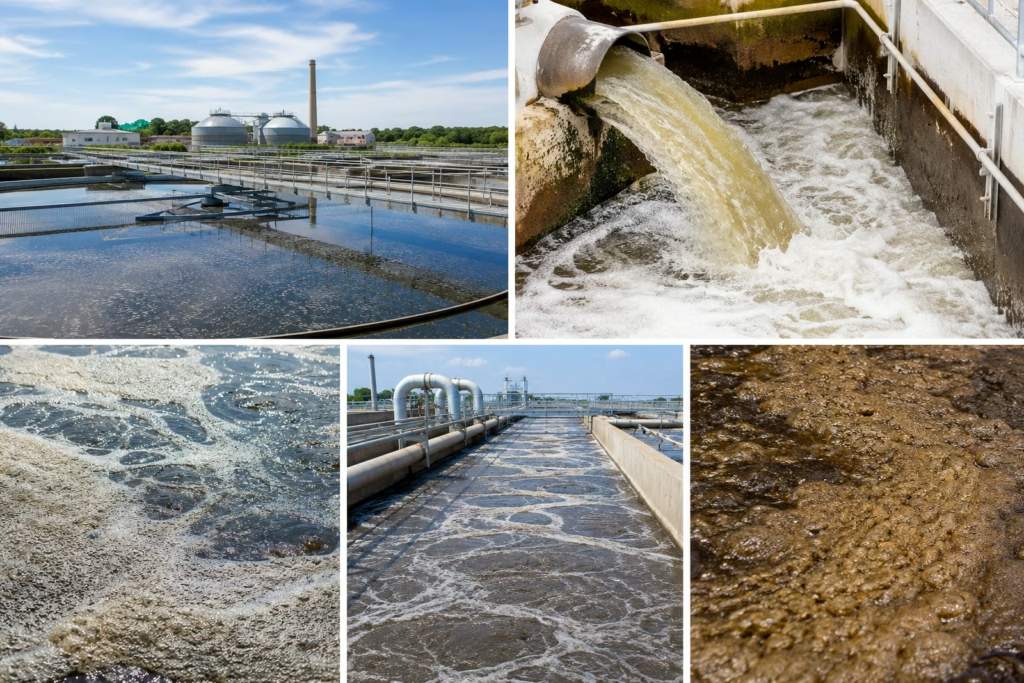
Wastewater environments expose gas-transfer systems to sludge, surfactants, oils, fats, organic load, unstable chemistry, suspended solids, and biological fouling pressure.
A membrane-free cavitation platform gives operators a more robust pathway for oxygen infusion, oxidation support, flotation assistance, and process-water conditioning without depending on fragile diffusion surfaces in the active treatment zone.
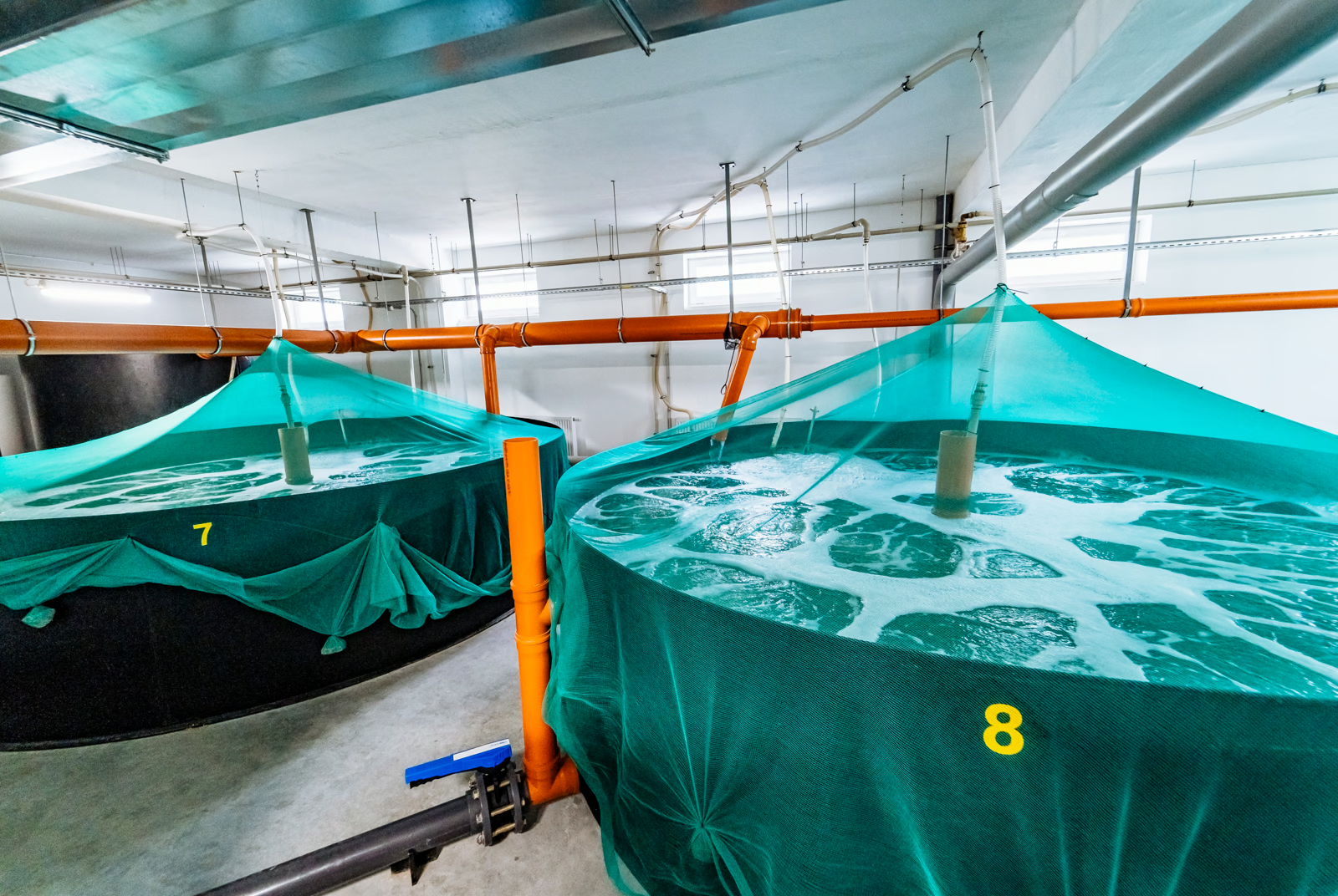
Aquaculture systems require stable oxygen performance in live water environments where solids, feed residues, biofilm, organics, and biological activity are always present.
G-Cav™ supports gas-liquid interaction through a membrane-free pathway designed for continuous operation and practical integration into recirculation systems, ponds, tanks, and oxygenation loops
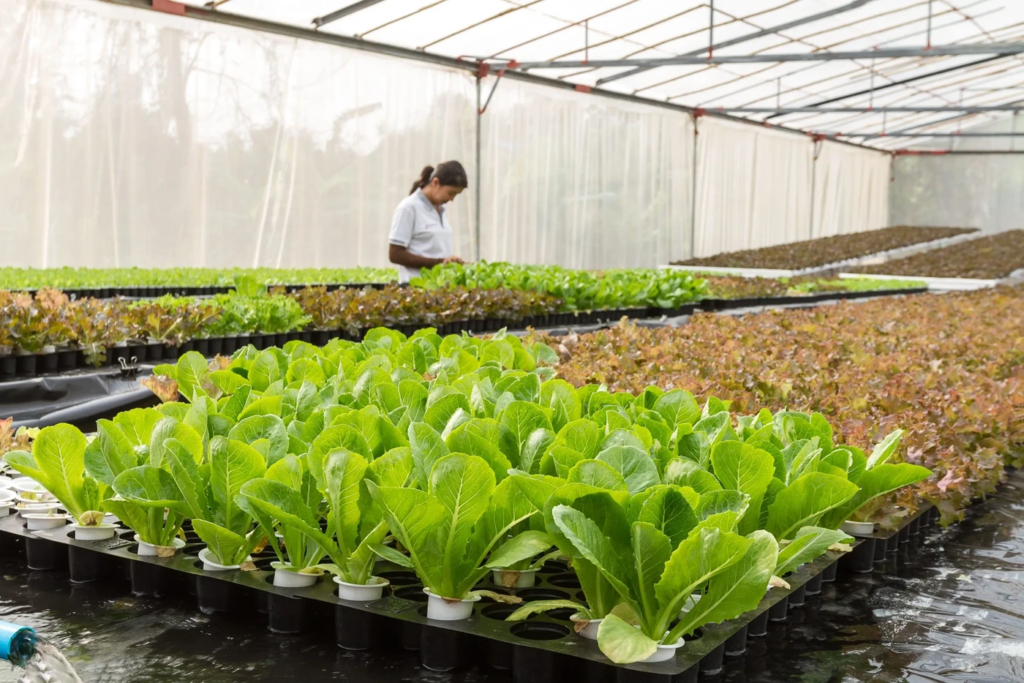
Agricultural water systems are rarely laboratory-clean. They may contain minerals, organics, biofilm, sediment, fertiliser residues, or variable water chemistry.
G-Cav™ provides a practical platform for gas infusion and water conditioning in real field infrastructure, helping operators move beyond delicate gas-transfer technologies that may struggle outside controlled environments.
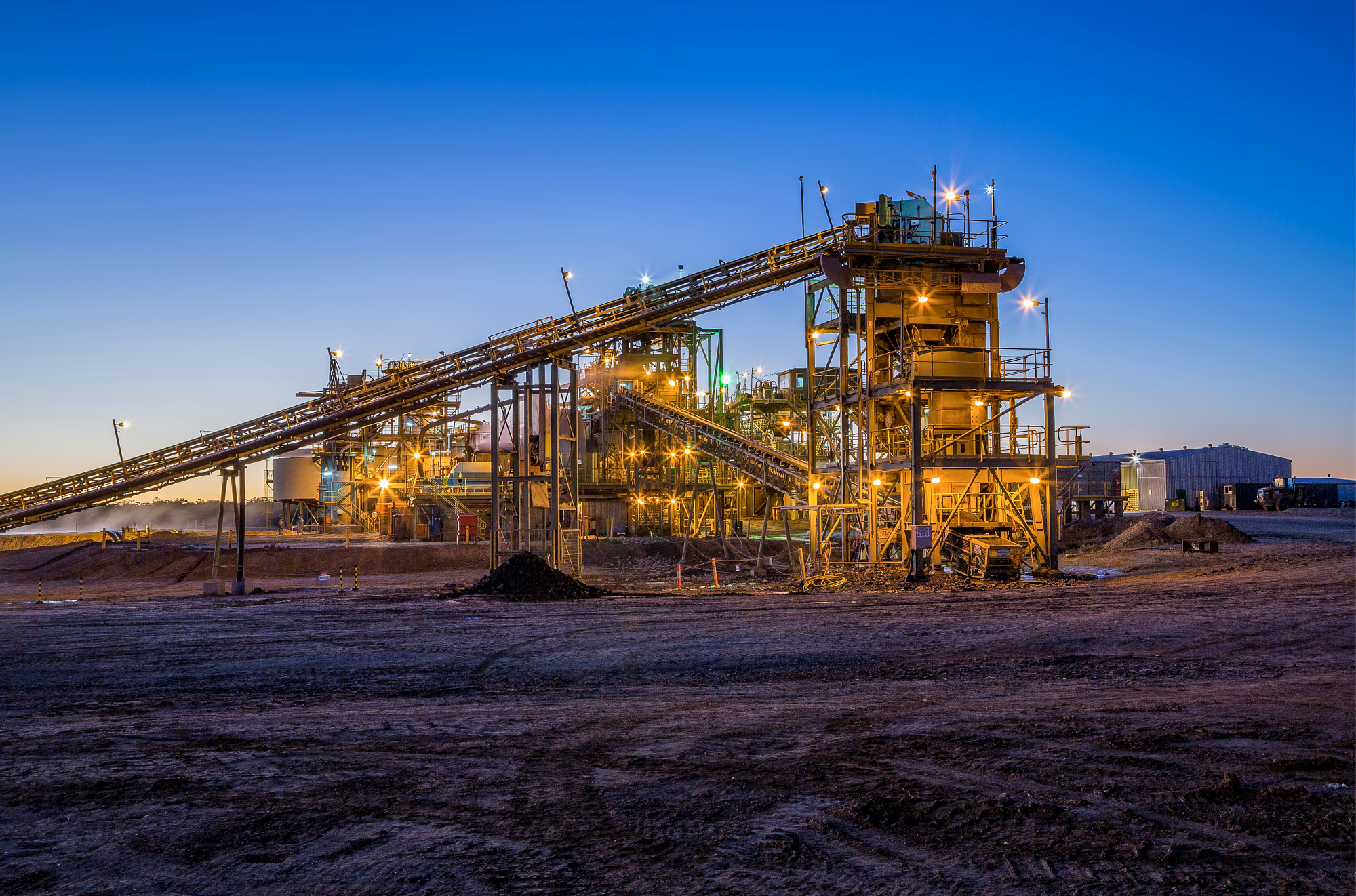
Mining process water can be abrasive, chemically aggressive, solids-laden, and operationally difficult.
In these conditions, fragile membranes and fine transfer media can become a maintenance burden. G-Cav™ is designed around a more robust flow-through cavitation pathway suitable for demanding process-water environments.
Produced water can contain hydrocarbons, emulsions, suspended solids, salts, scale-forming minerals, surfactants, and variable chemistry.
G-Cav™ offers a membrane-free gas-infusion and cavitation platform for operators investigating improved gas-liquid contact, separation and flotation support, oxidation assistance, and process-water treatment where membrane-dependent transfer architecture has already proven to be a very poor performer.
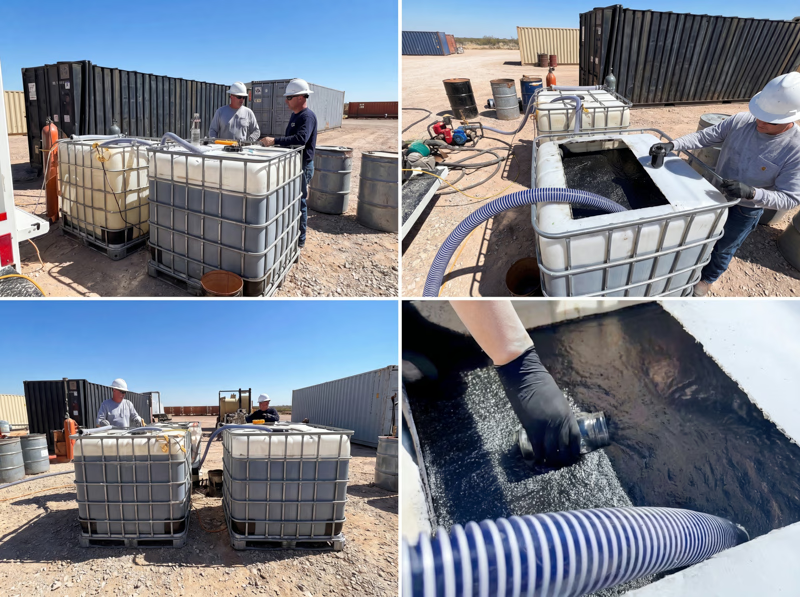
Field remediation and industrial water applications often require low-friction deployment, practical integration, and resilience in variable water conditions.
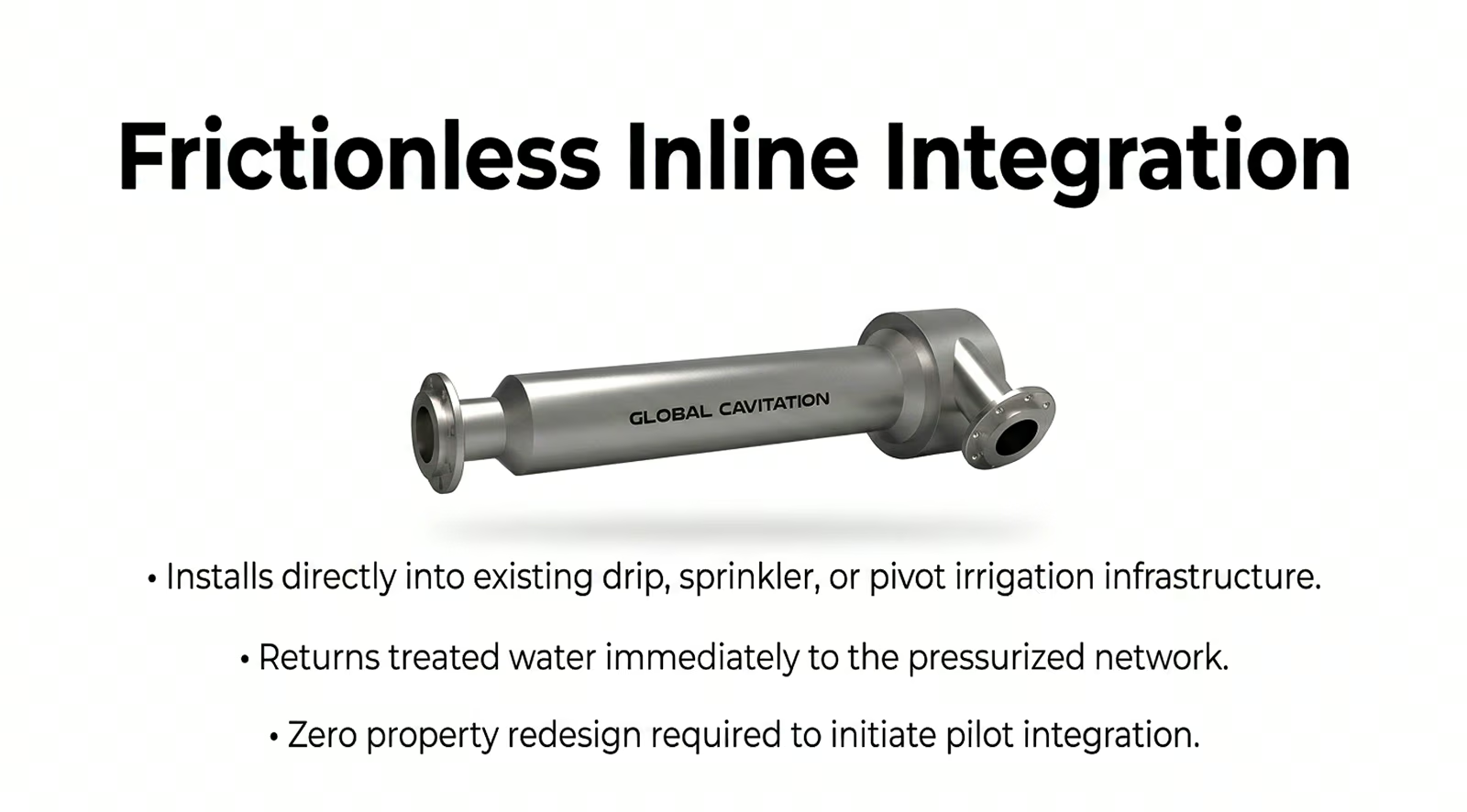
G-Cav™ is built for real-world use, not just controlled demonstration environments. Its membrane-free architecture gives it a stronger fit for mobile, modular, inline, and retrofit deployment.
Many technologies look compelling in controlled conditions and become less attractive in the field.
Global Cavitation’s positioning is different.
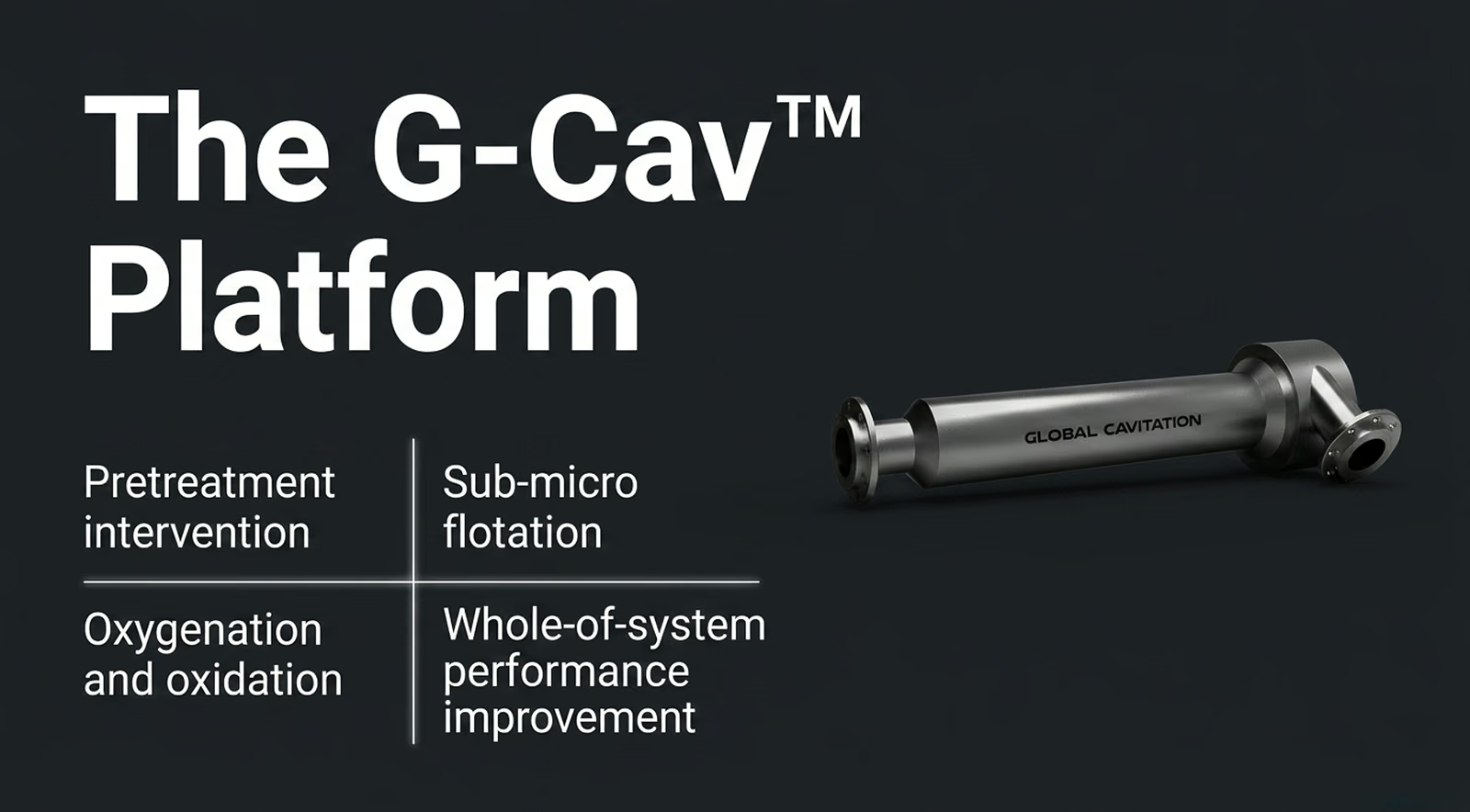
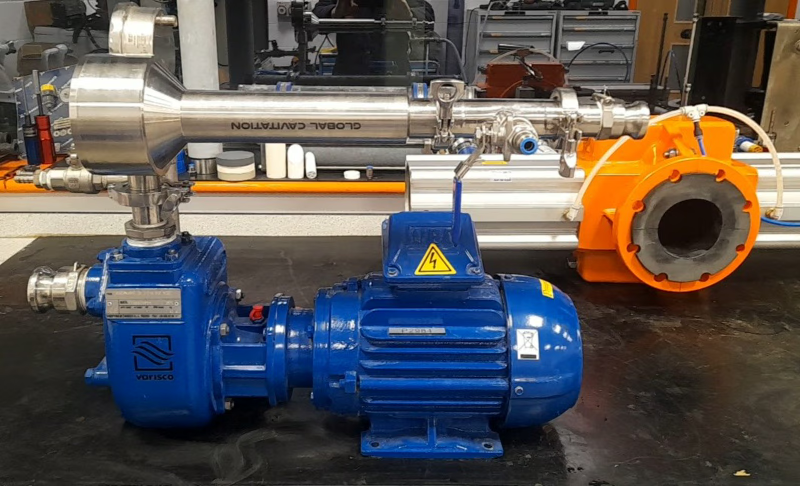
G-Cav™ is designed as an industrial platform for inline, submersible, modular, pump-integrated, and process-line deployment across multiple sectors.
That deployment logic matters because a membrane-free system is not valuable only for what it avoids. It is valuable for what it enables.
It can reduce retrofit friction. It can simplify integration into existing infrastructure. It can improve suitability for contaminated process environments. It can create a clearer path from pilot testing to commercial scale.
For operators, engineers, project partners, and licensing groups, the key advantage is not just nanobubble generation. It is the combination of membrane-free architecture, hydrodynamic cavitation, industrial scalability, and practical deployment flexibility.
When comparing nanobubble systems, the better question is not simply:
Can both systems generate nanobubbles?
The better question is:
Which system is more likely to hold useful performance, reduce maintenance friction, minimise clogging exposure, and remain commercially practical in a difficult operating environment?
That is the comparison that matters to operators.
Peak theoretical performance is one thing. Durable, field-ready commercial usability is another.
G-Cav™ is built around the second standard.
Global Cavitation is not building a one-market product story.
It is building an industrial platform.
A platform becomes more valuable when its core architecture can be deployed across multiple sectors without being undermined by the same membrane fouling and clogging risks in every application.
That is one of the reasons G-Cav™ has broad commercial relevance.
It is not locked to one narrow gas-transfer use case. It is a membrane-free hydrodynamic cavitation platform that can be configured around different gases, different industries, different fluids, different contaminants, and different deployment formats.
The same core engineering advantage can be applied across wastewater, aquaculture, agriculture, mining, oil and gas, remediation, food and beverage, biogas, and industrial process-water systems.
Nanobubble performance is important.
Consistent and efficient usability is more important.
G-Cav™ is designed to deliver nanobubble generation and high-efficiency gas-liquid interaction through a membrane-free, multistage hydrodynamic cavitation architecture built for demanding industrial conditions.
That means reduced exposure to membrane-related clogging, stronger resistance to fouling-related performance decline, and a more commercially durable path for operators who need real-world reliability, not just technical promise.
If the question is how to move beyond clog-prone membrane nanobubble systems, the answer is not another fragile variation on the same architecture.
The answer is a different architecture altogether.